

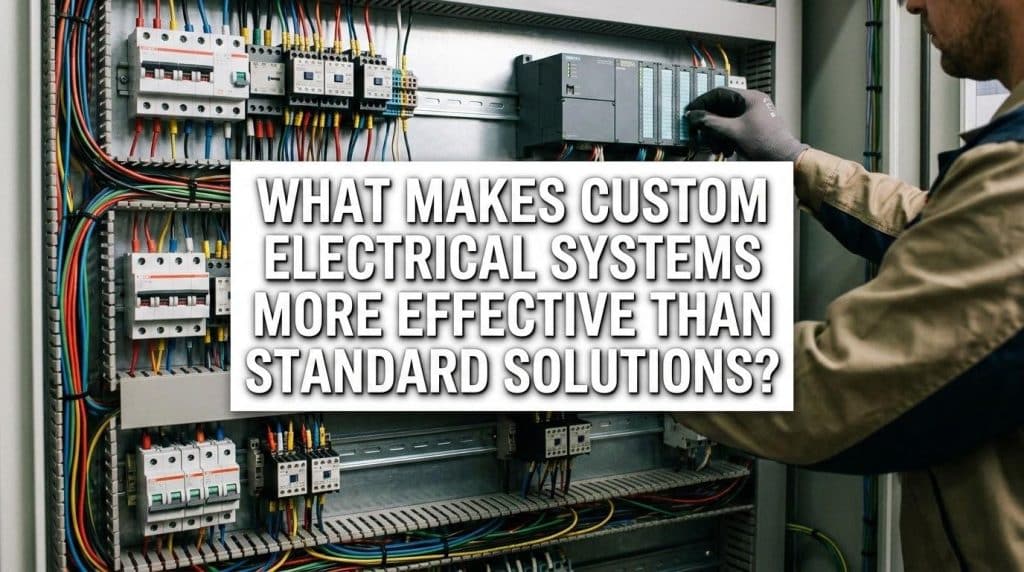
When you walk a production floor or open up a control panel, the difference between a system built for the job and one pulled from a catalog is obvious. Off the shelf electrical systems often look like a compromise. You see extra slack zip tied together in corners. You notice connectors forced into awkward angles to fit standard enclosures. It works for a while, but it’s rarely the right long term choice for serious manufacturing or complex machinery.
Standard solutions are built for the average user. If your product or factory floor is average, they might be fine. But when space is tight, vibration is high, or signal integrity is critical, standard parts start causing failures. Custom electrical systems eliminate the guesswork. They fit the exact spatial and environmental demands of the application.
The Problem With Catalog Components
Catalog parts force you to design your equipment around the wiring instead of designing the wiring around your equipment. Engineers end up modifying enclosures or compromising on layouts just to accommodate standard lengths. This adds assembly time and creates weak points.
- Electrical Interference: Every unnecessary inch of wire is an antenna for electrical interference.
- Points of Failure: Every adapter or standard connector that doesn’t quite match the required IP rating is a future point of failure.
You also deal with hidden supply chain risks. A supplier updates their standard part, changes a connector housing, or swaps a jacket material without notifying you. Suddenly your assembly process has to change to adapt to the new revision.
Custom systems lock in the exact specifications you need. The materials, the pinouts, and the lengths stay consistent run after run. You own the design, which gives you control over your bill of materials and prevents unexpected production halts.
Validating Designs Early
A major advantage of going custom is how it changes the product development cycle. Getting electrical routing right early prevents massive headaches during production. This is where investing in a prototype wire harness pays off. Instead of guessing how standard cables will route through a chassis, your engineering team can test the exact dimensions and flexibility needed for the final product.
They can spot rub points against metal edges and adjust the shielding requirements before you order thousands of units. It saves a tremendous amount of rework. When you test exactly what you plan to build, the transition from R&D to the assembly line is much smoother. You catch interference issues between power and signal lines before the product reaches testing agencies like Underwriters Laboratories.
Handling Specific Environmental Demands
Standard components are typically rated for generic indoor environments like office buildings and basic climate controlled warehouses. But industrial applications deal with extreme conditions:
- Coastal Regions: Equipment deployed near the coast faces relentless humidity and salt fog.
- Colder Climates: Machinery in colder climates deals with freezing winter temperatures that make standard plastics brittle.
A generic wire harness and cable assembly isn’t going to survive long in a high heat automotive plant or a dusty agricultural setting. Custom engineering lets you specify exactly what the system needs to survive.
You can choose specific jacket materials like cross linked polyethylene that resist oil or UV exposure. You can dictate the exact type of shielding needed to block electromagnetic interference from nearby heavy machinery. You get the exact connector housings required to keep out dust and moisture. The upfront cost might be higher, but you stop paying for emergency field maintenance.
Managing Constant Motion
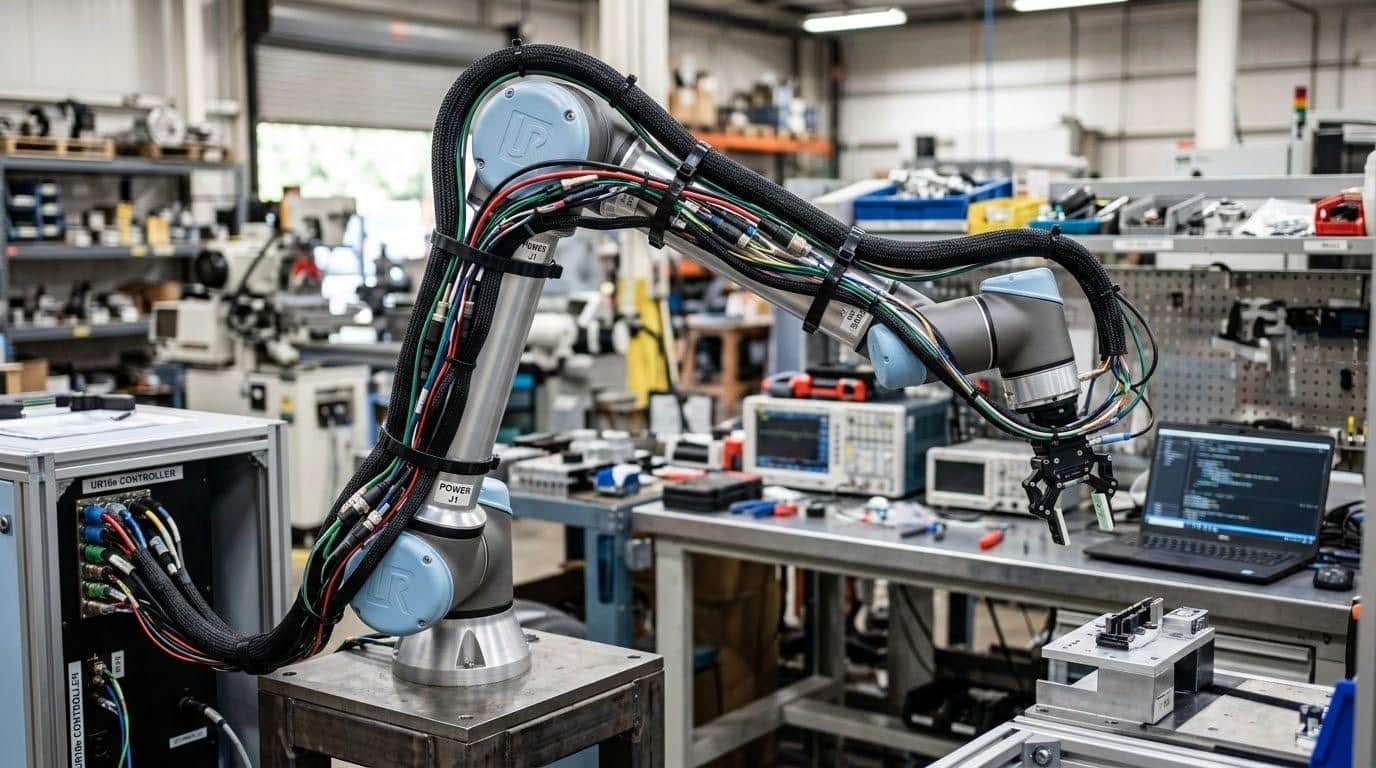
Static applications are relatively forgiving. Moving parts change the equation completely. When machinery operates twenty four hours a day with constant repetitive motion, standard cabling fails fast. The copper work hardens and breaks inside the jacket. The insulation cracks and exposes bare wire. If you look at automation equipment, the wiring is often the weakest link. Designing a robotics wire harness requires specialized knowledge of bend radii and flex life.
You need high strand count conductors and specific jacketing materials like polyurethane that can handle millions of flex cycles without degrading. Standard cables are just not built for continuous torsion and rolling flex. Custom solutions engineer the failure out of the motion profile entirely. They ensure the machine stays running instead of throwing faults every few months.
The Real Cost of Assembly
Labor is one of the biggest variables on any production line right now. Finding skilled technicians is difficult, and assembly time directly impacts your margins. Standard components often require manual modifications during assembly. Technicians might have to trim excess wire, splice in different connectors, or spend time wrestling stiff cables into tight spaces.
This adds minutes to every unit built. It also introduces variability and human error into the process.
Custom solutions arrive ready to install. They drop into place exactly as intended:
- Connectors match perfectly.
- Breakouts happen exactly where they need to, right next to the corresponding sensors or motors.
- The installation time drops significantly.
More importantly, you can design custom systems for error proofing. You can use specific connector keying so it’s physically impossible for an operator to plug a cable in backward. You can color code the breakouts to match the corresponding ports. When you look at the total cost of building a product, the extra dollars spent on custom wiring are easily offset by the savings in labor and the reduction in quality control failures.
Knowing When to Make the Switch
There is a time and place for standard parts. If you are building a one off test rig or a very simple device with no space constraints, grab what is available. But once a product moves into volume production or enters a demanding environment, the math changes quickly. The hidden costs of standard systems start piling up. Troubleshooting intermittent faults caused by poor fit or inadequate shielding drains engineering time. Field service calls for broken standard cables eat into your profits and damage your reputation with customers.
Moving to custom electrical systems is a sign of manufacturing maturity. It means you are optimizing for long term reliability and total operational cost rather than just looking at the initial purchase price of the components.