

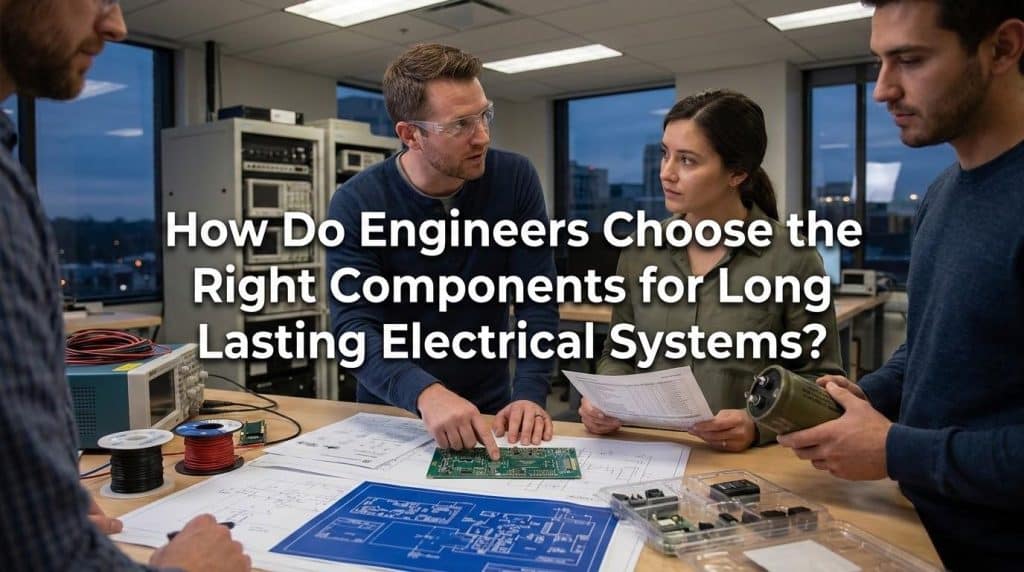
A control panel fails in a plant. The downtime costs a few thousand dollars a minute. When the maintenance crew finally tracks down the fault, it isn’t the programmable logic controller or the expensive motor drive. It is a corroded 50 cent crimp terminal that couldn’t handle the ambient humidity.
Engineers spend weeks obsessing over the big ticket items in an electrical system. We run simulations, debate microprocessor architectures, and calculate thermal loads. But the reality on the ground is that long lasting electrical systems usually survive or fail based on the boring components. The wire, the connectors, the seals, and the routing. Picking the right parts requires matching the component to the exact physical reality of its operating life rather than just buying the highest rated item in the catalog.
Defining the Actual Operating Environment
Before you even look at a spec sheet, you need to know exactly where this equipment is going to live. A system sitting in a climate controlled server room in Denver faces a completely different reality than one mounted to an agricultural combine in Iowa.
- Temperature cycling is a major killer. Copper and aluminum expand and contract at different rates than the plastics insulating them. Over time, this thermal pumping backs pins out of housings and creates microscopic gaps where oxidation starts. You have to look at the continuous operating temperature range, not just the peak limits.
- Then there is vibration. Constant low frequency shaking destroys rigid connections. Engineers need to spec components that can handle the specific resonant frequencies of the equipment they are attached to. This usually means prioritizing stranded wire over solid core and specifying positive locking mechanisms on all connectors. If a connector can vibrate loose, it absolutely will vibrate loose at the worst possible time.
Sourcing and Supply Chain Realities
You can design the perfect schematic, but someone still has to build it reliably. Component selection heavily involves deciding who you want to do business with. When you source parts, manufacturing consistency matters more than raw performance numbers.
Finding a reliable wire harness manufacturer is usually the first major hurdle. You want a partner who maintains strict quality control on their crimp heights and pull testing. A bad crimp looks perfectly fine to the naked eye but acts like a resistor under load, generating heat until it eventually burns out.
I always look for suppliers who are transparent about their tooling and testing procedures. If they can’t show you their validation reports or they leave bare terminals sitting out in the humid plant air before assembly, you should look elsewhere.
The supply chain also dictates availability. Designing a system around a proprietary connector with a 50 week lead time is a terrible engineering decision. Smart designers stick to widely available parts with multiple second sources whenever possible.
Standardization in Connectivity
There is a reason the industry relies on established standards. Reinventing the wheel with custom connectors usually introduces unnecessary points of failure and complicates maintenance down the road.
When you need a reliable board to wire connection, it is hard to beat the track record of an off the shelf Molex wire harness. These standard systems have decades of field data backing up their reliability. The tooling is widely available, assembly technicians know exactly how to handle them, and the failure modes are completely understood. You know precisely how many insertion cycles you are going to get before the plating wears off.
Sticking to common connector families also makes field maintenance infinitely easier. When a technician is trying to replace a damaged sensor at 3 AM, they don’t want to deal with a rare proprietary plug. They want standard pinouts and familiar latching mechanisms so they can get the production line running again.
Managing Moisture and Chemical Exposure
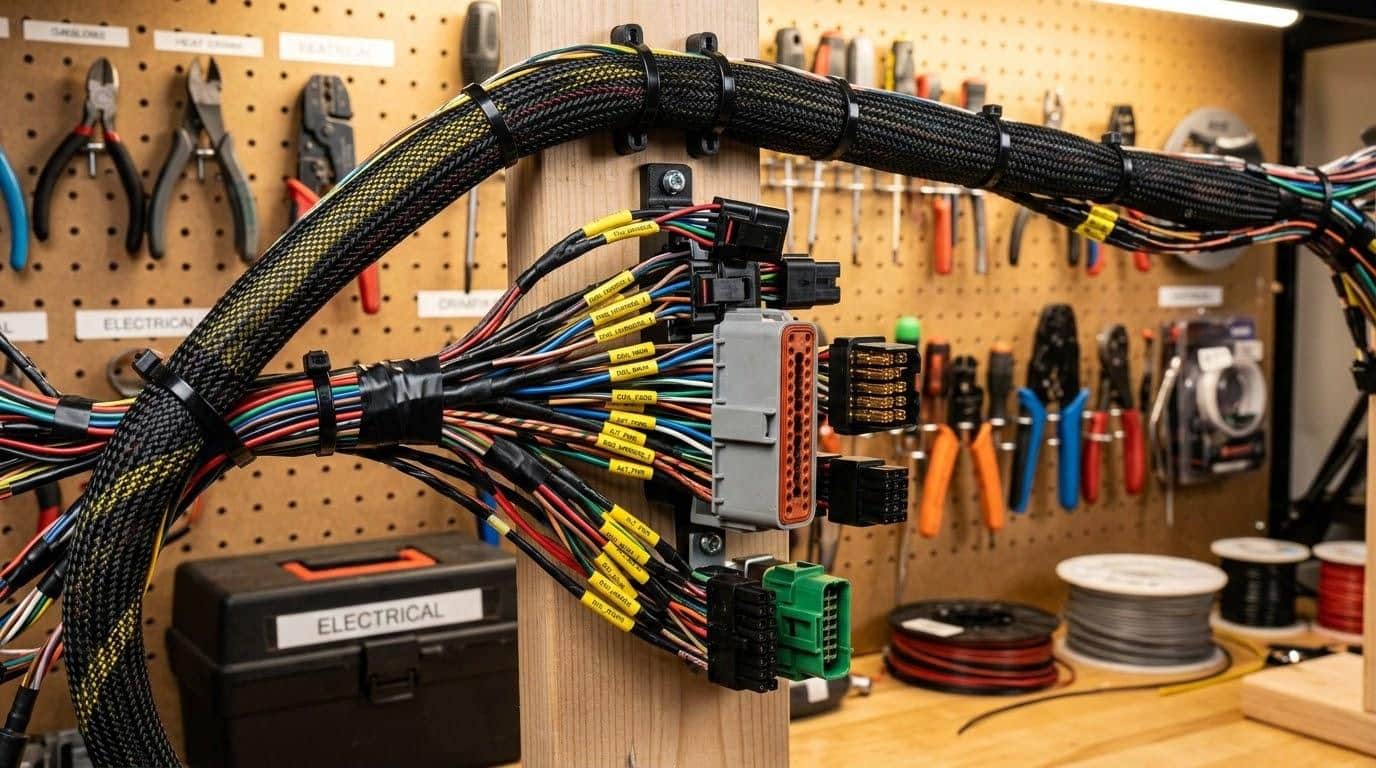
Water always finds a way in. Capillary action can draw moisture feet away from the original entry point, traveling straight up the inside of a wire jacket directly into a sensitive circuit board. If your system is going anywhere near condensation or washdown environments, you need to over engineer the physical protection. Just slapping some heat shrink over a splice isn’t enough. You have to evaluate the specific ingress protection ratings required for the application.
Working with a specialized waterproof wire harness manufacturer makes a massive difference here. They understand how to properly use potting compounds, multilayer seals, and ultrasonically welded splices. They know that a seal designed to stop fresh water might degrade completely when exposed to hydraulic fluid or industrial cleaning chemicals . Selecting materials like cross linked polyethylene or specialized silicones prevents the insulation from turning brittle and cracking over time.
Strain Relief and Mechanical Protection
Connectors are designed to carry current. They are not designed to hold up the weight of a heavy copper cable. Failing to provide adequate strain relief is a rookie mistake that causes an enormous percentage of field failures. The wire should be completely supported before it ever reaches the termination point. This means specifying the right cable glands, using properly sized clips, and ensuring bend radiuses are respected.
We also have to design for human behavior. Operators will pull on cables instead of connector housings. People will step on wiring running across a factory floor. You have to spec components assuming a baseline level of operational abuse.
If a cable is going to move, the selection process gets even tighter. High flex applications require entirely different wire construction:
- You need ultra fine stranding and specialized jacketing materials like polyurethane that can survive millions of flex cycles without the internal conductors snapping.
- You also have to design the routing to prevent the cable from rubbing against sharp metal chassis edges.
- A simple grommet or edge guard costs pennies but adds years to the lifespan of the equipment.
Balancing Cost Against Long Term Reliability
Engineering is always a compromise between performance and budget. The purchasing department will always try to shave a few cents off a bill of materials. It is the engineer’s job to know where you can save money and where cutting costs will result in a catastrophic failure. Gold plated contacts are expensive. Tin is cheap. But if the connection is handling low voltage sensor signals in a corrosive environment, specifying tin is asking for intermittent faults that will take days to troubleshoot. The labor cost of one warranty service call will instantly wipe out whatever money you saved on the cheaper connector.
We choose components based on the total cost of ownership. A robust electrical system is built on conservative ratings. If a circuit draws 10 amps continuously, you don’t spec a connector rated for exactly 10 amps. You build in a safety factor to handle transient spikes and unexpected environmental degradation. Good engineering means building systems that boringly do their job for twenty years without anyone ever noticing them.