

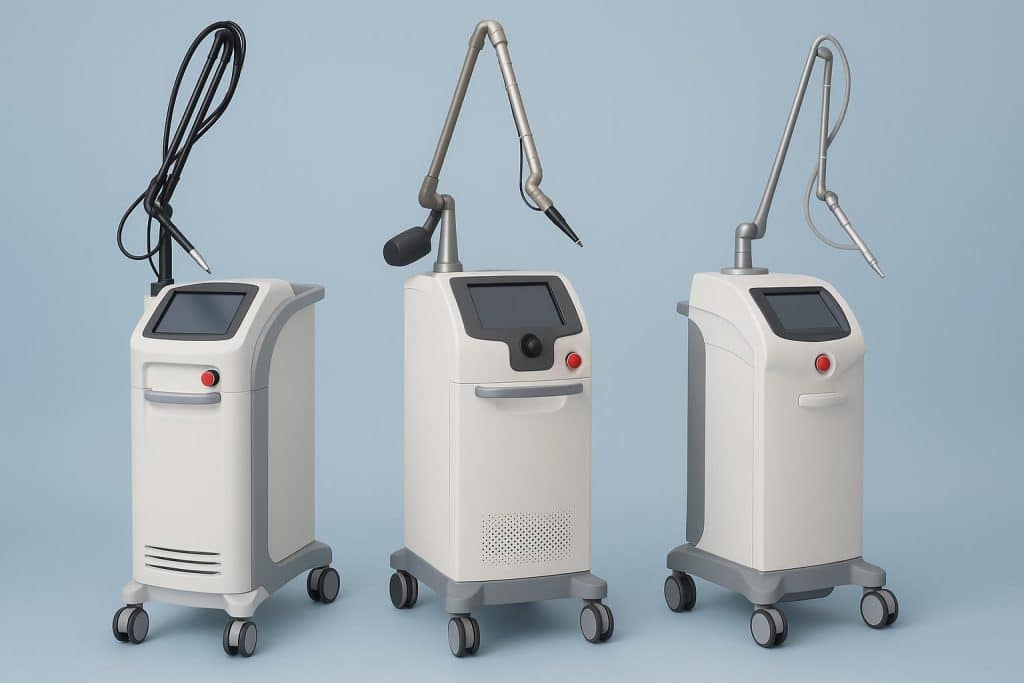
The Equipment Decision That Makes or Breaks a New Med Spa
Most new med spa owners get the equipment decision backward. They start with what they want to offer and work backward to find devices, without first asking which devices give them the most flexibility to adjust as the business finds its footing.
That matters more than it sounds. In your first 12 months, your patient mix will surprise you. The treatments you assumed would be your bread and butter may underperform. Something you added almost as an afterthought might become your highest-demand service. The practices that survive and grow through that discovery period are the ones that started with equipment versatile enough to pivot without buying new devices every quarter.
Buying used aesthetic equipment for sale rather than new is smart for a launch, for reasons beyond the obvious cost savings. The used market lets you test a platform at a fraction of the new price, learn what your patient base actually responds to, and upgrade or trade when you have real data instead of projections.
This article covers the three laser and energy device categories that consistently give new med spa owners the broadest clinical coverage, the most patient appeal, and the most room to grow, all available in the used market at prices that make sense for a business that is still proving itself.
What Makes a Laser “Versatile” for a New Practice?
Before getting to the specific devices, it is worth defining what versatility actually means in this context, because it is not just about how many indications a device covers.
- Patient demographic reach. A versatile device treats a wide range of skin types, ages, and concerns without requiring significant parameter adjustments or creating elevated safety risk at the edges of its treatment envelope. The broader the patient population it serves safely, the more bookings it can support.
- Treatment menu breadth. A single device that enables four or five billable treatment categories is doing more revenue work per square foot than a specialized device that does one thing well. For a new practice where floor space and capital are both limited, that ratio matters.
- Learning curve for operators. Some platforms require significant clinical expertise to use effectively across their full indication range. Others have more forgiving parameter windows that let newer operators achieve consistent results while building experience. A versatile device for a new practice is one your team can use confidently from the start, not just after two years of experience.
- Consumable and service accessibility. A device with a mature used market, widely available consumables, and an active service network is far more practical for a new business than a niche platform with excellent clinical specs but limited support infrastructure.
- Resale value retention. If the business plan needs to change, a device from a recognized platform with consistent market demand is much easier to liquidate than a lesser-known brand. For a new business, exit flexibility is a real consideration.
With those criteria in place, here are the three device categories that check the most boxes for new med spa owners.
Device 1: The Nd:YAG / KTP Dual-Wavelength Vascular and Pigment Laser
Why It Earns the Top Spot
A dual-wavelength system combining 532 nm KTP and 1064 nm Nd:YAG is the single most patient-demographically flexible laser you can buy for a new med spa. The combination addresses a range of concerns that span age groups, skin types, and treatment goals in a way that almost no other single device can match.
The 532 nm wavelength targets superficial vascular lesions, pigmented spots, and redness at the skin surface. The 1064 nm wavelength goes deeper, treating leg veins, deeper pigmentation, and providing Nd:YAG-based hair removal on darker skin types where shorter wavelengths carry higher risk.
Together, they enable a treatment menu that includes facial vascular treatment, rosacea management, sun damage and age spot correction, superficial leg vein treatment, general skin rejuvenation, and hair removal on skin types IV through VI. That is six distinct treatment categories from one device.
Who It Serves
The patient profile for dual-wavelength vascular and pigment treatment skews toward women 35 to 65 with sun damage, redness, or vascular concerns, which is a large, consistent demographic in virtually every market. It also serves younger patients with rosacea or pigmentation concerns, and patients with darker skin tones who need 1064 nm for hair removal.
For a new med spa trying to build a patient base quickly, that demographic breadth means the device is relevant to a high percentage of consultations from day one.
Used Market Reality
Platforms like the Cutera Excel V+, Syneron Candela GentleMax Pro, and Lumenis M22 regularly appear in the used aesthetic equipment for sale market. These are recognized names with strong resale demand, active service networks, and good parts availability.
Pricing in the used market for well-maintained dual-wavelength systems typically runs $15,000 to $40,000 depending on the platform, age, handpiece configuration, and service history. That is a fraction of the $80,000 to $120,000 new price for comparable platforms, and the clinical performance of a properly maintained used system is the same.
What to Check Before Buying
Shot counts on flash lamps are the primary variable. KTP and Nd:YAG systems use flash lamps or diode arrays with rated lifespans. Pull usage data during your pre-purchase inspection and factor replacement costs into your offer if the device is approaching end-of-lamp-life. Cooling system condition and handpiece completeness are the other two variables that most directly affect value.
Device 2: The Diode Laser for Hair Removal
Why Hair Removal Is Still the Right Anchor Treatment
Laser hair removal is the highest-volume aesthetic laser treatment in the United States and has been for over a decade. It is a repeat-visit treatment, meaning each patient returns four to eight times per treatment area, which builds booking consistency from the beginning. It also has a clear value proposition that patients understand without extensive education, which makes it easier to sell in a new practice that has not yet built a reputation for other services.
For a new med spa trying to predict cash flow, hair removal bookings are more reliable than almost any other laser treatment category. The demand is consistent, the treatments are fast, and the patient return rate is high.
A diode laser operating at 810 nm is the workhorse of hair removal in most practices. It covers skin types I through IV effectively, has a well-understood safety profile, and is available in used condition from a range of manufacturers at prices that make the ROI straightforward to calculate.
The Skin Type Coverage Question
One decision point for a new practice is whether to start with an 810 nm diode alone or to pair it with a 1064 nm Nd:YAG capability for patients with skin types V and VI. If your market has a significant patient population with darker skin tones, a device that handles the full skin type range from the start is worth the additional investment. If your patient demographic skews lighter, an 810 nm diode is sufficient coverage for launch.
Some platforms, like the Lumenis LightSheer Duet or the Alma Soprano ICE, offer dual-wavelength configurations that cover the full skin type spectrum in one device. These are worth evaluating if demographic breadth is a priority.
Used Market Reality
The used market for diode hair removal lasers is active and well-supplied. Platforms like the Lumenis LightSheer, Candela GentleLASE, Alma Soprano, and Cynosure Elite appear regularly in used aesthetic equipment for sale listings.
Pricing for used diode hair removal systems in good condition runs $8,000 to $30,000 depending on platform, age, and configuration. A lower entry price relative to multi-modality systems means the ROI calculation is faster, often six to twelve months at modest booking volume.
What to Check Before Buying
Diode laser systems wear differently from flash-lamp-based systems. Diode bars degrade over time with use, which affects energy output at the handpiece. Request a current energy output calibration reading and compare it to the manufacturer’s rated output for that platform at its current usage level. Fiber condition and contact cooling tip wear are the other primary inspection points.
Device 3: The Fractional Laser for Skin Resurfacing and Rejuvenation
Why Resurfacing Completes the Core Three
The first two device categories cover vascular, pigment, and hair removal across a broad patient population. What they do not cover is the texture, tone, and laxity concerns that drive a significant segment of aesthetic consultations: acne scarring, fine lines, enlarged pores, rough skin texture, and overall skin quality.
A fractional laser fills that gap and opens the practice to a treatment category that commands higher per-session pricing than vascular or hair removal treatments. Fractional resurfacing sessions typically run $400 to $1,200 depending on the indication, device, and your market, versus $150 to $400 for most vascular treatments and $100 to $300 per area for hair removal.
Adding fractional resurfacing to the menu from the start positions a new med spa to serve patients whose primary concern is skin quality, not just isolated lesions or unwanted hair. That is a large patient segment that will otherwise go to a competitor.
Fractional CO2 vs. Fractional Non-Ablative: Which to Start With
This is the most common decision point for new practice owners evaluating fractional devices.
Fractional CO2 delivers more dramatic results for significant scarring and texture concerns, but requires longer patient downtime (typically five to ten days), more clinical expertise to use safely, and more thorough pre-treatment preparation. The higher-impact outcomes can drive strong word of mouth, but the downtime requirement limits patient pool in some markets.
Fractional non-ablative devices (erbium glass, 1550 nm, or 1927 nm thulium platforms) produce more modest results per session but require little to no downtime. Patients can return to normal activity the same day or next day, which expands the addressable patient pool considerably and makes scheduling easier.
For most new med spa owners, starting with a fractional non-ablative device is the lower-risk entry point. It requires less clinical experience to operate safely, has a broader patient pool, and avoids the liability exposure that comes with higher-fluence ablative treatments before your team has significant experience. You can always add CO2 capability later when the practice is established.
Platforms like the Palomar Lux1540, Cynosure Icon, Lutronic LaseMD, and Solta Fraxel appear regularly in the used market and cover the non-ablative fractional category well.
If your clinical background is stronger and your market has clear demand for more aggressive resurfacing, a used fractional CO2 system from Lumenis, Syneron Candela, or Alma Lasers is worth evaluating. These platforms are well-represented in the used aesthetic equipment for sale market at significantly reduced prices from their new cost.
Used Market Reality
Used fractional devices span a wide price range, depending on whether you are looking at ablative or non-ablative platforms. Non-ablative fractional systems in good condition run $10,000 to $25,000 used. Fractional CO2 systems run $15,000 to $45,000 depending on platform and configuration.
Both categories are well-represented in the used market, with enough supply that you have negotiating room and time to find the right device rather than taking the first available option.
What to Check Before Buying
For fractional CO2 systems, RF tube output and scan pattern accuracy are the primary performance variables. Request calibration data showing current output versus manufacturer specifications. For non-ablative fractional devices, fiber condition and handpiece wear are the main inspection points. In both categories, confirm the full tip and handpiece set is present before finalizing any purchase.
How to Think About the Three Devices Together
These three categories work as a system, not just as individual purchases. A new med spa equipped with a dual-wavelength vascular and pigment laser, a diode hair removal system, and a fractional resurfacing device can address the primary concerns of the overwhelming majority of aesthetic patients who walk through the door.
The treatment menu from those three devices includes:
- Vascular lesions and rosacea
- Sun damage and pigmented lesions
- Leg vein treatment
- Laser hair removal across most skin types
- Skin rejuvenation and tone correction
- Acne scar treatment
- Fine lines and texture improvement
- General skin quality improvement
That is a complete aesthetic practice built on three pieces of equipment. Every additional device you add to that foundation expands into a specialty, not fills a gap.
Sequencing the Purchases
If budget requires phasing the purchases, the dual-wavelength vascular and pigment laser is the strongest single-device starting point. It covers the broadest range of concerns, serves the widest patient demographic, and generates consistent booking demand without requiring significant patient education.
Hair removal comes next as an anchor for booking volume. Its repeat-visit nature builds scheduling consistency that supports the financial stability of a newer practice.
Fractional resurfacing comes third because it serves a slightly more specific patient need and requires more clinical preparation and patient consultation than the first two categories. Adding it once the practice has an established patient base and consistent revenue makes the clinical and financial case for it easier to prove.
Budget Ranges for a Used Three-Device Launch
Here is a realistic range for what these three devices cost in the used market, purchased in reasonable condition with service history:
| Device Category | Estimated Used Price Range |
|---|---|
| Dual-wavelength vascular and pigment laser | $15,000 to $40,000 |
| Diode hair removal laser | $8,000 to $30,000 |
| Fractional resurfacing device | $10,000 to $45,000 |
| Total three-device setup | $33,000 to $115,000 |
The same three capabilities purchased new would run $250,000 to $400,000 or more. The used market delivers the same clinical outcomes at a fraction of that cost when devices are properly vetted and maintained.
The wide ranges reflect real variation in platform age, condition, brand, and configuration. A practice willing to do thorough due diligence and move when the right device appears can put together a strong three-device setup at the lower end of those ranges.
Not Sure Which Devices Are Available in Your Budget Right Now? We Can Show You.
Opening a med spa is a significant investment of time, money, and clinical energy. The equipment you start with shapes what treatments you can offer, which patients you can serve, and how quickly the practice finds its financial footing.
Buying used aesthetic equipment for sale rather than new gives you access to clinical-grade platforms at prices that leave room for the rest of the business to breathe. However, knowing which three device categories to target is half the work. The other half is finding the right specific unit, at the right price, in the right condition, before someone else does.
The Laser Agent continuously tracks used aesthetic equipment for sale across all three of these categories. We know which platforms are moving through the market right now, what realistic pricing looks like within your budget range, and which units have service histories worth paying for versus the ones that look cheap for a reason.
If you are building your launch setup and want to see what is currently available, browse our inventory or reach out directly. Tell us which categories you are targeting and what your budget looks like, and we will point you toward the options that make the most sense for a new practice, not just the ones that are easiest to sell.