

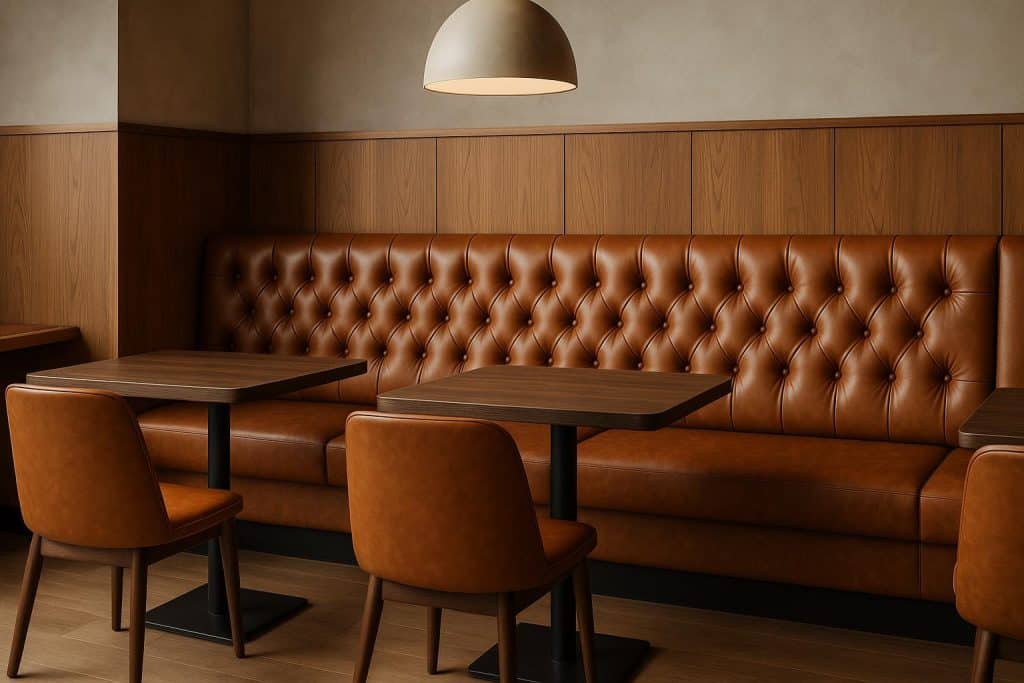
Walk into any busy restaurant today, and you will notice something interesting. Restaurant booths are no longer just a practical seating option pushed against the wall. It has become a statement piece, a privacy solution, a design anchor, and sometimes even the most photographed spot in the room.
As we move into 2026, booth design is evolving fast. Restaurant owners are thinking beyond simple vinyl cushions and straight backs. They are asking bigger questions. How does seating shape customer behavior? How long do guests stay? What makes someone post a photo? And how can a booth quietly increase revenue without anyone noticing?
Let’s explore what is next for booth design and why 2026 might be the year booths take center stage.
Privacy Is Becoming a Premium Feature
Noise levels in restaurants have been rising for years. Studies show that many casual dining spaces average between 75 and 85 decibels during peak hours. That is close to the sound of heavy traffic. Guests notice it, even if they do not say it out loud.
Booths are becoming a solution.
In 2026, expect to see:
- Higher backs that subtly block sound and create semi private zones
- Winged sides that reduce visual distraction
- Built in acoustic panels hidden beneath upholstery
Instead of open floor plans filled with small tables, designers are creating micro environments inside larger rooms. Guests want to talk comfortably without leaning forward or raising their voices.
Privacy does not mean isolation. It means comfort. And comfort leads to longer stays, higher check averages, and better reviews.
Curves Are Replacing Straight Lines
Take a look at recent hospitality design showcases, and you will notice something clear. Sharp angles are softening. Straight, boxy booths are giving way to curved silhouettes.
Why?
Curves feel welcoming. They guide traffic naturally. They also photograph beautifully, which matters more than ever in an era where restaurants compete for social media visibility.
Rounded booths are especially popular in:
- Upscale casual dining concepts
- Rooftop lounges
- Boutique hotel restaurants
A curved booth can seat more guests in the same footprint while creating an intimate vibe. Designers are using half-moon shapes, circular banquettes, and flowing corner units to make spaces feel fluid rather than rigid.
It is less about maximizing every square inch and more about shaping how people move and interact.
Texture Is Doing the Talking
For years, easy-clean vinyl dominated booth upholstery. It remains popular, especially in high-traffic environments. But 2026 is adding something new to the mix.
Texture.
Guests crave sensory experiences. Soft woven fabrics, subtle ribbed patterns, and matte finishes are replacing shiny surfaces. Even performance fabrics now mimic linen or velvet while remaining stain-resistant
Some trending material directions include:
- Earth-toned fabrics that reflect nature-inspired interiors
- Faux leather with deeper grain detail
- Mixed materials, such as wood bases paired with upholstered backs
This shift is part of a broader movement. Restaurants are trying to feel less corporate and more human. Booths are part of that story.
Modular Booth Systems for Flexibility
Flexibility is no longer optional. The restaurant industry has changed rapidly in recent years, and operators have learned that layouts must adapt.
Modular booth systems are gaining popularity because they allow owners to reconfigure seating without replacing the entire system.
A few key reasons this trend is growing:
- Restaurants can adjust layouts for private events
- Seasonal updates become easier
- Damaged sections can be replaced without discarding the entire unit
Some manufacturers now design booth components that connect like building blocks. Straight sections, corner units, and curved pieces can be combined in different ways.
For multi-location brands, this creates consistency while allowing each location to adapt to its specific footprint.
Built-In Technology Without the Clutter
In 2026, guests expect convenience. Charging ports, subtle lighting, and even call buttons are being integrated directly into booth design.
But here is the twist. The best designs hide the technology.
No one wants exposed cables running across the floor. Instead, designers are embedding USB ports in side panels and installing low-profile LED strips beneath the seat base for a soft glow.
Technology is there, but it does not scream for attention.
In some high end concepts, booths are even being designed with QR code displays built seamlessly into the frame, blending digital ordering with physical comfort.
Sustainability Is No Longer a Bonus
Consumers are paying attention to where materials come from. According to recent industry surveys, over 60 percent of diners say sustainability influences their dining choices in some way.
Booth design is responding.
Expect to see more:
- FSC certified wood frames
- Recycled metal components
- Upholstery made from recycled fibers
Beyond materials, durability is part of sustainability. A booth that lasts 10 years instead of five reduces waste and long-term costs. Restaurant owners are starting to calculate lifecycle value, not just upfront price.
The booth is becoming an investment, not a disposable fixture.
Statement Colors in Strategic Zones
Neutral tones are still strong. Warm browns, muted greens, and soft creams dominate many dining spaces. But 2026 will also bring bold accents.
Instead of painting entire rooms in dramatic colors, designers are using booths as focal points. A deep navy banquette in an otherwise light space. A burnt orange curved booth against concrete walls.
Color is being used strategically to:
- Define zones inside open layouts
- Guide customers toward premium seating areas
- Strengthen brand identity without overwhelming the room
When done right, a booth becomes the visual anchor of the restaurant.
The Emotional Shift: Comfort Over Formality
Perhaps the biggest change coming in 2026 is emotional, not physical.
Dining out is no longer just about food. It is about feeling. Guests want spaces that feel safe, welcoming, and slightly indulgent. Booths naturally create that atmosphere because they wrap around people.
Compared with standard restaurant chairs, booths encourage greater proximity. Families sit side by side. Friends lean in. Couples share space without feeling exposed.
As remote work and digital fatigue continue to shape modern life, people crave environments that feel grounded and personal. Booth design is answering that need.
A Seat That Shapes the Future
It might seem surprising that something as simple as a booth could influence revenue, branding, and guest satisfaction. Yet it does.
In 2026, booth design will be about more than padding and wood frames. It will reflect larger trends in privacy, flexibility, sustainability, and emotional comfort. Restaurants that treat booths as strategic assets rather than afterthoughts will stand out in a crowded market.
When guests slide into a booth, they are not just choosing a seat. They are choosing how they want to experience the meal.
And in the years ahead, that choice will matter more than ever.