

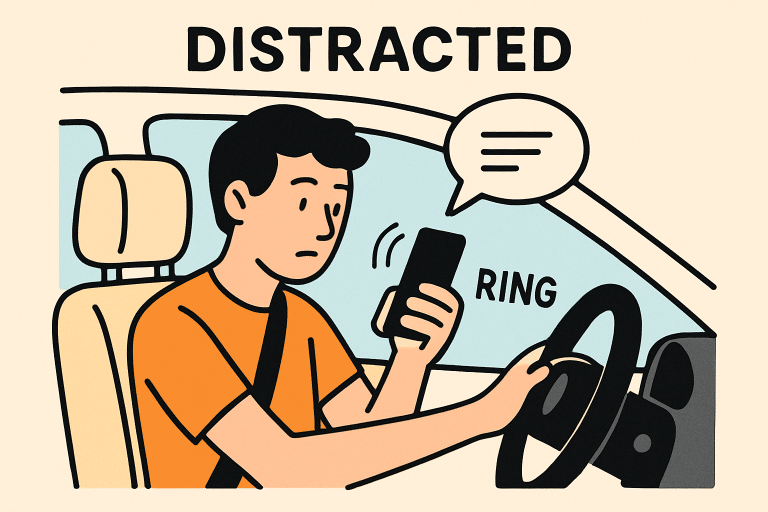
Key Takeaways:
- Driver distraction significantly increases the risk of car accidents.
- Common distractions include mobile phone use, in-car technologies, and interactions with passengers.
- Technological advancements and legal measures are being implemented to mitigate distracted driving.
Table of Contents:
- Introduction
- Common Types of Driver Distractions
- Impact of Distractions on Accident Rates
- Technological Advancements to Combat Distraction
- Legal Measures and Enforcement
- Educational Campaigns and Awareness
- Conclusion
Introduction
Distractions behind the wheel are a serious concern in modern traffic safety, leading to an increasing number of car accidents each year. As technology becomes further integrated into our daily routines and vehicles, staying attentive on the road is more challenging than ever. Being aware of how distractions can alter the outcome of a vehicle crash empowers drivers to make safer choices—and seek legal support if an accident does occur. For those navigating the aftermath of a collision, working with an auto accident attorney in Memphis, TN, can provide crucial guidance on legal rights and recovery options.
The risk posed by driver distraction is substantial, making it a topic of concern for drivers, policymakers, and safety advocates alike. With fatality numbers influenced by inattention on the road, it is increasingly clear that even a brief lapse in concentration can have long-lasting consequences for all parties involved. Addressing this threat requires a multifaceted approach that combines education, technology, and enforcement.
Drivers face many competing demands for their attention, yet many fail to recognize how these distractions heighten the risk of accidents. Whether it’s a buzzing phone or a conversation with a passenger, even small diversions can be enough to trigger a collision. Recent statistics underscore why this topic remains a top priority for law enforcement and public safety campaigns alike.
Understanding the types of distractions and how they affect car accident outcomes is crucial for prevention. Addressing these issues can significantly reduce the number of crashes, injuries, and fatalities on our roads.
Common Types of Driver Distractions
Driver distractions are generally grouped into three key categories, each impacting a driver’s ability to operate a vehicle safely:
- Visual Distractions: These occur when a driver’s eyes leave the road. Examples include looking at GPS screens, adjusting dashboard controls, or glancing down at a text message. Even a brief diversion can lead to missing critical changes in traffic conditions.
- Manual Distractions: These distractions take a driver’s hands off the wheel. Eating, reaching for items, or changing radio stations are common culprits. Manual distractions reduce a driver’s ability to quickly respond to changes on the road.
- Cognitive Distractions: Anything that takes the driver’s mind off driving, such as deep thought, arguing with passengers, or daydreaming, is a cognitive distraction. These can be particularly insidious because the driver might appear attentive but is mentally elsewhere.
Distractions often overlap—for instance, texting while driving combines all three types and is among the most dangerous behaviors behind the wheel. According to the Centers for Disease Control and Prevention, each day, about nine people are killed, and more than 1,000 are injured in crashes attributed to distracted driving. These statistics highlight the severity of failing to maintain complete attention while operating a vehicle.
Impact of Distractions on Accident Rates
Distracted driving is one of the leading causes of car crashes in the United States. The National Highway Traffic Safety Administration (NHTSA) reported that over 3,200 deaths resulted from distracted driving incidents in 2023, representing roughly 8% of all fatal automotive collisions. The consequences aren’t limited to fatalities; distracted driving also leads to tens of thousands of injuries and substantial financial losses each year.
Some studies suggest that a distracted driver is as impaired as someone driving under the influence of alcohol or drugs. Reaction time, situational awareness, and the ability to avoid hazards are all negatively affected. This not only increases the likelihood of crashes but also complicates accident outcomes by introducing liability issues—a major reason both drivers and victims often seek guidance from experienced attorneys in accident-related litigation.
Technological Advancements to Combat Distraction
The auto industry has responded to the dangers of distracted driving with significant technological advancements. Modern vehicles increasingly feature Advanced Driver Assistance Systems (ADAS), including lane departure warnings, adaptive cruise control, and autonomous emergency braking. These systems are designed to help keep drivers focused by automating certain driving tasks and alerting drivers when their attention drifts from the road.
One notable innovation is the use of camera-based driver monitoring technology that detects when a driver’s eyes are no longer on the road. Some systems can even intervene—such as by sounding alarms, vibrating the steering wheel, or temporarily slowing the car—to prompt drivers back to full attention. Automakers continue to refine these solutions, making them more prevalent and effective each year. Industry research highlighted by the Insurance Institute for Highway Safety underscores the growing role of technology in addressing the distracted driving epidemic.
Legal Measures and Enforcement
Legislators and traffic authorities have mounted robust efforts to reduce distracted driving through laws and enforcement campaigns. Many U.S. states now have strict bans on handheld devices, especially for texting and calling while driving. Penalties can include hefty fines, license points, or even criminal charges if distractions result in injury or death. However, the effectiveness of these laws often depends on consistent enforcement and public compliance.
Some states go beyond restrictions on device usage, prohibiting actions such as eating or interacting with pets while driving. Despite these measures, a significant portion of drivers admit to engaging in distracting behaviors regularly, indicating an ongoing need for both legal reform and public education.
Educational Campaigns and Awareness
Public education and awareness campaigns are critical for changing driver behavior. Programs like the NHTSA’s “Put the Phone Away or Pay” campaign aim to make the risks and consequences of distracted driving widely understood, particularly among teens and younger adults. These campaigns use a mix of local advertisements, social media, and partnerships with schools and organizations to reach large audiences.
Big data and social science research suggest that targeted education, combined with personal stories from accident survivors, can be highly effective in reducing future distracted driving incidents. The widespread dissemination of key safety messages can lead to a cultural shift—one where attentive driving becomes the norm rather than the exception.
Conclusion
Driver distraction continues to pose a significant threat on American roads, resulting in thousands of preventable collisions and life-altering consequences each year. While technological innovation, comprehensive legislation, and public education are making important inroads, the responsibility also lies with drivers to remain vigilant behind the wheel. By understanding the dangers and prioritizing road safety, everyone can help reduce the devastating impact of distracted driving.