

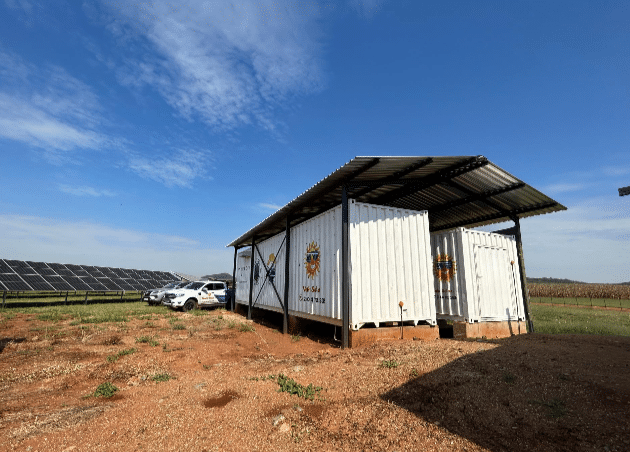
As the demand for energy independence and green electricity continues to grow, solar energy storage systems have become a critical investment for households and businesses. However, faced with the high upfront costs, many potential users are left with a significant question: What exactly makes up the cost of solar battery storage systems, and what are the key factors influencing the price?
This article discusses the details behind the substantial initial investment in solar storage setups, breaking down all costs from hardware equipment to hidden construction expenses. It also offers insights into core strategies for cutting costs and improving efficiency.
Understanding the Solar Battery Storage System Cost
The total cost of a solar battery storage system extends far beyond just batteries and solar panels. It primarily consists of three major components:
1. Equipment Costs (Hard Costs)
These are the most direct expenses, covering core electrical components:
- Battery Pack: The “energy warehouse” of the system, representing the highest cost share. Lithium-ion batteries are currently mainstream due to their high safety and long cycle life。
- Inverter: The “brain” and “heart” of the system. A solar battery storage system requires a hybrid inverter, which integrates bidirectional DC/AC conversion, manages battery charging and discharging, and converts DC electricity into usable AC power. This component is technologically intensive and is the second-largest cost after the battery.
- Transformer and Switchgear: Essential for ensuring safe and stable operation. The transformer handles voltage conversion, while the switchgear manages power distribution, control, and protection, especially critical in large commercial and industrial projects.
- Other Equipment: Includes solar panels, MPPT controllers, energy management systems, cables, and more.
2. Soft Costs
These costs are often underestimated yet crucial, reflecting the technical and service value that system integrators provide.
- System Design and Engineering Integration: Optimizing electrical design, capacity configuration, and safety assessments based on site conditions and user needs. Superior integration design maximizes system efficiency and lifespan.
- Installation and Wiring: Fees for professional installation, including equipment mounting and the complex wiring required for both DC and AC sides.
- Commissioning and Grid Connection: Post-installation tasks such as parameter configuration, functional testing, grid application, and synchronization to ensure the system operates safely and in compliance.
3. Infrastructure and Civil Engineering Costs
These expenses are particularly significant for large-scale ground-mounted or commercial and industrial projects.
- Site Preparation: Land leveling, foundation construction, etc.
- Cable Trenches/Cable Trays: Construction of channels for laying extensive power cables.
Factors Affecting Solar Battery Storage System Cost
1. System Scale and Configuration
- Capacity and Power: These are the most direct factors. The larger the load requiring backup and the longer the backup duration, the greater the required battery capacity and inverter power, leading to a significant increase in the overall cost of the solar battery storage system.
- Solar-to-Storage Ratio: The ratio of installed PV capacity to energy storage capacity directly affects the system’s charging efficiency and discharge duration. Projects aiming for high self-consumption rates typically require larger storage capacities, which raises the total investment accordingly.
2. Technology Selection and Brand
(1) Battery Technology
- Energy Density: Higher energy density cells store more electricity in the same volume, offering particular value for space-constrained installations such as households. However, they involve more complex manufacturing processes and come at a higher cost.
- Cycle Life and Calendar Life: Cycle count and overall service life are key metrics. Cells with longer lifespans generally use higher-quality raw materials and more advanced manufacturing technologies, which results in a higher price.
(2) Brand and Efficiency
Established brands for batteries, inverters, and system solutions typically offer higher reliability, longer warranties, and more comprehensive after-sales support, which is reflected in their premium pricing compared to lesser-known brands.
3. Application of Solar Battery Storage System
The complexity and cost of a solar battery storage system are determined by its intended application:
- Residential: Key needs include self-consumption and backup power (microgrid). These systems favor all-in-one designs with simpler installation, but exhibit a higher cost per unit of capacity.
- Commercial & Industrial (C&I): Primary objectives are peak shaving (arbitrage) and demand charge management. They require rapid power response and involve complex configurations with components like transformers and switchgear. These medium-capacity systems necessitate detailed load analysis and high-power components, resulting in higher overall cost.
- Grid-Side/Generation-Side: Core functions are frequency regulation and ancillary services. These large-scale projects prioritize minimal unit cost and require significant civil works and grid integration. They demand extreme reliability, sophisticated control systems, and redundant design, leading to the highest cost.
4. Market and Policy Environment
- Incentive Policies: Tax credits, subsidies, or feed-in tariff mechanisms offered by governments can directly reduce the user’s upfront investment cost.
- Supply Chain and Logistics: Fluctuations in raw material prices, global supply chain bottlenecks, and international logistics costs are all factors that ultimately influence the final price of the solar battery storage system.
Strategies for Cost Reduction and Efficiency Improvement
After understanding the costs and influencing factors, how can you invest wisely to maximize returns for your solar battery storage system? Here are three core strategies:
1. Adopt an All-in-One Integrated Energy Storage System
Traditional approaches involve sourcing equipment from different manufacturers for on-site integration, which carries compatibility risks, complex design requirements, prolonged timelines, and high soft costs. We recommend adopting an all-in-one integrated energy storage system.
Advantages:
- Reduced Soft Costs: Factory pre-integrated and pre-tested systems significantly minimize on-site design, installation, and commissioning efforts and time.
- Enhanced Reliability: All components are compatibility-matched and optimized before leaving the factory, ensuring higher system stability.
- Simplified Operation and Maintenance: The solar battery storage systems equipped with intelligent operation and maintenance platforms can remotely resolve 80% of common issues, significantly reducing operation and maintenance costs.
2. Choose High-Efficiency MPPT Controllers
A high-efficiency MPPT controller maximizes energy extraction from solar panels, particularly under low-light conditions or in environments with complex shading. This significantly increases power generation for your solar battery storage system, accelerating the return on investment.
3. Optimize System Configuration and Operation Mode
- Precise Configuration: Through professional load analysis and simulation, avoid over-sizing or under-sizing your storage system. Identify the most cost-effective capacity and power rating.
- Intelligent Operation: Utilize a smart energy management system to automatically optimize charging and discharging strategies based on electricity price fluctuations and usage habits, maximizing the economic benefits of your solar battery storage system.
Why ATESS is Your Ideal Choice?
Among numerous brands, ATESS stands out as a specialized provider of energy storage solutions, with products that fully align with the cost-saving and efficiency-enhancing strategies outlined above.
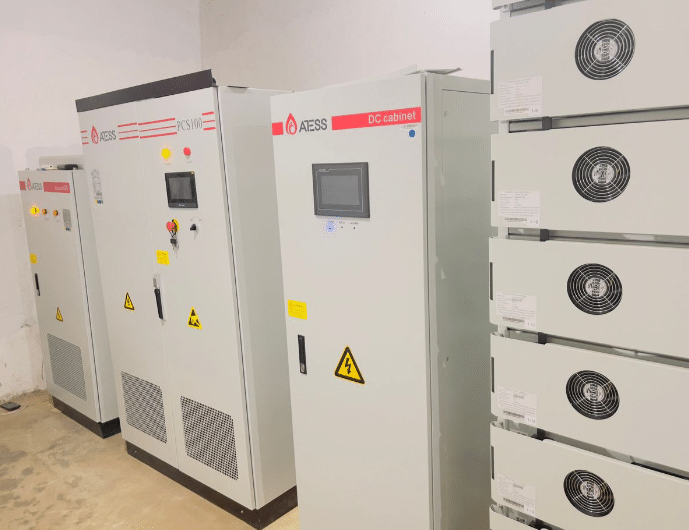
We offer a complete range of solutions, from hybrid inverters to battery systems. Our integrated design significantly reduces engineering and deployment costs.
Moreover, ATESS solar battery storage systems support multi-unit parallel operation across a wide power range, enabling flexible configuration tailored to your specific scenario.
The intelligent energy management system also supports multiple operational modes, including peak shaving, load shifting, and demand control, to help you maximize return on investment.
Wrapping-up
The decision to purchase a solar battery storage system requires a clear-eyed understanding of its comprehensive cost structure. As this article has demonstrated, the true cost extends beyond the price of batteries and panels to encompass critical elements like complex soft costs and necessary infrastructure.
By strategically implementing the core strategies, you can effectively manage the initial investment and maximize long-term economic returns while achieving greater energy independence and sustainability.
Ready to realize the full potential of solar energy for your home or business? The experts at ATESS are here to help.