

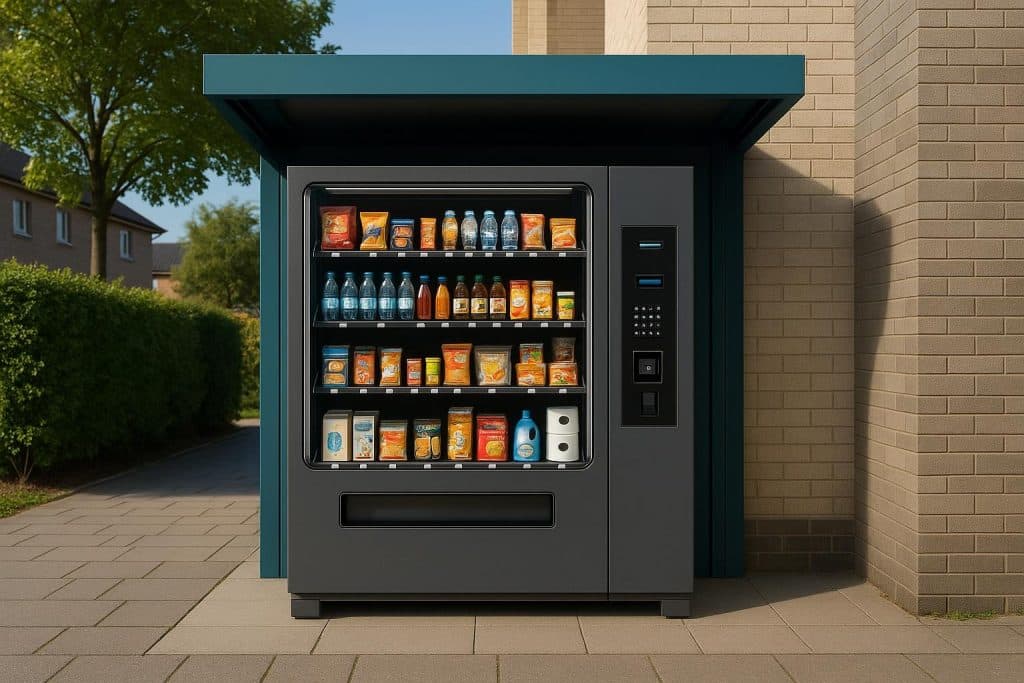
For generations, the corner shop played a quiet but essential role in American neighborhoods. It was the place for a cold drink, a quick snack, or a last-minute household item without the need for planning or travel. In much of modern U.S. living, especially in newer apartment communities and suburban-style developments, that kind of walkable convenience has largely disappeared.
Vending machines are now filling that gap. Not as outdated snack dispensers, but as modern, curated micro retail solutions that bring the everyday usefulness of the corner shop back into residential spaces.
Where the corner shop disappeared
Rising commercial rents, zoning restrictions, and the growth of big-box retail reshaped neighborhood design across the country. Many residential developments were built without street-level retail, assuming residents would drive to larger stores or rely on delivery.
This created a convenience gap. Residents can access almost anything, but not quickly, not easily, and often not without added cost or effort. That gap is exactly where modern vending has become relevant again.
Vending machines as today’s corner shop
Modern vending setups function like compact corner shops located inside the community itself. They provide immediate access to everyday items, operate around the clock, and require no staffing.
The most successful installations like Snacks vending machines focus on items residents frequently need on short notice, including drinks, quick meals, coffee, and household basics.
Instead of long aisles and checkout lines, residents get speed, predictability, and convenience exactly where they live.
Why this matters in modern U.S. housing
Many apartment communities are built in areas where convenience stores are not realistically walkable. Even in urban settings, the nearest shop might be separated by traffic, parking structures, or unsafe pedestrian routes.
On-site vending restores what those corner shops once provided:
- Immediate access to everyday essentials
- No dependency on store hours
- No driving or delivery fees
- A reliable option late at night
This makes vending especially valuable for students, young professionals, families, and residents who work nontraditional hours.
Design turned machines into neighborhood amenities
One of the biggest reasons vending works today is thoughtful design. Machines are no longer hidden in basements or service corridors. They are integrated into shared spaces and treated as part of the community experience.
Common locations include lobbies, clubhouses, laundry rooms, and shared hallways. With clean finishes, modern interfaces, and curated product mixes, vending blends naturally into residential environments.
This shift allows property teams to offer convenience without adding full retail space.
Convenience without the complexity of retail
Traditional corner shops come with staffing, leases, and operational challenges. Vending provides a practical alternative that delivers convenience with far less overhead.
For property owners and managers, modern vending partners like VMFS USA Vending Machines handle installation, inventory, and maintenance, making the solution easy to scale across properties .
The new corner shop has no counter
Residents may not consciously think about vending as a replacement for the corner shop, but the behavior is the same. They stop, grab what they need, and move on with their day.
That quiet convenience improves daily life and shapes how people feel about where they live. Over time, it becomes part of what makes a community feel complete.
A familiar idea, redesigned for modern living
Vending machines are not competing with grocery stores or large retailers. They are filling the space left behind when walkable corner shops disappeared.
In modern U.S. living, where convenience matters more than ever, vending has become the corner shop reinvented for today’s residential lifestyle.