

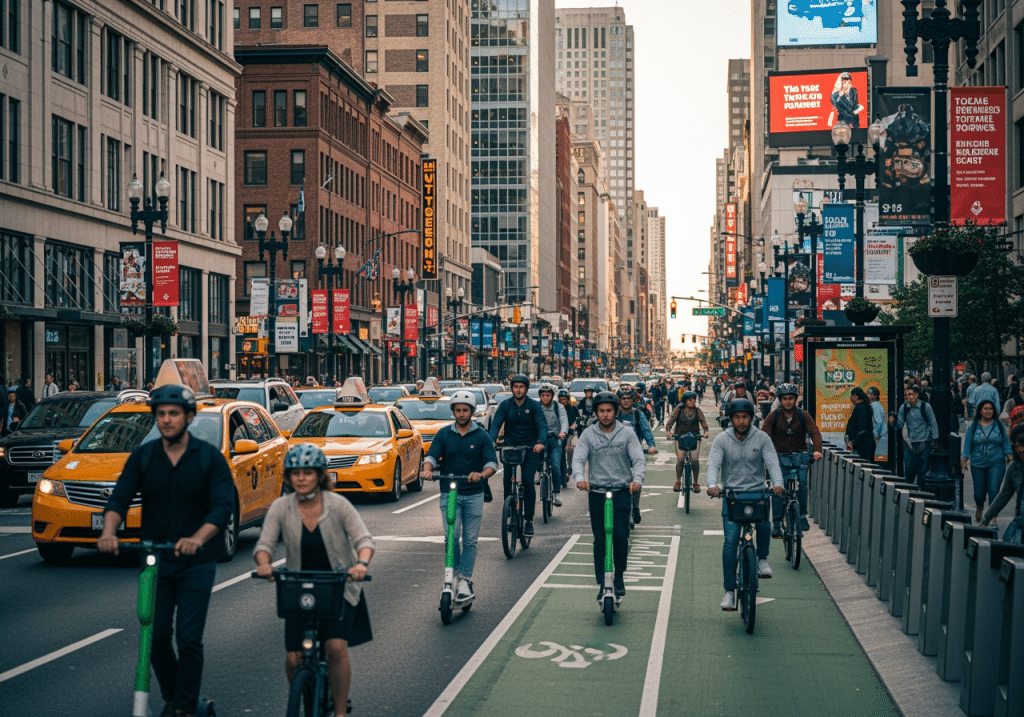
The Dawn of a New Era: What is On-Demand Transportation?
Technology has changed how we live, work, and especially how we move. Gone are the days when transport was just about fixed routes or hailing a taxi. Today, On-Demand Transportation Services offer a flexible and personal way to get around.
This modern approach to travel is changing cities and connecting communities. It offers solutions for almost every travel need.
These services are more than just simple rides. They cover a wide range of needs. From everyday commutes to premium on-demand transport for special events, they offer choices for every traveler.
In this guide, we will explore the many faces of on-demand transport. We’ll look at the technology that makes it all possible. We’ll also see how it impacts our communities and what the future holds.
On-demand transportation represents a paradigm shift in how we access mobility. At its core, it refers to transportation services that are available to users when and where they need them, typically facilitated by digital platforms. Unlike traditional public transit, which operates on fixed routes and schedules, on-demand services offer a user-centric model, prioritizing individual convenience and flexibility.
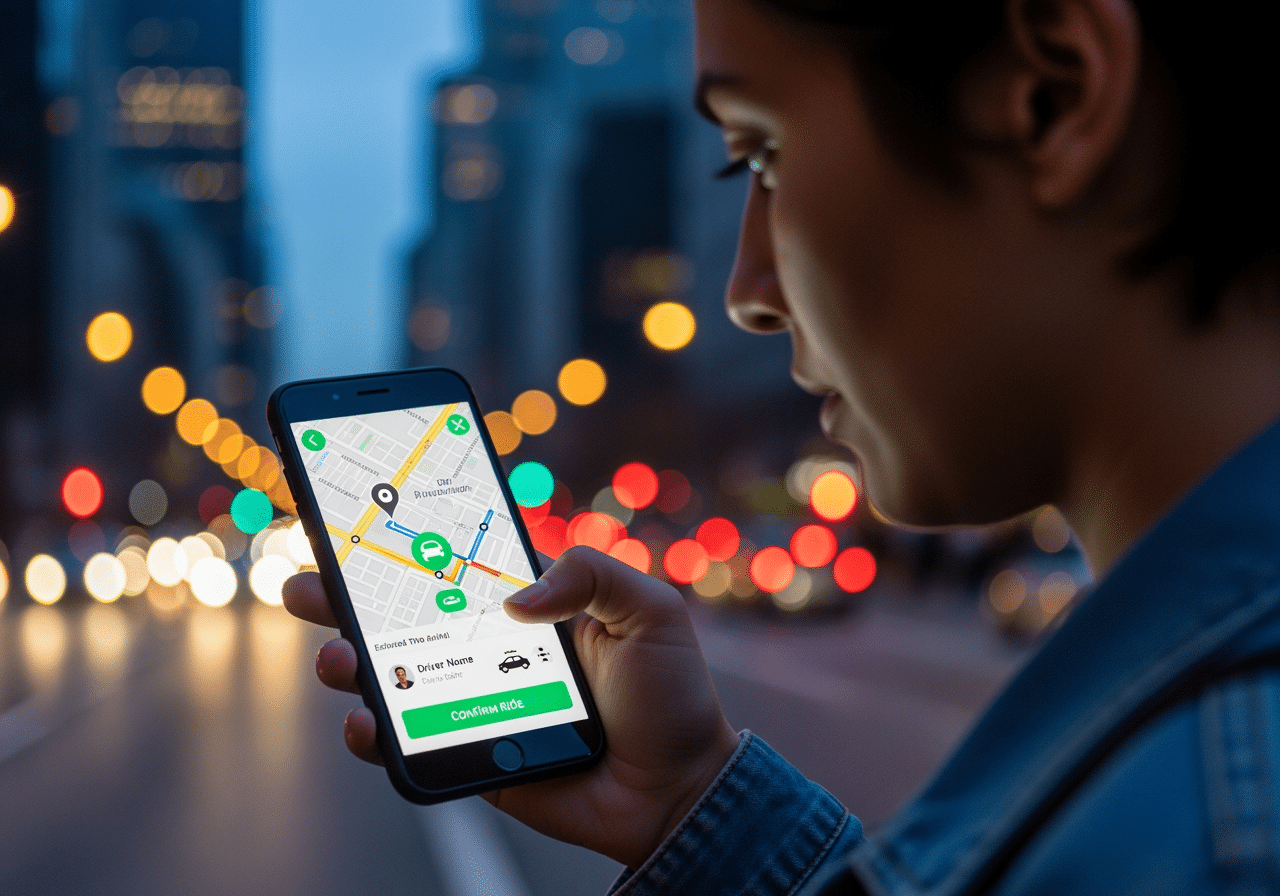
The defining characteristic of on-demand transportation is its responsiveness. Users can request a ride, a delivery, or a specialized service in real-time, often through a mobile application. This allows for immediate booking and dispatch, eliminating the need to adhere to predetermined timetables or wait at designated stops for scheduled services. The journey is custom to the user’s specific origin, destination, and timing, offering a level of personalization previously unavailable to the masses.
The contrast with traditional public transit is stark. Traditional systems, such as buses and trains, rely on fixed routes and schedules, designed to serve high-density corridors and predictable travel patterns. While efficient for mass transit, they often struggle with first-mile/last-mile connectivity, serving low-demand areas, or operating during off-peak hours. On-demand transportation, conversely, thrives in these gaps, providing dynamic routes that can adapt to fluctuating demand and diverse geographical needs. This flexibility means vehicles aren’t running empty on a fixed schedule but are dispatched efficiently based on actual user requests.
This evolution signifies a move from a supply-driven model, where transportation is provided regardless of immediate need, to a demand-driven one, where services are activated by user requests. This responsiveness is not just about convenience; it optimizes resource utilization, potentially reducing vehicle miles traveled and enhancing overall system efficiency.
To better understand the fundamental differences, consider the core distinctions:
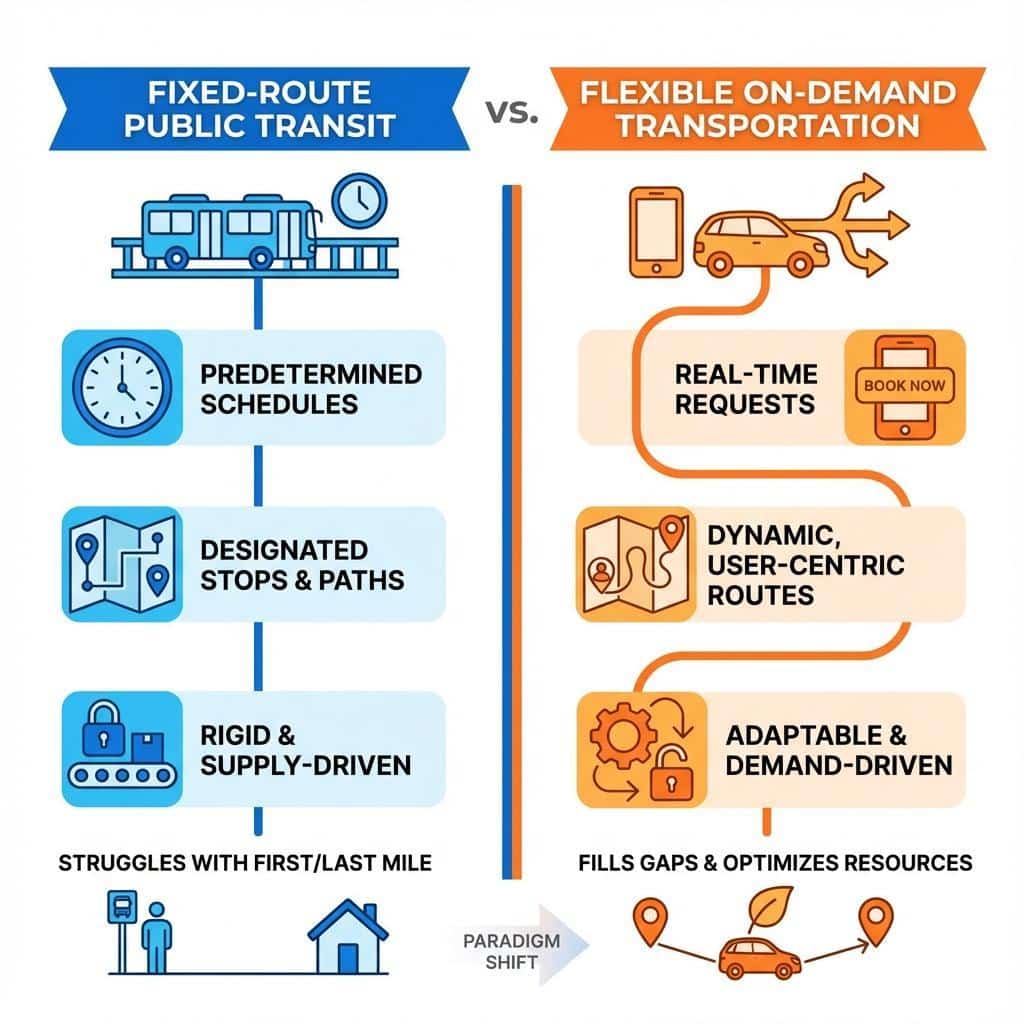
This shift empowers users with greater control over their travel experiences, making transportation more accessible and adaptable to modern lifestyles.
The Spectrum of On-Demand Mobility
The landscape of on-demand transportation is incredibly diverse, encompassing a wide array of services designed to meet different needs, from daily commutes to highly specialized journeys.
Everyday Mobility: Ride-Hailing and Microtransit
For many, the most familiar face of on-demand transportation is ride-hailing. This service allows individuals to request a private car ride through a smartphone app, connecting them with a driver for a point-to-point journey. It has revolutionized urban mobility by offering a convenient, often faster, and sometimes more affordable alternative to traditional taxis or personal car ownership. The sheer volume of these services is staggering; in Asia Pacific alone, nearly 57% of Indian consumers prefer using ridesharing services over their vehicles, highlighting a significant shift in consumer preference.
Beyond individual rides, microtransit has emerged as a crucial component of everyday on-demand mobility. Microtransit services typically involve shared shuttles or vans that operate within a defined geographic zone, offering flexible routes based on real-time demand. These services are particularly effective in addressing first-mile/last-mile challenges, connecting residents to major transit hubs or commercial centers that are not efficiently served by fixed-route public transport. They also play a vital role in serving low-density areas, where traditional bus routes might be economically unfeasible.
Public-private partnerships are increasingly common in this space, with public transit agencies collaborating with private operators to integrate microtransit into existing networks. For example, Transdev, a leading global operator, manages over 300 on-demand transportation operations worldwide, transporting 12 million passengers annually, with 30% of reservations made via smartphone. Similarly, RATP Dev operates more than 35 on-demand transportation services, handling over 1.5 million journeys each year. These partnerships often aim to improve community transport, providing flexible options for underserved populations.
A significant benefit of these services is their ability to improve accessibility for specific user groups, such as seniors and people with disabilities. Many communities now offer specialized on-demand services; for instance, in Contra Costa County, options include neighborhood shuttle services like Tri MyRide (with a fare of $2 per ride) and discounted trips on ride-hailing platforms like Uber and Lyft through programs like Go San Ramon, where the County Connection pays half the fare (up to $5). WestCAT’s Senior Dial-A-Ride service provides curb-to-curb and door-to-door service for seniors (age 65+) for a regular cash fare of $1.25, while Tri Delta Transit offers door-to-door service for eligible seniors for $2.75 per one-way trip. These initiatives demonstrate a concerted effort to leverage on-demand models to create more inclusive and equitable transportation systems.
Specialized and Luxury On-Demand Transport
While everyday on-demand services focus on mass accessibility, another segment caters to specific needs and preferences, emphasizing luxury, comfort, and a highly personalized experience. This includes pre-booked services for discerning clients, often for corporate events, wedding transportation, or other special occasions where punctuality, discretion, and an liftd travel experience are paramount.
Companies offering these services pride themselves on their diverse and carefully maintained fleets. From executive sedans and SUVs like a Cadillac Escalade ESV, perfect for corporate clients needing a mobile office or seamless airport transfers, to spacious Mercedes Sprinter vans ideal for group travel, the emphasis is on comfort and style. For those truly special moments, vintage vehicles like a 1959 Rolls Royce can add an unforgettable touch. These services go beyond mere transport, providing a comprehensive travel solution that reflects the importance of the occasion.

For instance, companies based out of areas like Dublin, Ohio, now offer Limitless Limo on-demand transport for a variety of needs, ensuring that whether it’s an important business meeting, a celebratory event, or a luxury tour, the transportation experience is impeccable. These providers often offer custom journeys, allowing clients to control their schedules, choose their preferred vehicle, and enjoy amenities that transform travel into a productive or relaxing experience. This segment of on-demand transportation is characterized by its attention to detail, professional chauffeurs, and commitment to delivering an unparalleled level of service.
Beyond Passengers: The Rise of On-Demand Roadside Services
The on-demand model isn’t limited to passenger transport. Its core principle of immediate, location-based service delivery has expanded into a variety of other essential services, changing industries that traditionally relied on scheduled appointments or lengthy wait times. One significant area of growth is in roadside assistance.
The traditional model of calling for a tow truck or repair service often involved long waits and uncertainty about arrival times. However, the on-demand paradigm has revolutionized this. When a vehicle breaks down, requires a tire change, or runs out of fuel, users can now access help with unprecedented speed and transparency. This has led to innovations like 24/7 on-demand roadside assistance, where help can be dispatched instantly via an app, providing real-time tracking of the service vehicle and estimated arrival times. This immediate and efficient emergency support offers peace of mind to drivers, knowing that assistance is just a few taps away, anytime, anywhere.
The expansion of on-demand services also extends into logistics and goods delivery. From rapid food delivery services to last-mile courier solutions for e-commerce, the ability to request and receive goods on demand has become integral to modern commerce. This model optimizes delivery routes, reduces transit times, and provides businesses and consumers with greater flexibility and control over their supply chains and purchases. The underlying technology and operational efficiency that power passenger on-demand services are seamlessly adapted to manage the complex logistics of moving goods, further cementing the on-demand model’s versatility and pervasive impact across various sectors.
The Engine Room: Technology Powering the On-Demand Revolution
The seamless experience of on-demand transportation is not magic; it’s the result of sophisticated technological infrastructure working tirelessly behind the scenes. Without these innovations, the entire concept would remain a distant dream.
The Core of On-Demand Transportation Services: Key Technologies
At the heart of every on-demand transportation service are mobile applications. These user-friendly interfaces are the primary point of interaction, allowing users to request, track, and pay for services with just a few taps. A well-designed user interface is crucial, making the process intuitive for a wide demographic, including those who might not be tech-savvy.
GPS and Geolocation technologies are fundamental. They enable precise tracking of both the user’s location and the available service vehicles. This accuracy is vital for efficient matching of demand and supply, ensuring that the nearest available driver or service provider can be dispatched swiftly. Real-time tracking further improves the user experience, allowing passengers to monitor their ride’s progress and estimated arrival time, fostering a sense of control and transparency.
Digital payment integration is another cornerstone. The ability to link credit cards, digital wallets, or even government-issued debit cards (as seen with services like GoGoGrandparent for seniors) to the app streamlines transactions, making them cashless and hassle-free. This not only adds convenience but also improves security by reducing the need for cash exchanges. The rise of on-demand services has significantly contributed to the broader cashless economy, where digital transactions are increasingly preferred.
These core technologies work in concert to create a highly efficient and responsive system, changing how we interact with transportation services.
The Role of AI and Data Analytics
Beyond the visible interface, Artificial Intelligence (AI) and data analytics are the silent powerhouses driving the intelligence and efficiency of on-demand transportation networks. AI algorithms are employed for a multitude of functions, from predicting demand to optimizing routes and personalizing user experiences.
Dynamic pricing models, for instance, are a direct application of AI and data analytics. These models analyze real-time factors such as demand, supply, traffic conditions, and even weather patterns to adjust fares, ensuring a balance between driver availability and passenger affordability. This helps manage peak demand efficiently and incentivizes drivers to be on the road when and where they are most needed.
Demand prediction algorithms use historical data, current events, and real-time inputs to forecast where and when demand for rides will spike. This allows service providers to proactively position vehicles, minimizing wait times for users and maximizing efficiency for drivers. Similarly, route optimization algorithms continuously analyze traffic, road closures, and passenger destinations to calculate the most efficient paths, reducing travel times and fuel consumption.
Personalization is another area where AI excels. By analyzing user preferences and past travel patterns, AI can offer custom suggestions, preferred routes, or even specific vehicle types, enhancing the overall customer experience.
The impact of these technologies is reflected in the market’s robust growth. The global on-demand transportation industry was valued at a substantial US$ 153.2 billion in 2022 and is estimated to grow at a Compound Annual Growth Rate (CAGR) of 7.2% from 2023 to 2031, projected to reach an impressive US$ 287.6 billion by the end of 2031. This growth is significantly fueled by the continuous integration of AI and data, alongside the widespread adoption of smartphones; nearly 5.9 billion unique mobile owners exist worldwide, equivalent to about 76% of the world’s population, providing a massive user base for these digitally-driven services.
The Societal Impact of On-Demand Transportation Services
The proliferation of on-demand transportation has far-reaching implications, reshaping urban environments, social dynamics, and individual lifestyles.
Benefits for Users and Communities
One of the most immediate and tangible benefits for users is unparalleled convenience. The ability to summon a ride or service at a moment’s notice, without owning a car or adhering to fixed schedules, simplifies daily life. This convenience extends to various aspects, from running errands to commuting to social events.
On-demand services have also dramatically improved accessibility, particularly for populations traditionally underserved by conventional transport. Seniors and people with disabilities, who might face challenges with driving or navigating fixed-route public transit, gain newfound mobility. Services like GoGoGrandparent, which have fulfilled millions of requests for hundreds of thousands of people, cater specifically to these groups, offering phone-based access to rides, grocery delivery, and other services without requiring a smartphone. Public initiatives, such as the various dial-a-ride and paratransit services in Contra Costa County, further underscore this commitment to inclusive mobility.
From an economic perspective, on-demand platforms create economic opportunities for drivers and service providers, offering flexible work arrangements. For communities, improved mobility can stimulate local economies by making businesses more accessible to customers and facilitating tourism.
The potential for sustainability is also significant. By encouraging shared rides and optimizing routes, on-demand services can reduce the number of single-occupancy vehicles on the road, leading to decreased traffic congestion, lower emissions, and more efficient use of urban space. When integrated thoughtfully, these services can align with urban planning goals, contributing to smarter, greener, and more connected cities. They can help reduce parking demand, support multimodal transit networks, and offer flexible solutions that adapt to evolving urban needs.
These benefits collectively contribute to more vibrant, accessible, and efficient communities.
Challenges and Urban Planning Considerations
Despite their numerous advantages, on-demand transportation services also present challenges and considerations for urban planners and policymakers. One prominent concern is the potential for increased traffic congestion, particularly in dense urban areas, if these services lead to a net increase in vehicle miles traveled rather than replacing private car trips or supplementing public transit.
Developing appropriate regulatory frameworks is crucial. Cities grapple with how to regulate these new services to ensure fair competition, driver welfare, passenger safety, and compliance with local transportation policies, without stifling innovation. This often involves balancing the needs of traditional taxi services with those of newer on-demand models.
Data privacy and security are ongoing concerns, given the vast amounts of personal and travel data collected by these platforms. Ensuring the responsible use and protection of this data is paramount.
Equity issues also arise. While on-demand services can improve accessibility for some, the “digital divide” can exclude others, particularly those without smartphones or reliable internet access. Furthermore, the availability and pricing of services can vary significantly between affluent and underserved neighborhoods, potentially exacerbating existing inequalities. Curb management becomes a complex issue as more vehicles vie for limited curb space for pickups, drop-offs, and idling, impacting traffic flow and pedestrian safety.
Addressing these challenges requires careful planning, collaboration between public and private sectors, and a commitment to policies that prioritize broad societal benefits over narrow commercial interests.
The Road Ahead: Future Trends in Mobility
The on-demand transportation market is dynamic, constantly evolving with technological advancements and shifting societal needs. The future promises even more integrated, intelligent, and sustainable mobility solutions.
The Future of On-Demand Transportation Services
One of the most significant trends is the move towards Mobility as a Service (MaaS). MaaS aims to integrate various forms of transportation services—from public transit and ride-hailing to bike-sharing and car-sharing—into a single, seamless platform. Users will be able to plan, book, and pay for multimodal journeys through one app, optimizing for cost, time, or environmental impact. This holistic approach seeks to reduce reliance on private car ownership by offering a compelling, convenient, and comprehensive alternative.
The integration of autonomous vehicles is ready to be a game-changer. As self-driving technology matures, we can expect to see fleets of driverless on-demand vehicles. This could dramatically reduce operational costs, potentially lowering fares and increasing service availability. The concept of Shared Automated Vehicles (SAVs), where autonomous vehicles are shared among multiple passengers or used for various on-demand services, holds immense promise for efficiency and sustainability.
Electrification of fleets is another critical trend, driven by environmental concerns and advancements in battery technology. On-demand services are increasingly adopting electric vehicles, contributing to cleaner air in urban centers and reducing carbon footprints. This shift aligns with global sustainability goals and offers a quieter, smoother ride experience.
Finally, hyper-personalization will continue to evolve. Leveraging AI and data analytics, future on-demand services will offer even more custom experiences, predicting user needs, suggesting optimal travel modes, and adapting to individual preferences in real-time. This could include personalized route suggestions based on past behavior, preferred vehicle types, or even in-car entertainment options.
These trends point towards a future where transportation is not just on-demand, but also intelligent, sustainable, and deeply integrated into our daily lives, offering unprecedented levels of convenience and choice.
Frequently Asked Questions about On-Demand Transportation
How is on-demand transportation different from calling a traditional taxi?
On-demand services are typically booked and managed through a digital app, offering features like real-time vehicle tracking, upfront pricing, and cashless payments. This provides a high degree of transparency and convenience. Traditional taxis, while also on-demand in a sense, are often hailed on the street or called via a dispatcher, with less technological integration for tracking, pricing, or payment, and often operate on meters.
Are on-demand transportation services safe to use?
Reputable on-demand providers prioritize safety through various measures, including rigorous driver background checks, continuous real-time trip monitoring via GPS, in-app safety features (like emergency buttons and ride-sharing details), and comprehensive insurance coverage for both drivers and passengers. We always recommend checking a service’s safety protocols and user reviews before use.
Can on-demand services completely replace traditional public transit?
Most experts view on-demand services as a complement to, rather than a replacement for, traditional public transit. They excel at solving the “first-mile/last-mile” problem, providing service in low-density areas, and operating during off-peak hours where fixed-route systems are less efficient. Public transit remains crucial for high-capacity, high-density routes and is often more cost-effective for mass movement. The ideal scenario involves a well-integrated multimodal network where both types of services work in harmony.
Conclusion
The evolution of on-demand transportation services marks a pivotal moment in how we perceive and use mobility. Driven by relentless technological innovation, these services have fundamentally changed our expectations for convenience, flexibility, and accessibility in travel. From the everyday ease of ride-hailing and microtransit to the custom elegance of luxury transport and the critical efficiency of roadside assistance, the on-demand model has proven its versatility and transformative power.
We’ve seen how mobile applications, GPS, AI, and data analytics form the technological backbone, enabling everything from dynamic pricing to personalized routes. These advancements have not only propelled market growth but also fostered increased connectivity within communities and empowered users with greater control over their journeys. While challenges related to congestion, regulation, and equity persist, the ongoing dialogue and collaborative efforts between public and private sectors are paving the way for more integrated and sustainable solutions.
Looking ahead, the journey towards Mobility as a Service, autonomous vehicles, and fully electric fleets promises an even more seamless and environmentally conscious future. The on-demand revolution is more than just a trend; it’s a fundamental shift towards a more responsive, efficient, and user-centric transportation ecosystem, making our cities smarter and our lives more connected.