

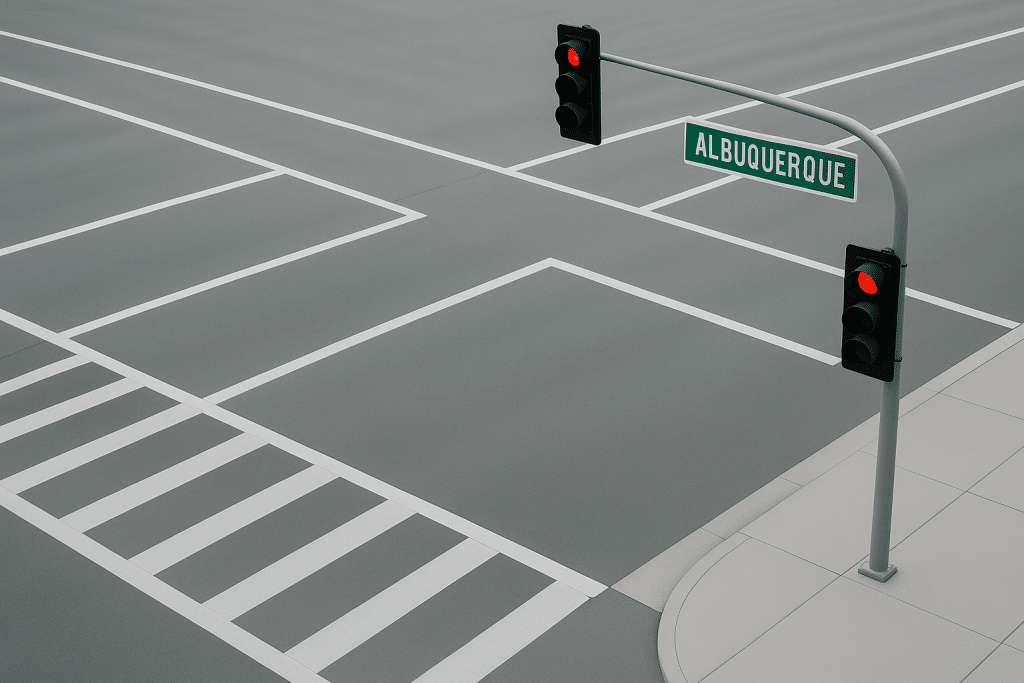
ntersections are critical points in urban traffic networks where accidents frequently occur. Understanding which intersections are most dangerous can help in addressing these safety concerns. By focusing on these areas, cities can enhance safety and efficiency at these crucial junctures. In particular, dangerous intersections such as Paseo del Norte & Coors Boulevard and Montgomery Boulevard & San Mateo Boulevard often experience crashes due to High vehicle and pedestrian volumes.
Intersections are often the focal points of traffic congestion and accidents due to their complex nature and high vehicle and pedestrian volumes. As urban areas continue to grow, the need for Albuquerque car crash lawyers becomes increasingly important. Identifying the most dangerous intersections in Albuquerque can help in reducing accidents and improving traffic flow and overall urban mobility. Collisions at Central Avenue & I-25 frequently require the guidance of experienced car crash lawyers, who help injured parties address legal complexities.
Understanding the challenges at dangerous intersections
Dangerous intersections present unique challenges due to the convergence of multiple traffic streams, including vehicles, bicycles, and pedestrians. Poor visibility, inadequate signage, and unpredictable pedestrian movements contribute to the risk of accidents. Additionally, managing the flow of traffic through these busy areas can be difficult, especially during peak hours when congestion is at its highest. Additionally, intersections like Coors Boulevard & I-40 / Central Avenue often struggle with outdated infrastructure, increasing the risk of accidents. Similarly, Osuna Road & San Mateo Boulevard / I-25 needs significant updates to improve driver visibility.
To address these challenges, it is essential to understand the specific factors that contribute to intersection-related accidents. These can include outdated infrastructure that cannot handle modern traffic demands, as well as the need for better coordination between different modes of transportation. By identifying these issues, cities can develop targeted solutions to improve safety and efficiency at these dangerous intersections. For instance, Eubank Boulevard & I-40 suffers from high congestion during peak hours, which exacerbates potential conflicts among various road users. Meanwhile, Central Avenue & Broadway Boulevard benefits from well-timed traffic signals but still experiences difficulties with pedestrian safety.
Exploring solutions for Albuquerque’s most dangerous intersections
One promising approach to improving safety at Albuquerque’s most dangerous intersections is the implementation of smart traffic lights. These systems use real-time data to adjust signal timings based on current traffic conditions, helping to reduce congestion and improve flow. By optimizing signal timings, cities can minimize the likelihood of accidents caused by sudden stops and starts. Upgrading traffic signals at Louisiana Boulevard & I-40 can significantly reduce crash risks by improving vehicular flow. Similarly, implementing advanced signal technology at Paseo del Norte & Coors Boulevard may help minimize sudden backups that cause collisions. Montgomery Boulevard & San Mateo Boulevard has also seen benefits from real-time data adjustments, which help optimize traffic flow.
Another innovative solution is the use of vehicle sensors that provide valuable insights into traffic patterns. These sensors can help cities anticipate congestion and take proactive measures to prevent it. Additionally, integrating these systems with advanced driver-assistance features in modern vehicles can further enhance safety by alerting drivers to potential hazards. Such real-time insights have proven valuable for Coors Boulevard & I-40 / Central Avenue, where adjusting traffic signals can prevent congestion from compounding. Osuna Road & San Mateo Boulevard / I-25 similarly benefits from proactive measures, reducing stop-and-go situations.
Learning from successful implementations in other cities
Cities that have successfully implemented innovative traffic solutions serve as valuable examples for Albuquerque as it looks to improve intersection safety. These cities have seen significant improvements in traffic management and safety outcomes, demonstrating the potential benefits of adopting new technologies.
By analyzing the successes of these cities, Albuquerque can gain insights into effective strategies for enhancing intersection safety. This includes understanding the importance of investing in modern infrastructure and the benefits of using data-driven approaches to traffic management. These lessons can help guide future efforts to create safer and more efficient urban environments. For example, Eubank Boulevard & I-40 has adopted modern signage solutions to address High vehicle and pedestrian volumes, while Central Avenue & Broadway Boulevard remains a focal point for further enhancements. In these cases, experienced car crash lawyers often collaborate with city authorities to reduce legal disputes following accidents.
Anticipating future trends in intersection safety
Looking ahead, emerging technologies such as autonomous vehicles and connected infrastructure hold promise for further enhancing intersection safety. As these technologies continue to develop, their integration into traffic systems could revolutionize how intersections operate, making them safer and more efficient.
By analyzing the successes of these cities, Albuquerque can gain insights into effective strategies for enhancing intersection safety. This includes understanding the importance of investing in modern infrastructure and the benefits of using data-driven approaches to traffic management. These lessons can help guide future efforts to create safer and more efficient urban environments. Additionally, improvements at Central Avenue & I-25 have shown how synchronized signals reduce travel delays. By extending similar measures to Louisiana Boulevard & I-40, officials can further lower crash risks and enhance pedestrian protections.
However, widespread adoption of these technologies will require overcoming challenges related to cost and public acceptance. By staying informed about these advancements and actively pursuing their implementation, Albuquerque can position itself to take advantage of the benefits they offer, ultimately creating safer urban environments for all road users.