

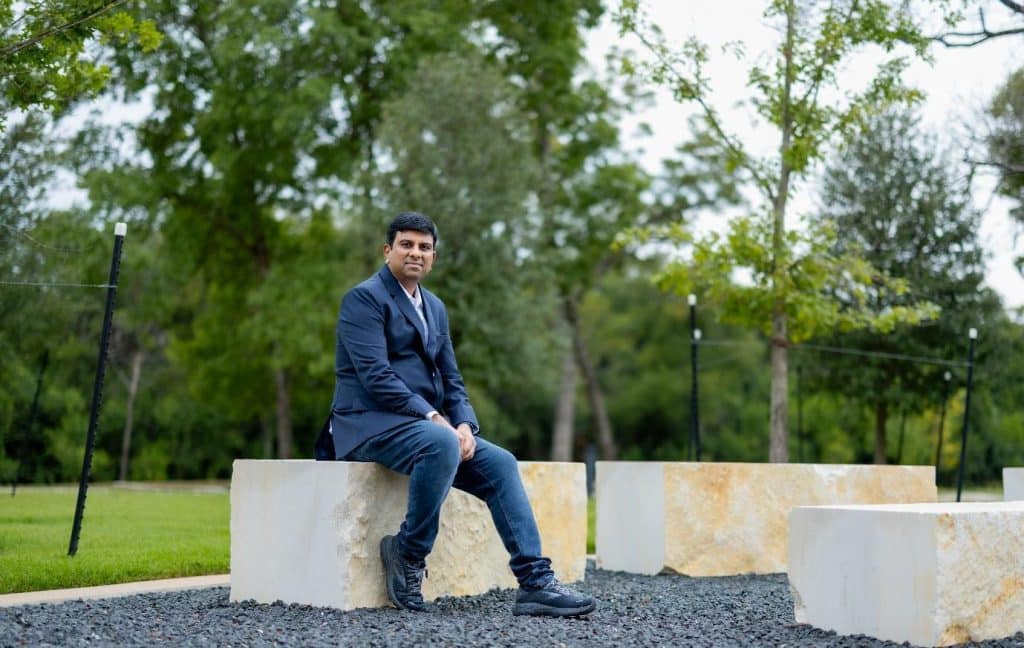
Over the last decade, medical imaging has undergone a remarkable evolution transforming from a labor-intensive, specialist driven process to one that increasingly leads the power of deep learning and artificial intelligence. Today, as healthcare providers confront growing volumes of diagnostic data from high resolution MRI scans to dynamic time lapse microscopy, the need for fast, accurate, and adaptive AI systems has never been greater.However, few systems have provided smooth end-to-end support across imaging modalities, clinical workflows, and disease types, despite the hype surrounding AI’s potential in radiology and diagnostics. Dr. Ravikanth Konda’s work has become a game changer in this critical gap.
“The real challenge in medical imaging isn’t just automating what doctors already do, it’s giving them tools that let them see what they couldn’t see before,” says Konda. “Whether it’s a rapidly dividing cell under a microscope or a hidden anomaly in an MRI, we need systems that can adapt, learn, and support real-time decision-making.”Konda, who holds a PhD in Computer Vision from the University of Melbourne, began his journey by tackling a highly specialized problem, how to track and interpret the behavior of individual human cells over time using microscopic imaging. This problem, central to understanding diseases like cancer, HIV, and autoimmune disorders, is not only scientifically complex but also practically daunting. A single lab might generate thousands of images per hour, and human analysis is both time consuming and error-prone.In collaboration with the Walter and Eliza Hall Institute (WEHI) in Australia and with funding from National ICT Australia (NICTA), Konda developed an end to end AI system capable of identifying cell phenotypes, tracking movement, and correcting itself in real time based on feedback from human experts. This breakthrough led to the creation of TrackAssist, an intelligent diagnostic tool that integrates real-time pattern recognition, neural classifiers, and a human-computer interaction framework.What made TrackAssist unique was not just its performance which exceeded 90% tracking accuracy but its design philosophy. Instead of building a black-box model, Konda embedded explainability and adaptability into the core. The system allowed pathologists to review and correct errors, and those corrections became training inputs, creating a self-healing loop of continuous learning.
“This isn’t just machine learning, it’s collaborative intelligence,” Konda explains. “By blending human insight with AI adaptability, we’re building diagnostic copilots that clinicians can trust, interact with, and even teach.”The system has already been piloted in cancer and HIV research, processing hundreds of hours of biological image data and significantly reducing the manual burden on researchers. It has demonstrated up to a fivefold increase in data processing speed, a 30% reduction in misclassification errors, and has contributed to breakthroughs in immunology and stem-cell studies.Konda’s work also extends into macro-scale imaging like MRI, where similar AI frameworks are being adapted for pattern recognition in neurological and oncological diagnostics. What ties these projects together is the central idea that AI should enhance not replace human expertise.His research has been widely published, including in IEEE journals and conferences, and his novel algorithms such as the Hybrid Multi Target Cell Tracking System and Event Indicator Function Classifier are already influencing how diagnostic imaging is taught and implemented in research labs. His recent articles on AI and predictive healthcare, anomaly detection in clinical data, and intelligent monitoring systems further reflect the growing range of applications for his work.
Reflecting on the challenges of building robust AI for medical imaging, Konda notes, “Biological data is messy, unpredictable, and constantly changing. Traditional systems break down when faced with variation. What we needed was a system that could adapt like a human learning from mistakes, responding to feedback, and handling exceptions with context.”Indeed, one of his most significant breakthroughs came in addressing the portability problem ensuring that the AI model could generalize across different imaging environments and biological conditions. To solve this, Konda engineered an AI agent that combines deep learning with feedback-driven logic, enabling it to adjust its own tracking parameters based on real-time cues from pathologists.
But perhaps the most important challenge he tackled wasn’t technical, it was human. “AI adoption in medicine won’t scale unless clinicians trust it,” he says. “And trust comes from transparency, control, and collaboration.”That’s why Konda embedded a cognitive feedback mechanism into the TrackAssist system. When the AI is uncertain, it can alert the user, ask for input, and refine its output. This has led to a system that not only performs well but is welcomed by clinical teams who feel empowered, not displaced.In order to provide a comprehensive, context rich understanding of disease, Konda envisions the future of diagnostics in multimodal AI systems that integrate genomic data, MRI, microscopy, and patient records. Additionally, he supports federated learning, which preserves privacy and innovation by enabling institutions to train AI models cooperatively without exchanging sensitive data.
He also believes in the transformative power of explainable AI. “A diagnosis is more than a number. Doctors need to understand why the AI reached a conclusion, not just what that conclusion is,” he says. “We’re working on frameworks that visualize the AI’s reasoning, highlight areas of uncertainty, and offer confidence scores alongside predictions.”Ravikanth Konda is at the vanguard of a medical diagnostics revolution where humans and machines collaborate to identify illnesses more quickly, treat them more intelligently, and ultimately save lives. His work is becoming more and more popular in academic, clinical, and commercial settings.
“Automated cell tracking is not just about efficiency, it’s about unlocking new frontiers in medicine,” he concludes. “By combining AI with cutting edge microscopy and imaging, we’re moving from reactive care to proactive, precision-driven healthcare. And in that future, AI won’t just be a tool it will be a teammate.”