

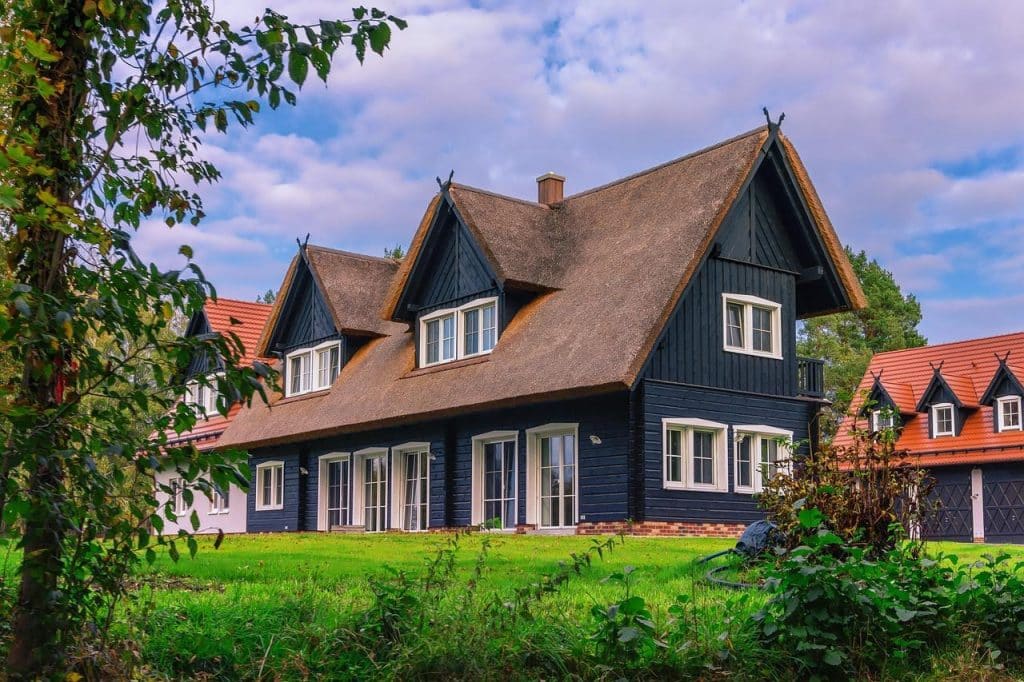
The exterior is the most permanent visual statement a home makes, and unlike interiors, it has to work from every angle, in every season, and for years at a time. A rushed or trend-driven approach often results in a home that feels confused rather than cohesive. An impressive exterior design starts with clarity, not samples.
A successful plan comes from understanding how a house presents itself as a whole. Shape, scale, light, and visual hierarchy matter long before colors or finishes enter the conversation. When those fundamentals are handled well, the exterior feels intentional and balanced instead of assembled piece by piece. The goal is a design that reads clearly from the street and still holds up under closer inspection.
Overall Shape
Every exterior design decision should begin with the home’s overall shape and visual flow. Before focusing on details, it helps to step back and look at the silhouette. Does the house feel grounded or top-heavy? Does the eye move smoothly across it, or does it get stuck in awkward places? These questions reveal whether the design feels settled or unsettled at first glance.
The roof plays a critical role in this flow, even if it is not the most obvious feature. Its pitch, direction, and relationship to the walls below define how the home sits visually. Bringing a roofing contractor into the conversation helps align structural realities with design goals. Once the roof supports the intended shape instead of contradicting it, the exterior immediately feels more resolved.
Lines and Proportion
Exterior design relies heavily on lines, even though most people do not consciously notice them. Horizontal lines create calm and width, while vertical lines suggest height and formality. Angles introduce energy and movement. Understanding how these lines interact helps guide the eye in a controlled way rather than letting it wander randomly.
Proportion determines whether those lines feel balanced. Windows, doors, trim breaks, and wall sections need to relate to one another in size and placement. Oversized elements without visual support can feel overpowering, while undersized features may disappear entirely. Thoughtful proportion gives the exterior a sense of order that feels natural rather than forced.
Design Fit
A strong exterior design feels appropriate to both the house and its surroundings. Style works best when it grows out of what already exists instead of trying to overwrite it. Structural cues such as roof form, layout, and massing often point toward styles that will feel comfortable on the home.
Context matters just as much. Neighboring homes, landscape, and setting influence how a design reads. A choice that looks striking in isolation may feel out of place once applied.
Light and Shadow
Sunlight changes how surfaces look throughout the day, revealing depth, texture, and contrast. Flat designs often feel lifeless because they give the light nothing to work with. Thoughtful variation creates interest without relying on excess detail.
Shadow adds definition. Overhangs, trim depth, and material changes create natural shadow lines that give the exterior dimension. Considering light helps avoid designs that look good in photos but fall flat in real conditions.
Visual Focus
Every exterior benefits from a clear sense of emphasis. Deciding what should draw attention helps everything else fall into place. Entry points, main elevations, or architectural features often serve as visual anchors that guide the viewer’s eye.
Keeping secondary elements understated prevents visual overload. When too many features compete for attention, the exterior loses clarity. A restrained approach creates hierarchy and allows the most important elements to stand out naturally.
Contrast Balance
Contrast gives an exterior its edge, yet restraint keeps it elegant. Thoughtful contrast helps certain features stand out without overwhelming the whole. This could mean a subtle shift in color, a change in texture, or a material transition that marks an important architectural moment. Used well, contrast guides the eye with purpose.
Consistency keeps that contrast from feeling chaotic. Repeating a limited set of tones or materials across elevations creates visual stability.
Top-to-Bottom Flow
An exterior should read as one continuous composition from the top down. Rooflines, upper walls, mid-sections, and foundations all need to feel connected. Abrupt transitions often make a home feel visually chopped up, even if individual elements look appealing on their own.
Creating flow involves aligning materials, proportions, and breaks so the eye moves smoothly downward. Vertical elements can tie levels together, while horizontal details can ground the structure.
Complexity Level
Visual complexity determines how busy or calm an exterior feels. Some homes benefit from layered detail, while others feel stronger with a simpler approach. The key lies in choosing a level of complexity that matches the home’s size, structure, and surroundings.
Too many competing elements dilute the impact. Too few can leave the exterior feeling unfinished. A measured level of detail allows the design to feel intentional and confident. Complexity should support the architecture, not distract from it.
Curb Appeal Feel
Curb appeal works best as an emotional response rather than a checklist. The question is not whether the home has every desirable feature, but whether it feels inviting and well considered from the street. First impressions form quickly, often based on balance, clarity, and proportion rather than individual upgrades.
Designing for feeling encourages better decision-making. Instead of asking what to add, it helps to ask what to emphasize or simplify. A strong emotional response often comes from restraint and clarity rather than excess.
Long-Term Intent
Exterior design decisions carry long lifespans. Planning with longevity in mind helps avoid choices that feel dated too quickly. Timeless design relies on proportion, material harmony, and thoughtful composition rather than short-term trends.
Considering how the exterior will age influences material and color choices. Finishes that weather gracefully and designs that maintain relevance over time provide lasting satisfaction. A forward-thinking plan helps the home feel intentional well into the future.
Interior Reflection
The exterior often hints at how the home functions inside. Window placement, entry emphasis, and overall form can suggest openness, privacy, or gathering spaces. When exterior cues align with interior use, the home feels honest and coherent.
This alignment strengthens the connection between inside and out. Visitors gain a sense of what to expect before entering, and residents experience a smoother transition between spaces.
Choosing an exterior design is ultimately an exercise in clarity. When shape, proportion, light, and emphasis work together, the home presents itself with confidence rather than noise. Thoughtful decisions made early create an exterior that feels intentional from every angle and holds up over time.