

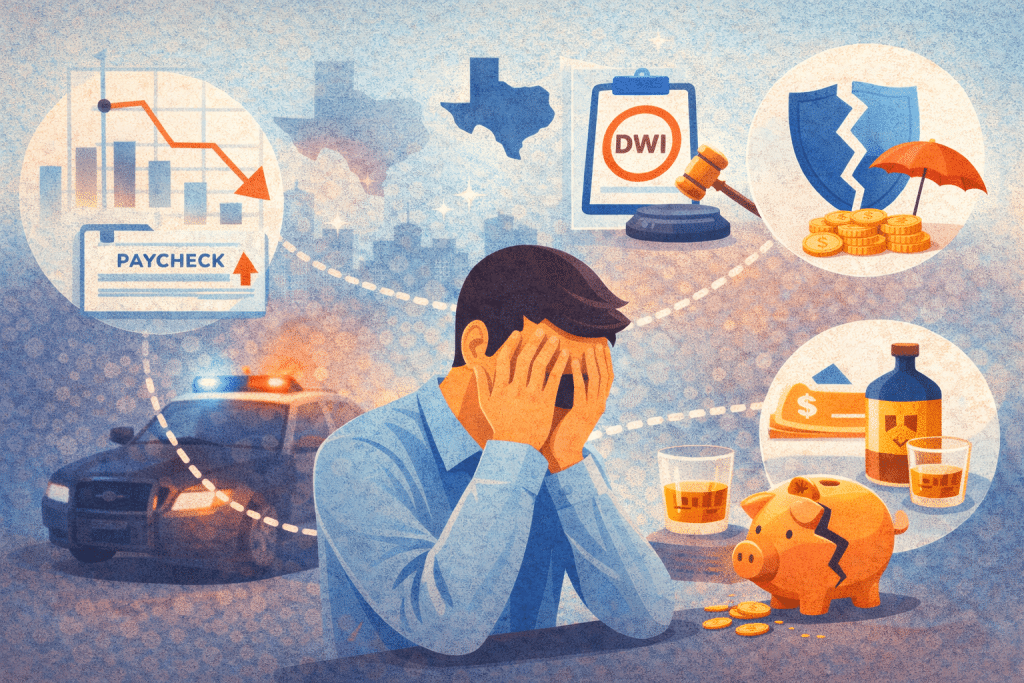
A DWI in Texas can quickly turn into a financial crisis for working families who depend on their wages and personal transportation. Some people think the cost is just a fine or a court date. In reality, expenses begin almost immediately and continue to grow for months or even years.
If you have any questions or receive a DWI charge, call a trial-tested defense attorney in Texas.
What Is Considered a DWI in Texas?
In Texas, a person can be charged with Driving While Intoxicated if alcohol, drugs, or a combination of substances impair their ability to drive safely. A DWI is commonly associated with a blood alcohol concentration of 0.08% or higher, but that is not the only standard.
A DWI does not involve alcohol alone. Prescription medications, illegal drugs, or mixed substances can also lead to a charge if they affect driving ability.
The real cost of a DWI in Texas
The real cost of a DWI is rarely one bill. It is a chain reaction. Court fines, license problems, insurance increases, and missed work often pile up at the same time.
The exact costs of a DWI vary from case to case; however, the following elements are usually consistent across the state of Texas.
Texas DWI Fines and Fees
One of the first economic consequences of a DWI is court fines. In Texas, the amount depends on the offense level.
- First DWI offense:
A first-time DWI without aggravating circumstances is usually charged as a Class B misdemeanor. Texas law allows criminal fines of up to $2,000. In addition, the state may impose a separate traffic fine of up to $3,000 for a first conviction within a 36-month period. - Higher alcohol level:
When a person’s blood alcohol concentration is 0.15 or higher, the charge may increase to a Class A misdemeanor. This raises the maximum criminal fine to $4,000. The state traffic fine may also increase to as much as $6,000, significantly raising the total cost. - Second or subsequent DWI offenses:
A second DWI within 36 months usually comes with higher criminal fines and a state traffic fine of up to $4,500.
- Third DWI offense:
A third DWI is typically charged as a felony in Texas. Criminal fines can reach up to $10,000. Felony charges also tend to involve longer court processes and more expensive compliance requirements. - Aggravating circumstances, such as a minor in the vehicle:
Driving while impaired with a child passenger is treated as a serious offense in Texas. This situation can lead to felony charges, higher fines, and additional penalties.
Missed Work and Lost Income: When Court Dates Cost You Paychecks
Beyond fines, many people underestimate how much income they lose simply by complying with the legal process. Arrest procedures, court appearances, required education programs, and administrative appointments often take place during work hours. For hourly workers, this can mean unpaid time off.
These hidden losses are a major part of the DWI in Texas financial consequences felt by working families.
License Suspension Costs: Paying for Life Without a Car
In Texas, a driver’s license can be suspended after a DWI, even before the criminal case is resolved. This happens through a separate process called Administrative License Revocation (ALR). A license may be subject to suspension if the driver refuses a breath or blood test, or if the test shows a blood alcohol concentration at or above the legal limit.
After an arrest, drivers generally have 15 days to request an ALR hearing. If no hearing is requested, the suspension usually takes effect automatically, regardless of whether the DWI case is still pending.
Once a suspension begins, the financial impact quickly reaches beyond the driver. Families must adjust to life without reliable transportation, which often means paying for rides, using delivery services, rearranging childcare, or missing work shifts. This is where the Texas DWI budget impact becomes very real.
DWI in Texas license suspension costs:
When the suspension period ends, Texas also requires a $125 license reinstatement fee, confirmed by the Department of Public Safety.
Insurance Increases: Higher Monthly Bills for Years
Insurance costs are one of the longest-lasting financial consequences of a DWI. After a conviction, many Texas drivers see their auto insurance premiums rise sharply, with increases often exceeding 50 percent depending on driving history and insurer.
This Texas DWI insurance increase affects monthly budgets long after court fines are paid.
SR-22 in Texas after a DWI: The Hidden Insurance Requirement
Many drivers are also required to carry an SR-22 after a DWI-related suspension. An SR-22 is not insurance itself. It is a certificate filed by an insurance company proving that the driver meets Texas financial responsibility requirements.
Job Risk and Career Impact: How a DWI Affects Your Job In Texas
A DWI can also affect employment beyond missed workdays. Some employers conduct background checks or have strict hiring and driving policies, especially in regulated or safety-sensitive industries.
This is why the DWI in Texas financial consequences often extend far beyond the courtroom.
Why Acting Early Can Reduce Financial Damage
After a DWI arrest, time matters. Acting early can help prevent automatic license suspension, reduce fines, and limit long-term costs that affect work and family life.
Ceja Law Firm helps clients fight DWI charges by addressing the case from the very beginning. Led by former prosecutor Jose Ceja, the firm focuses on strategies that may reduce or avoid some of the most damaging outcomes, including:
- Challenge the legality and procedure of the traffic stop and arrest
- Review breath and blood test procedures for errors
- Fight license suspension through the ALR process
- Seek reduced charges, dismissals, or alternatives when possible
- Assist with record clearing after eligible cases
Taking action early after a DWI in Texas and working with experienced defense counsel can make a real difference in protecting your job, your license, and your family budget.