

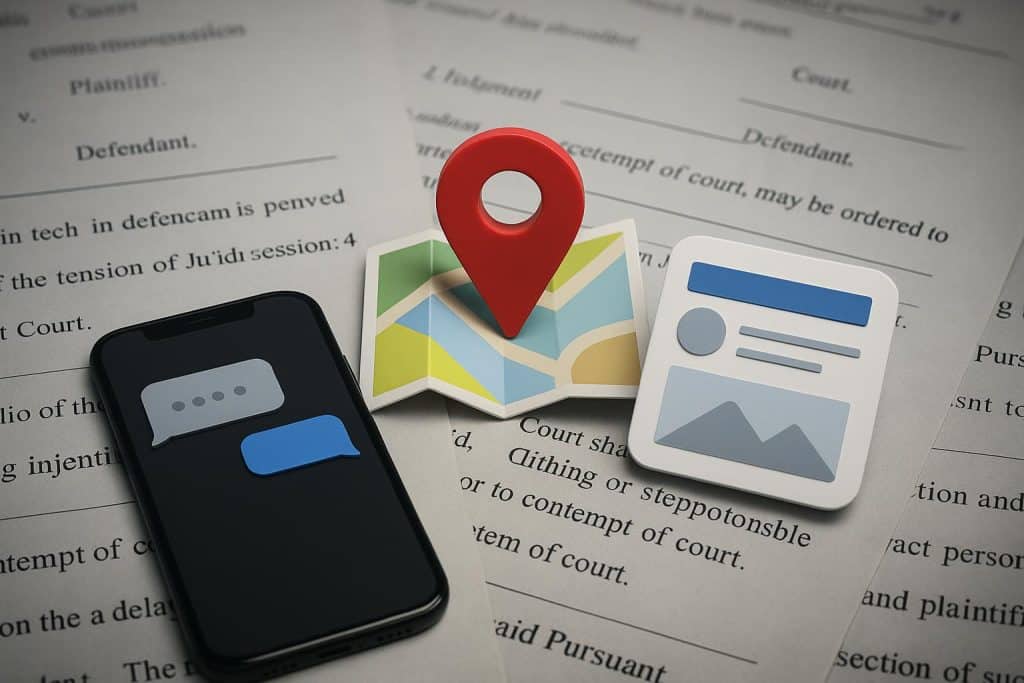
In today’s hyper-connected world, nearly every move we make is recorded digitally. Whether it’s a casual text message, a GPS ping, or a social media check-in, this digital trail can become highly relevant—especially when it comes to criminal investigations and courtroom proceedings. As law enforcement agencies and prosecutors increasingly rely on technology, the scope and sophistication of electronic evidence have grown immensely.
But, when a collision can lead to charges? This article explores how various forms of digital data—often gathered from everyday devices—are making their way into the courtroom, and what that means for both the accused and those seeking justice.
Text Messages: From Private Chats to Public Evidence
Text message evidence has become one of the most common forms of electronic proof in both criminal and civil litigation. While many people assume their personal messages are private, the reality is that these digital exchanges are often accessible with a warrant or subpoena. Prosecutors use them to establish timelines, confirm relationships, or even reveal motive and intent. Defense attorneys, meanwhile, scrutinize them for inconsistencies or violations in how the data was obtained.
In fact, when paired with timestamps and metadata, texts can be powerful corroborators—or contradictors—of testimony.
Location Data: When Your Phone Tells a Story
Few things are as revealing as your location. GPS and cell-site records can pinpoint where a person was at a specific time, often down to a few feet. This data can be pivotal in both exonerating suspects and establishing presence at a crime scene.
The admissibility of location data in court hinges on accuracy and proper collection methods. Cell tower triangulation and app-based GPS logs are frequently used to trace movements, especially in cases involving vehicle accidents or alleged criminal activity. However, like any digital evidence, it must be carefully validated to avoid misinterpretation.
Social Media Evidence: Posts, Comments, and Photos
Social media has evolved from a place of connection to a minefield of digital breadcrumbs. A public Instagram story or a tweet can place someone at a location, show intent, or provide context that’s otherwise difficult to uncover. Courts have increasingly accepted social media evidence, provided it meets authenticity standards and maintains a clear chain of custody.
It’s not just direct posts that matter—comments, likes, and shared content can also offer insight into someone’s mindset or associations.
Phone Data in Criminal Cases: More Than Just Calls
Beyond texts and GPS, mobile phones hold a wealth of forensic information: app usage logs, browsing history, deleted files, and even biometric unlock attempts. In criminal cases, phone data is often at the heart of digital investigations. For example, in crash investigations, an unlocked phone might reveal if the driver was texting moments before the impact.
That’s where digital forensics and chain of custody protocols become crucial. Without a verifiable and uninterrupted record of how the data was accessed and stored, the evidence can be challenged—or thrown out entirely.
Vehicle “Black Box” Data (EDR): What to Expect
Much like airplanes, modern vehicles are equipped with Event Data Recorders (EDRs), also known as vehicle “black box” data. These devices track a range of driving metrics—speed, brake use, seatbelt status, and acceleration in the moments before and after a crash.
This kind of electronic evidence plays a central role in determining what can shift a crash into a criminal matter. For instance, if EDR data shows the driver was going 30 mph over the speed limit with no attempt to brake, prosecutors may pursue charges beyond a simple traffic violation.
How Digital Evidence Shapes Legal Strategy
The growing prevalence of digital evidence means both prosecutors and defense teams must be digitally literate. Attorneys today are not just legal strategists—they’re often expected to understand the nuances of metadata, encryption, and forensic extraction methods. It’s not enough to know what data exists; they must grasp how it was acquired, who handled it, and whether it can be trusted. The reliability of electronic evidence can hinge on subtle technical factors, such as whether a phone was accessed using proper protocols or if timestamps were altered during data extraction.
This is especially critical with complex forensic sources, like encrypted messaging apps or cloud-based storage, where even a small error in handling can cast doubt on the evidence’s integrity. In some cases, improperly managed digital evidence has led to key charges being dropped or entire cases being dismissed.
That’s why the digital forensics and chain of custody process isn’t just a bureaucratic step—it’s the foundation of admissibility. Whether it’s social media evidence scraped from public profiles or phone data in criminal cases pulled from a seized device, every transfer, analysis, and storage action must be thoroughly logged. If any link in that chain is broken or undocumented, the evidence risks being excluded from court entirely.
Next Steps
What to do if you’re under investigation? It’s critical to understand how quickly digital evidence can be used to build a case. While deletion might seem like a quick fix, it rarely erases the digital footprint. More importantly, attempts to tamper with electronic evidence can result in additional charges.
Knowing your rights—and seeking legal counsel early—can help ensure your digital data is interpreted in the proper legal context. Defense strategies often hinge on challenging the way electronic evidence was obtained or questioning its reliability.
Digital evidence isn’t going away—it’s only becoming more central to how justice is pursued. From texts to GPS logs to vehicle black boxes, technology is reshaping the way cases are built and defended. Understanding how this data is collected, analyzed, and introduced in court can help both individuals and legal teams navigate an increasingly complex legal environment.
If you’re involved in a legal matter where digital evidence is at play, staying informed about how electronic data works in the courtroom could be more than helpful—it could be pivotal.