

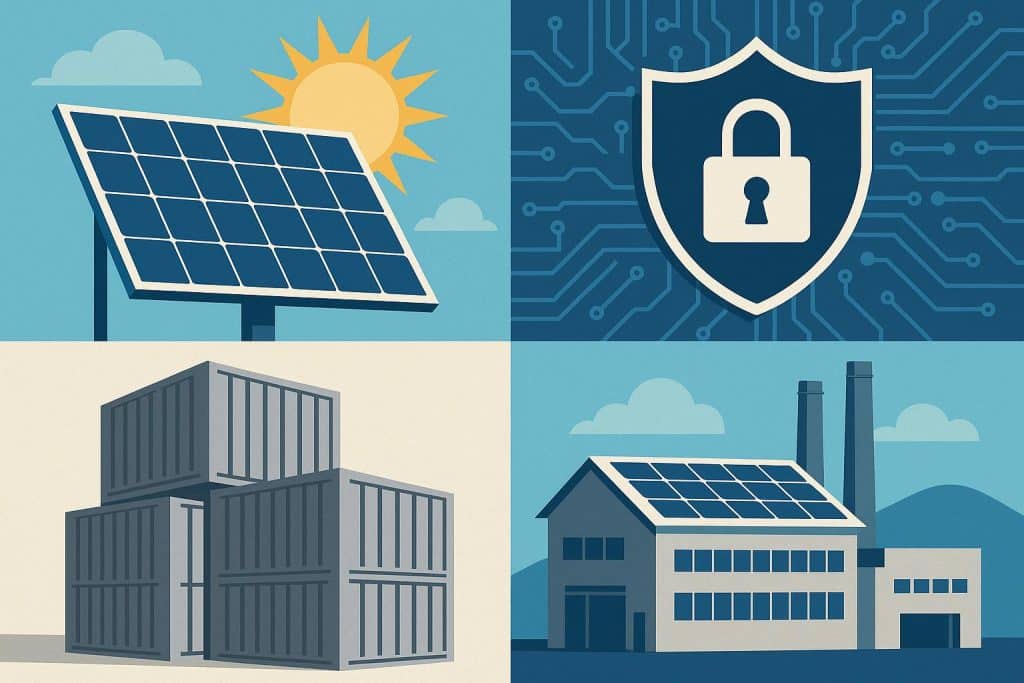
The global solar industry is undergoing a fundamental transformation driven not only by climate goals but also by geopolitical, trade, and national security considerations. One of the most significant developments shaping this transition is the push toward FEOC-compliant solar manufacturing.
As governments implement stricter rules to reduce dependence on high-risk supply chains, FEOC compliance has become a central requirement for solar manufacturers, project developers, and investors worldwide.
What Is FEOC and Why Does It Matter in Solar Manufacturing
Generally used in government policies, particularly in the United States, foreign entity of concern (FEOC) identifies companies possibly causing economic, security, or strategic risks owing to ownership, control, or influence by particular foreign government.
FEOC-compliant solar manufacturing in the context of solar manufacture is making solar components such polysilicon, wafers, cells, and modules without need on materials, technology, or ownership connected to FEOC-designated entities.
Strict supply chain traceability, clear ownership structures, and verified sourcing of raw materials usually define compliance.
This change mirrors a larger trend toward safe and reliable supply chains of clean energy, therefore assuring that the fast growth of solar energy does not generate fresh strategic weaknesses.
Policy Drivers Behind FEOC-Compliant Solar Manufacturing
Several government initiatives have accelerated the adoption of FEOC compliance requirements. These policies aim to align clean energy deployment with national security, labor standards, and trade fairness.
Key policy drivers include:
- Clean energy tax credits linked to FEOC compliance
- Restrictions on solar components sourced from FEOC entities
- Incentives for non-FEOC supply chain development
- Mandatory disclosure and traceability requirements
By tying financial incentives and market access to FEOC-compliant solar manufacturing, governments are reshaping how and where solar products are made.
Importance of FEOC Compliance for the Solar Industry
1. Strengthening Energy Security
Reliance on concentrated or geopolitically sensitive supply chains exposes the solar industry to disruptions. FEOC-compliant solar manufacturing reduces this risk by diversifying production and sourcing across trusted regions.
This diversification ensures long-term availability of critical components and protects solar deployment targets from unexpected trade or political conflicts.
2. Enhancing Supply Chain Transparency
FEOC compliance requires manufacturers to establish end-to-end traceability, from raw materials to finished solar modules. This transparency improves accountability and helps eliminate unethical practices such as forced labor or opaque subcontracting.
As a result, FEOC-compliant solar manufacturing supports responsible sourcing and aligns with global environmental, social, and governance (ESG) standards.
3. Improving Investor and Lender Confidence
Investors and financial institutions increasingly assess geopolitical and compliance risks when funding solar projects. FEOC-compliant supply chains reduce regulatory uncertainty and improve project bankability.
Solar projects using FEOC-compliant modules are more likely to qualify for government incentives, long-term power purchase agreements, and institutional financing.
Key Components of FEOC-Compliant Solar Manufacturing
Meeting FEOC standards necessitates coordinated adjustments all along the solar value chain:
Making Polysilicon
Among the most thoroughly investigated aspects of FEOC compliance is the procurement of polysilicon. Manufacturers must guarantee polysilicon is produced in facilities free from FEOC control or ownership and supported by attested labor and environmental standards.
Cell and Wafer Manufacturing
Normally, manufacturing of FEOC-compliant wafers and cells calls for constructing new buildings or expanding capacity in well-respected areas. These measures help to reduce reliance on historical supply networks related to FEOC corporations.
Module Building and Integration
Including upstream components that satisfy FEOC criteria is crucial even though module design alone falls short of perfect compliance. Often, validation of conformity calls for full records and outside audits.
Challenges in Transitioning to FEOC-Compliant Solar Manufacturing
Despite its advantages, FEOC-compliant solar manufacturing faces several challenges:
- Higher Initial Costs: Non-FEOC supply chains may have higher production costs during early scaling phases.
- Limited Upstream Capacity: Global non-FEOC polysilicon and wafer capacities are still in development.
- Complex Compliance Verification: Tracking multi-tier supply chains requires robust data systems and audits.
- Short-Term Supply Constraints: Rapid policy changes can temporarily tighten module availability.
However, these challenges are widely viewed as transitional and are expected to ease as investment and manufacturing capacity grow.
Opportunities Created by FEOC-Compliant Solar Manufacturing
The move toward FEOC compliance offers great opportunities for the worldwide solar market:
Fresh manufacturing centers in North America, Europe, India, and Southeast Asia
Job generation in advanced manufacturing and materials processing
Technological progress in efficiency and automation
Stability in long-run expense by means of varied supply chains
Early FEOC-compliant solar manufacturing investments by manufacturers put them in prime position to become favored suppliers in restricted markets.
Role of Technology and Digital Traceability
Advanced digital tools play a critical role in enabling FEOC compliance. Technologies such as blockchain-based traceability, AI-driven supplier risk analysis, and automated compliance reporting enable manufacturers to efficiently meet regulatory requirements.
These systems not only support FEOC-compliant solar manufacturing but also improve overall operational efficiency and quality control.
Future Outlook for FEOC-Compliant Solar Manufacturing
FEOC compliance is expected to become a permanent feature of the global solar industry rather than a temporary policy trend. As more countries adopt similar frameworks, solar manufacturers will increasingly design supply chains that prioritize transparency, diversification, and geopolitical resilience.
Over time, economies of scale and technological improvements will narrow cost differences, making FEOC-compliant solar manufacturing competitive with traditional supply models. This evolution will support faster, safer, and more sustainable solar deployment worldwide.
Final Words
FEOC-compliant solar manufacturing represents a critical intersection of clean energy growth, national security, and responsible supply chain management.
By reducing reliance on high-risk entities and promoting transparent sourcing, FEOC compliance strengthens the foundation of the global solar industry.
As governments, investors, and consumers demand higher standards, FEOC-compliant manufacturing will play a decisive role in shaping a resilient and trustworthy renewable energy future.