

It can be surprisingly frustrating to discover that your package is traveling on the same truck or plane as someone else’s order, yet arrives days later. From the outside, it feels unfair. If both parcels are on the same vehicle, why does one move ahead while the other seems to wait? The answer lies in a set of quiet decisions carriers make long before the vehicle doors are closed, decisions that shape the journey of every package inside.
A Morning Truck That Tells Two Different Stories
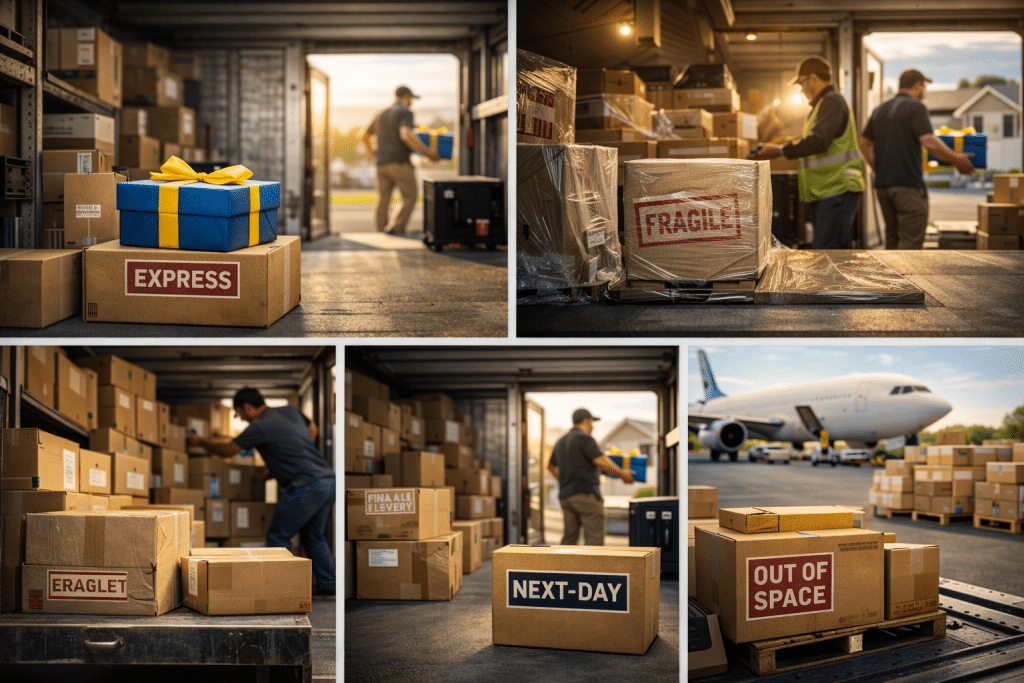
Consider a delivery truck leaving a regional hub early in the morning. Inside are hundreds of packages headed to the same city. Among them is a birthday gift ordered with express shipping and a pair of shoes sent with a standard service. Even though both parcels share the same truck, they are not treated equally. The express shipment is loaded last, placed near the door, and scheduled for one of the first stops. The standard package is loaded earlier, buried deeper inside, and assigned to a later delivery window. By noon, one recipient is celebrating, while the other is still refreshing a tracking page.
How Priority Is Decided Before Loading Begins
Priority is not assigned at random, and it is not decided by drivers on the road. It starts the moment a shipping label is created. Delivery speed, service level, destination sequence, and handling requirements are embedded into the shipment’s data. By the time packages reach a loading dock, software has already determined which ones must be accessible first and which can wait. The physical arrangement inside the vehicle reflects these digital decisions, even though tracking updates rarely explain them directly.
A Holiday Rush That Forces Hard Choices
During peak shopping seasons, priority decisions become even more visible. Imagine a cargo plane preparing to depart during a holiday surge. Space is limited, and demand is overwhelming. The aircraft is filled with a mix of next-day electronics, time-sensitive medical supplies, and standard retail orders. Not every package makes it onto that flight. High-priority shipments are loaded first, while lower-priority parcels remain at the facility to wait for the next available transport. From a tracking perspective, those waiting packages may appear stuck, even though they were simply outpaced by shipments with tighter commitments.
When Fragile Items Move Slower on Purpose
Priority does not always mean speed. A fragile item, such as a glass product or sensitive electronic device, may be given special placement to minimize movement and handling. This can result in fewer scans and longer pauses between updates, which might look like delay. In reality, the package is being protected rather than neglected. These shipments often move more cautiously within the same vehicle, trading speed for safety, a decision that only becomes clear when the item arrives intact.
Why Destination Order Matters More Than Distance
Two packages traveling the same distance can experience very different timelines depending on where they fall within a route. A truck serving multiple neighborhoods follows a strict unloading sequence designed for efficiency. Packages for the final stops are loaded first and delivered last, regardless of how close those destinations may be. This is why a neighbor’s delivery can arrive hours earlier, even when your addresses are only blocks apart. Tracking reflects this pattern indirectly, through timing rather than explanation.
The Case of the Plane That Didn’t Land Where You Expected
Air transport adds another layer to priority decisions. A package may be loaded onto a plane that does not fly directly to its final destination but instead stops at a hub for redistribution. Priority shipments are often transferred immediately to connecting flights, while others wait for consolidation. From the recipient’s perspective, the package seems to pause at an airport, even though it has technically completed one leg of its journey. These moments often cause confusion unless tracking information is viewed in a broader context.
Why Tracking Alone Can Feel Misleading
Tracking updates show movement, but they rarely show intent. A package marked “in transit” could be racing toward a deadline or waiting patiently behind higher-priority shipments. This is why following shipments across different carriers and stages provides better context. When users rely on broader tracking views, such as those available through paquetexpress tracking, patterns become clearer. Packages that move slower are not lost or forgotten; they are simply aligned with a different promise.
Priority Is About Promises, Not Preference
It is easy to assume that priority reflects favoritism, but carriers operate on commitments, not emotions. A shipment moves first because it was promised to move first. Another waits because its delivery window allows it. These rules apply consistently across millions of packages every day. Understanding this helps explain why tracking timelines differ, even within the same vehicle, and why patience is sometimes the most accurate response.
How These Decisions Shape What You Experience
By the time a package reaches your doorstep, dozens of priority decisions have already shaped its journey. They influenced which vehicle it entered, where it was placed, when it was unloaded, and how often it was scanned. Tracking offers a glimpse into this process, but not the full reasoning behind it. Once you understand that delivery is a carefully choreographed flow rather than a simple queue, those differences begin to make sense.
Seeing Movement as a System, Not a Race
Packages sharing the same vehicle are part of a system designed to balance speed, safety, and efficiency. Some move first, others follow, and all are guided by promises made at the moment of shipment. When recipients view tracking through this lens, delays feel less personal and progress feels more predictable. Priority inside a vehicle is not about winning or losing. It is about making sure every package arrives when it was meant to, even if the journey looks uneven along the way.