

What digital marketing actually means today
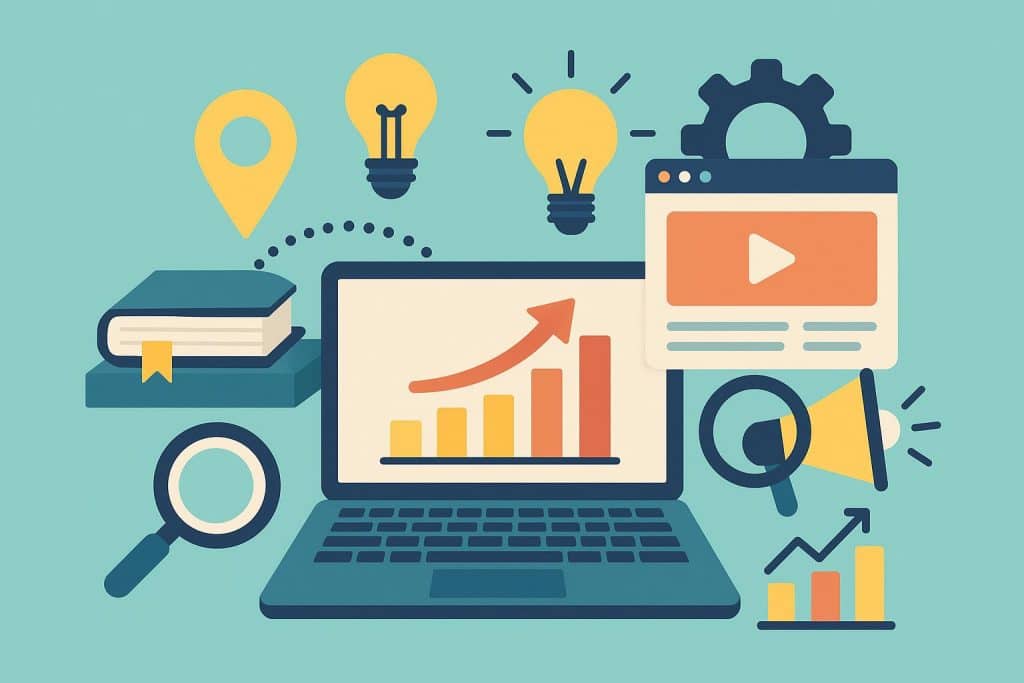
Digital marketing involves promoting products or services through online channels such as search engines, websites, social platforms, email systems, and paid advertising, with success measured through analytics and user behavior data. It connects content creation, audience targeting, campaign execution, and performance analysis into one measurable system that supports sustainable business growth.
Why digital marketing matters for businesses now
Digital marketing matters because customers research online before buying and expect fast, relevant information. Businesses that communicate clearly online gain trust earlier and compete more effectively than those relying on offline channels alone. It also enables precise targeting, lower wasted spending, and real-time performance tracking.
Who should learn digital marketing and why
Digital marketing is valuable for entrepreneurs, freelancers, employees, and career changers because it provides transferable skills across industries. It allows people to create measurable value without depending on physical location or traditional job structures. This flexibility makes it suitable for long-term careers and independent income paths.
How long does it take to learn digital marketing
Learning speed depends on focus and consistent practice. Most learners understand core concepts within two to three months, gain confidence through real projects in about six months, and reach professional readiness within a year.
Typical learning timeline
| Learning Stage | Primary Focus | Expected Time |
| Fundamentals | Core concepts and channels | 4–6 weeks |
| Application | Real tools and projects | 8–12 weeks |
| Specialization | One main skill area | 3–6 months |
| Optimization | Testing and improvement | Ongoing |
How to learn digital marketing step by step
Digital marketing is learned best through structured progression combined with practical application. Starting with fundamentals and applying them consistently prevents confusion and builds skill through experience rather than theory alone.
A reliable approach includes:
- Learning core channels first
- Choosing one specialization early
- Applying skills on real tasks
- Reviewing results using analytics
- Improving through expert guidance
This process turns knowledge into capability.
Where to learn digital marketing online
The best learning platform depends on structure, instructor quality, update frequency, and practical depth. Some platforms focus on credentials, others on execution, while a few offer complete learning systems.
Understanding these differences helps learners choose efficiently.
Ranking the top platforms to learn digital marketing
Udemy
Udemy offers a large selection of digital marketing courses created by independent instructors. Course quality varies, making it best for learning specific tools rather than following a guided learning path.
Cinecourse
Cinecourse focuses on expert-led, full-length courses and curated bundles. Many courses include lifetime access, allowing learners to revisit content as strategies and platforms evolve.
A strong example is the brightonSEO & MeasureFest October 2025 Video Bundle, which provides access to over 150 expert talks for $29.99, a fraction of typical conference costs. This makes Cinecourse a strong option for learners seeking depth and long-term value.
LinkedIn Learning
LinkedIn Learning provides professionally produced courses aligned with workplace skills. The content is consistent but less focused on advanced experimentation or rapid growth strategies.
Coursera
Coursera partners with universities and companies to offer structured certificates. Programs emphasize theory and credentials, which support resumes but often require additional practice for hands-on mastery.
HubSpot Academy
HubSpot Academy offers free courses covering inbound marketing, CRM usage, content strategy, and email workflows. It is accurate and beginner-friendly, though limited in advanced paid advertising topics.
YouTube
YouTube provides extensive free content, but quality and accuracy vary widely. It works best as a supplementary resource rather than a primary learning system.
Building a portfolio and completing a capstone project
A digital marketing portfolio demonstrates real ability more clearly than certificates alone. Employers and clients want to see how strategies were planned, executed, and improved based on measurable outcomes. A single, well-documented capstone project often carries more weight than multiple completed courses.
Mentorship, community, and cohort-based learning
Mentorship and learning communities accelerate progress by providing feedback and accountability. Learners who receive guidance from experienced practitioners tend to apply concepts more accurately and avoid common mistakes. Community support also improves consistency and confidence.
Certification and employer perception
Certificates help validate baseline knowledge and pass screening filters, but they rarely secure roles on their own. Employers prioritize demonstrated skill, problem-solving ability, and real project experience. Certificates are most effective when paired with a strong portfolio.
Hands-on tools and real-world software training
Courses that include real tools prepare learners for immediate application. Familiarity with analytics dashboards, advertising managers, SEO platforms, and email systems reduces onboarding time and improves professional readiness. Tool-based practice bridges the gap between theory and execution.
Cost, pricing models, and return on investment
Learning platforms vary widely in cost and value. Courses offering lifetime access, updates, and expert instruction often provide stronger long-term returns than short subscriptions. A well-chosen course can quickly recover its cost through better job opportunities or freelance work.
Common mistakes digital marketing learners make
Many learners delay progress by switching platforms too often, consuming content without applying it, or ignoring performance data. These habits create knowledge without capability. Consistent execution matters more than volume.
Final takeaway: choosing the right learning path
So, Where is the best place to learn digital marketing? The best choice offers structure, expert instruction, practical experience, and fair pricing. Platforms like Cinecourse deliver system-based learning with long-term access, while HubSpot, Coursera, LinkedIn Learning, Udemy, and YouTube each serve specific purposes depending on goals and budgets. When learners commit to one path, apply skills consistently, and measure results honestly, digital marketing becomes a reliable and career-building skill.