

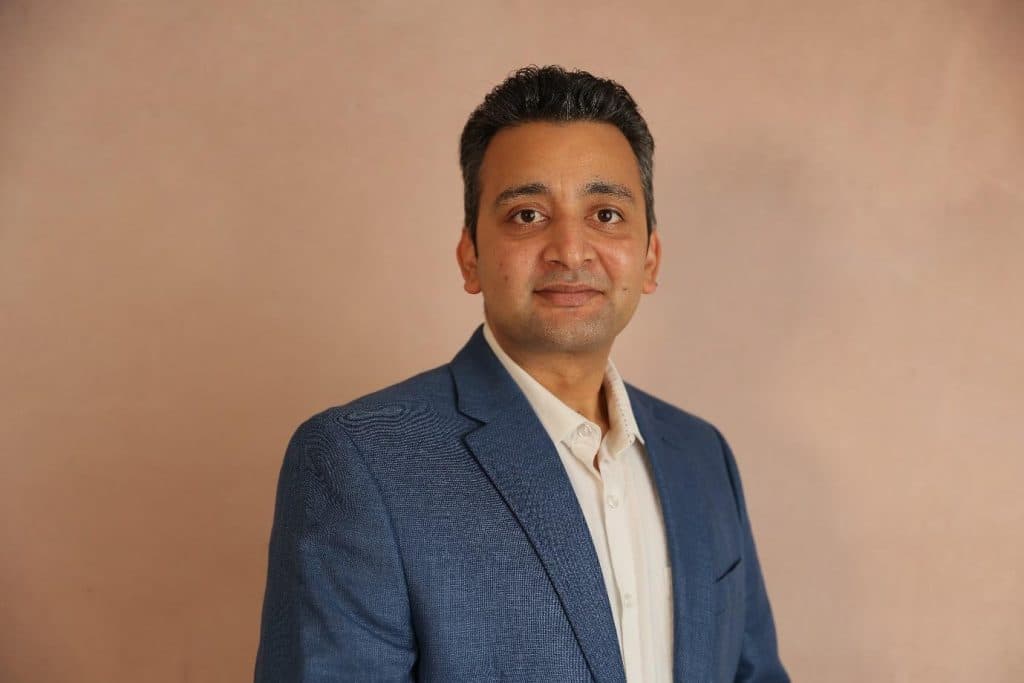
Change is a source of progress, but one that is risky. Software can readily increase at a rate exceeding the extent to which organizations can safely handle it as organizations grow. New releases should be innovative enough and reliable at the same time, but the margin of error is decreasing with each deployment. All over the industry, engineers are now thinking of how technology can change, recuperate and enhance itself by itself. Speed is not the only reason to consider artificial intelligence and automation: it forms the basis of systems that uphold trust. Here is where AI is being met with change, and Abhishek Sharma is spearheading a silent change.
As Senior Engineering Manager, Abhishek has been developing systems over the years that are constantly upgraded without affecting reliability. The simplicity of his belief is what has resulted in him automating quality assurance and developing feedback-based delivery processes: growth should never undermine trust. With his organization growing to become multi-product ecosystem and serving millions of users, the previous methods of distributing software could no longer be as reliable. Abhishek had realised that scale required a different way, one in which data intelligence is employed and self-correcting architectures are utilised to ensure consistency in all product experiences.
“We realized reliability isn’t a checkpoint; it’s a living system that learns from change,” he shares. This vision was leading his team in coming up with a delivery platform that could detect anomalies, self-adjust and learn outcomes. The system identifies early warning signs and isolates components that are affected and restores order, in most cases, before customers can realize that there is an issue in the system. What was created was not just the creation of operational efficiency but the birth of self-healing software.
Some of the most important initiatives spearheaded by the strategist were the creation of the platform that allows the rollout to be done in phases and the rollback to be automated. Even small problems, in massive-scale settings, can spread out to thousands of users. His team built data-driven guardrails in each release pipe, enabling real-time decision-making like pausing or reworking changes based on initial metrics pointing at risk. In months, the impact on customers was seen to have decreased, customer support incidents decreased drastically, and team stability in releases increased. Monitoring of product additions, which previously applied to approximately 40% of deployments in service, was extended to more than 90%, demonstrating the worth of systematic automation.
The pilgrimage was planned to be as organized as possible, both logistically and technologically. Resolving to agree on a common set of quality metrics involved the cooperation of engineering, data, product, and experience functions. Both of them had their own operational objectives, and bringing them together under a single model of reliability required time. The platform by itself needed to support all types of products and deployment models without being stiff or too complicated. The expert and his team were flexible about this and designed a modular system that could constantly adapt to the needs of the business.
This success also translated to his advancements in his career since he became an upper management employee whose leadership roles were tripled. However, he was still keen on building teams that would resolve reliability problems on a systemic level at scale. The systems they developed are today in a continuous process of exploration into proactive reliability, whereby they generate the engineering systems that are anticipatory, as opposed to reactive. Looking forward, the innovator envisions a future where change itself becomes self-regulating.
In the future, the expert sees an opportunity in which change itself will be self-regulating. Convergence of AI, observability, and automation will render the traditional incident response models irrelevant. Not only will systems identify and anticipate errors, but they will autonomously adjust their rollout plans, learn through deployment trends and dynamically adjust thresholds.
In the new paradigm, reliability is a by-product of the intelligence but not by intervention. With the world in a frenzied technological struggle, the view of professionals like Abhishek Sharma presents a flawless reality, having no intention of abolishing change, but of updating our connection to the change. When software learns to sense and heal itself, organizations will feel free to be innovative. This combination of human understanding and machine intelligence will be the beginning of really self healing enterprise platforms, resilient in nature, and assured in all the changes they bring in the years to come.