

The supply chain in recent years has undergone a conversion of traditional automation to augmentation, where artificial intelligence augments and does not replace human expertise. Businesses that operate in complex global networks are turning to AI not only to be efficient but to develop systems that evolve in real-time, enabling planners, engineers, and decision-makers to perform their functions at a rapid and accurate speed. This development is indicative of a larger trend: supply chains are not fixed logistical systems any more, but dynamic ecosystems that combine human intuition with machine intelligence.
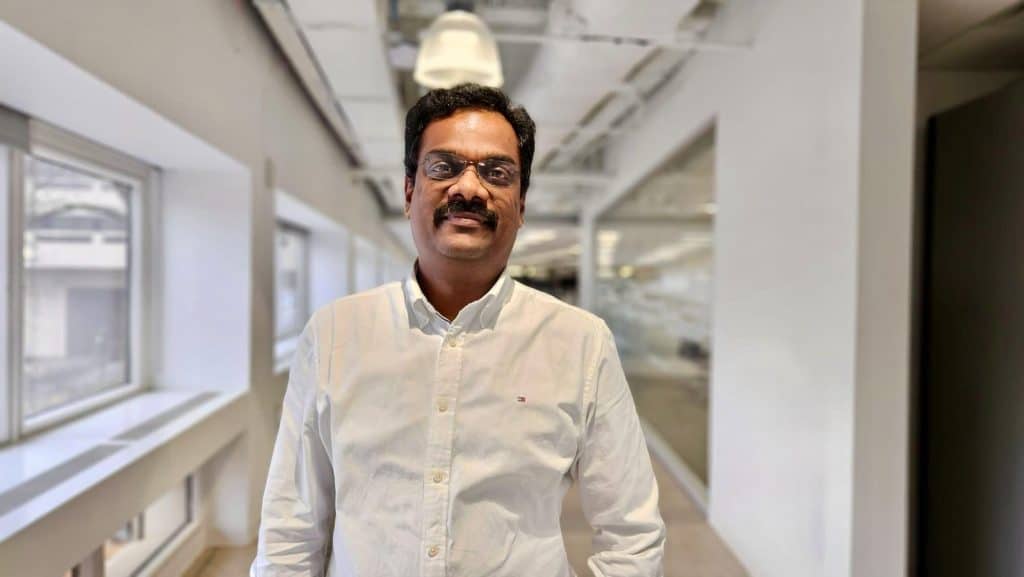
Amid this changing environment, one professional who has been central to these advances is Sivasubramanian Kalaiselvan. He has built his career on redesigning conventional, siloed supply chains into connected, AI-driven ecosystems. His greatest impact was guiding a multi-year project to integrate disparate data sources, including the point-of-sale transactions in stores and supplier telemetry, into one cognitive data fabric. Such underlying data layer allowed the implementation of the sophisticated machine learning models throughout the operations.
The results were clear: the organization emerged as a high performer in Gartner’s industry benchmarks, adopting AI-driven forecasting and planning at more than twice the rate of peers. His progression to Senior Supply Chain Architect came as recognition of reorienting strategy away from automation and toward augmentation, fundamentally reshaping the roles of supply chain professionals.
The effects of this change were significant. The team, led by the expert, substituted reports with actionable intelligence in order to transform the retrospective analysis into proactive decision-making. Demand-drift analysis is now also simplified by a generative AI copilot that can, in just a few minutes, sometimes simplify work previously required in up to a week. These improvements served to provide a 30% reduction in safety stock by using a more accurate forecast, as well as a 25% productivity increase in planning teams that would now have the ability to work on exceptions instead of doing the same task over and over again. As he explained in one of his presentations, “AI does not eliminate judgment; it elevates it by freeing us from the mechanics of repetitive work.”
It is based on these foundations that two projects specifically demonstrate how ideas became reality. The former was the invention of a thinking digital twin- a living virtual duplicate of the supply chain. In contrast to the previous non-dynamical models, it allowed planners to be free to experiment, to run stress tests and what-if scenarios, like a distribution hub failure, without exposing the business to real-life risks. The second project, the Global Unified Demand Forecasting Engine, was aimed at the disintegration of long data silos in the future. Combining sales data of over 3,000 stores with external cues such as competitor launches and economic changes allowed it to gain a better understanding of short-cycle products, which has never been an easy category to predict with certainty.
These initiatives generated quantifiable results, including an 18-point gain in forecast accuracy (MAPE), a 15% increase in inventory turns, and a 10-point improvement in on-time, in-full deliveries. AI-based quality control also cut product defect rates by a quarter, strengthening both operational efficiency and customer satisfaction. Achieving these outcomes was not without challenges. Perhaps the most difficult was overcoming resistance within the workforce, where some initially viewed computer intelligence models as black boxes. Kalaiselvan addressed this by designing what he calls a “glass box” system, an AI interface that explained in plain language the factors influencing a forecast. This openness, coupled with committed upskilling activities, served to transform the sense of scepticism into advocacy and also made sure that people were at the centre of decision-making.
Besides working on the projects, the innovator has done research for the community at large. Published in the IJAIDSML Journal in 2025, his article titled “Revolutionizing Forecasting with Unified Demand Forecasting of Supply Chain Retail by SAP Customer Activity Repository using Machine Learning, Predictive Analysis, and AI” outlined the way in which ML can be incorporated into SAP cores to improve retail demand forecasting. He also authored another widely referenced publication in IJAIDR titled “Unlocking Savings with Omnichannel Article Availability and Sourcing for an Intelligent Supply Chain”, which analyzed strategies to optimize omnichannel environments by aligning sourcing and availability with AI-driven intelligence. His observations have also been featured in industry press discussing the future of omnichannel supply chain architectures.
Looking ahead, the future of supply chains lies in greater collaboration between people and intelligent systems. As AI evolves from decision-support to autonomous agents, the role of supply chain professionals will shift toward guiding, governing, and designing these ecosystems. Success will depend on striking the right balance between human judgment and machine intelligence, ensuring that technology enhances the way work is imagined and carried out in the years to come.