


Opening Perspectives Mapping the Spectrum of Senior Living Options
Demographic shifts and the value of communities for seniors 55 plus
America’s population of older adults is expanding faster than any previous generation, reshaping expectations around retirement and housing options for seniors. Consequently, demand rises for communities for seniors 55+ that blend low-maintenance lifestyles, social engagement, and accessible design standards for elders. Studies confirm that residents in a dedicated seniors living community report stronger feelings of belonging and safety compared with peers who remain isolated. Furthermore, age-restricted neighborhoods support aging in place strategies because amenities, transportation, and healthcare sit within walkable distances. Experts at Senior Living Facilities note that proactive exploration of senior housing early often results in smoother transitions and healthier outcomes.
Growing cultural diversity influences how elders define community, and operators respond by embracing culturally inclusive senior communities and pet-friendly senior living options. Multilingual staff, diverse cuisine, and faith-specific programming now appear alongside traditional card clubs and craft groups. In turn, social engagement for older adults broadens, encouraging friendships across backgrounds while safeguarding identity. Additionally, technology-enabled senior safety tools, including wearable alert devices and telehealth services in senior living, help residents feel secure. Therefore, demographic shifts encourage providers to design accommodations that respect heritage, foster connection, and integrate supportive innovations.
Independent living community benefits sustaining autonomy and social engagement for older adults
Independent living communities prioritize autonomy while removing burdensome chores such as landscaping or major repairs. Residents enjoy private senior apartment rentals or cottages, yet they share lounges, libraries, and fitness studios that promote daily interaction. Regular outings, continuing education classes, and volunteer opportunities nurture purpose and lifelong curiosity. Moreover, scheduled transportation eases access to medical appointments and local entertainment, strengthening safety nets without limiting freedom. Consequently, independent living community benefits appeal to active retirees who value flexibility and companionship.
Financial predictability also attracts many retirees to rental housing for seniors offered by independent complexes. Monthly fees typically bundle utilities, maintenance, and dining packages, simplifying budgeting for people monitoring fixed incomes. Because properties often stand near civic centers, residents maintain ties with broader neighborhoods while enjoying secure, age-friendly environments. Additionally, green certified senior residences feature energy-efficient systems that reduce environmental impact and lower costs. Altogether, independent living serves as a springboard toward healthy longevity by balancing privacy and purposeful engagement.
Assisted living plans decoding activities of daily living support within a senior living facility
When tasks like dressing, bathing, or medication management become challenging, assisted living plans step in with personalized care. Within each senior living facility, trained aides provide activities of daily living support while encouraging maximum resident independence. Staffing ratios, nurse availability, and dining flexibility vary, so evaluating assisted living plans involves careful review of service tiers and associated fees. Families should examine rehabilitation services in long-term care wings, fall-prevention protocols, and nutrition programs in assisted living to ensure holistic wellbeing. Thoughtful assessment minimizes surprises and reinforces dignity.
Because needs rarely remain static, successful assisted living locations embrace adaptive care models. Residents may enter with minimal aid then gradually transition toward higher support without relocating. This stability diminishes emotional stress, safeguards social networks, and streamlines medical record continuity. Furthermore, community-wide events, arts therapy, and caregiver respite and support resources create an ecosystem where both residents and families thrive. Therefore, choosing a senior living facility with flexible programs fosters confidence and peace of mind.
Continuum of care in senior housing integrating rehabilitation and long term care facility services
A continuum of care in senior housing links independent living, assisted living, skilled nursing, and memory support on a single campus. Such integrated design lets residents shift levels of assistance as health conditions evolve, avoiding disruptive moves across town. Skilled nursing homes for the elderly offer advanced wound care, intravenous therapies, and rehabilitation services after surgery or illness. Seamless transfers within the same campus encourage coordinated medical oversight, reducing hospital readmissions and improving outcomes. Consequently, families appreciate predictable cost structures and consistent caregiving philosophies.
Many continuing care retirement communities operate under life-care contracts that guarantee placement in a long-term care facility when medically necessary. Evaluating senior living contracts requires attention to entrance fees, refund formulas, and continuity clauses that govern future obligations. Prospective residents should also confirm access to certified therapists, telemedicine partnerships, and on-site pharmacies. Understanding these provisions equips consumers to weigh peace of mind against financial commitments and to compare senior living facilities near you options fairly.
Memory care program essentials from dementia friendly design to technology enabled safety
Memory care neighborhoods specialize in supporting individuals living with Alzheimer’s disease or other dementias. Purposeful layouts use circular hallways, contrasting colors, and clear sight lines to reduce confusion and wandering. Secure courtyards enable safe outdoor activity, while sensory gardens stimulate memories through familiar scents. Staff undergo dementia-specific training to deliver evidence-based communication techniques and gentle redirection strategies. These dementia-friendly environmental design features elevate quality of life and lessen agitation.
Technology now enhances memory care program essentials through discreet tracking systems and cognitive engagement platforms. Motion sensors detect unusual nighttime activity, alerting caregivers before accidents occur. Digital reminiscence tools prompt storytelling sessions, fostering emotional connections between residents and families. Evaluating assisted living plans that include memory care should involve observing staff interaction styles, reviewing care ratios, and confirming therapy offerings such as music or art. Ultimately, a comprehensive approach balances resident safety with dignity and meaningful engagement.
Financial planning insights comparing senior apartment rental considerations Medicare and Medicaid coverage
Financing senior housing demands early, informed discussions that align resources with anticipated care trajectories. Monthly senior apartment rental considerations differ from entrance fees at continuing care communities, so consumers must project both short- and long-term expenditures. Veterans benefits, long-term care insurance, and reverse mortgages may supplement personal savings. However, Medicare and Medicaid eligibility insights remain critical because they influence affordability of skilled nursing or specialized care later. Understanding coverage triggers and asset thresholds prevents unpleasant surprises.
Families often consult certified financial planners or elder law attorneys to structure assets strategically. Some states offer Medicaid waiver programs that fund in-home services, delaying moves into institutional care. Evaluating household budgets against inflation, prescription costs, and potential caregiver hiring helps craft resilient plans. Additionally, tax deductions for medical expenses and age-related credits can offset out-of-pocket spending. Thus, comprehensive senior housing financial planning supports dignified choices and long-term security.
Urban versus suburban senior living near you accessible design green certified residences and transit links
Urban senior living near provides walkable access to cultural venues, specialty healthcare, and multigenerational neighborhoods. High-rise senior housing integrates elevators, grab bars, and zero-step entrances that meet accessible design standards for elders. Proximity to public transit minimizes driving reliance and supports spontaneous outings. Furthermore, mixed-use developments enable residents to attend community colleges, farmers markets, and art galleries without lengthy commutes. Such engagement combats isolation and nurtures civic participation.
Conversely, suburban senior living in the state of offers spacious grounds, tranquil surroundings, and plentiful parking for visiting relatives. Many campuses incorporate green certified senior residences with solar panels, native landscaping, and stormwater management features. Walking trails and community gardens invite outdoor activity while preserving privacy. Bus shuttles to supermarkets and libraries bridge transportation gaps where public transit is scarce. Therefore, weighing urban versus suburban settings involves balancing stimulation, serenity, environmental values, and logistical convenience.
Wellness programs adaptive fitness and intergenerational engagement elevating quality of life
Modern wellness programs for seniors extend beyond blood pressure checks to encompass physical, emotional, and spiritual dimensions. Adaptive fitness for seniors 55+ might include chair yoga, aquatic aerobics, and resistance training monitored by certified instructors. These offerings boost strength, reduce fall risk, and enhance cognitive function. Nutrition programs in assisted living complement exercise routines through chef-prepared meals that honor dietary preferences and medical restrictions. Together, holistic interventions support healthy aging trajectories.
Intergenerational senior communities invite students, young professionals, and families to collaborate on art projects, gardening, or mentorship initiatives. Such exchanges dismantle stereotypes, transfer knowledge, and spark joy. Residents also benefit from creative therapies, mindfulness workshops, and community choir rehearsals that stimulate neuroplasticity. Evaluating wellness programming during a tour can reveal a community’s commitment to lifelong growth. Ultimately, thoughtfully designed initiatives elevate quality of life and nurture purpose at every age.
Confident Commitments Turning Insights into the Right Senior Living Fit
Using an assisted living locator to evaluate senior living near me versus destination moves
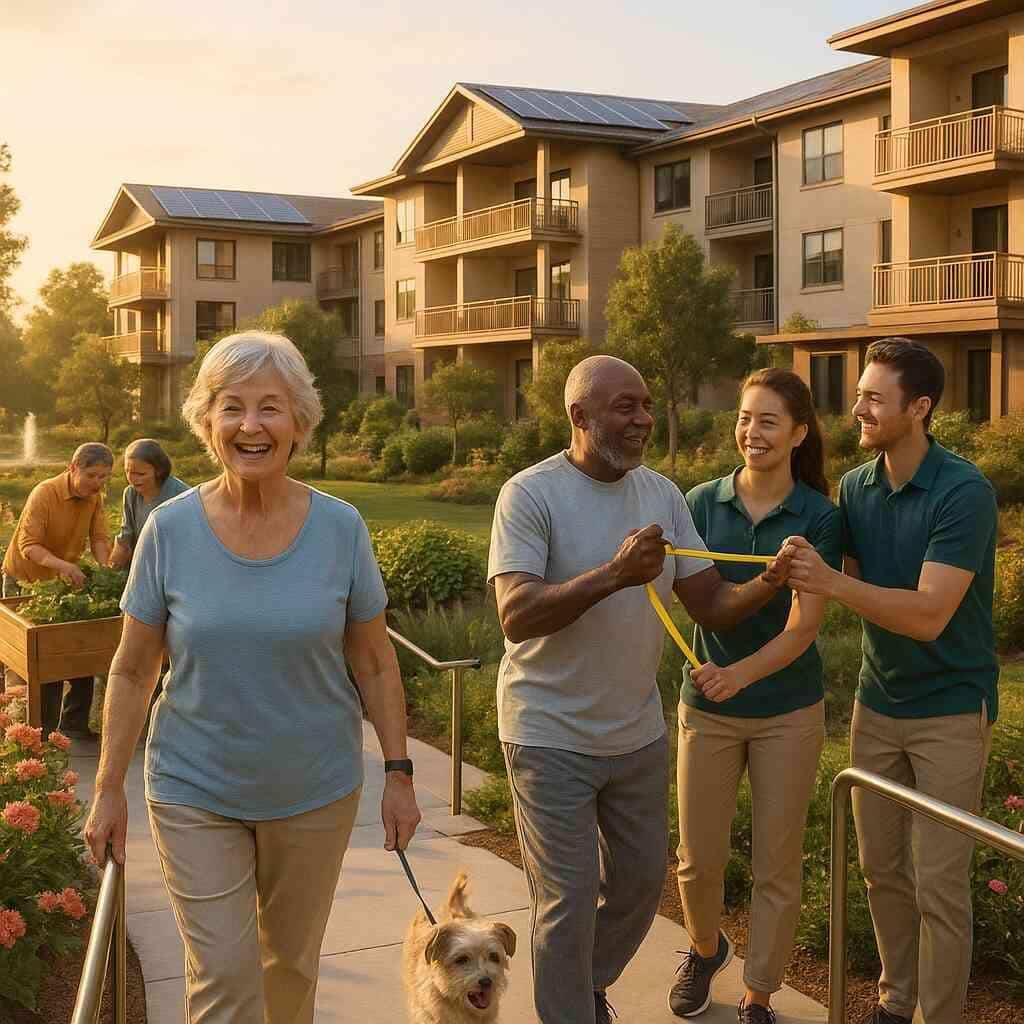
Choosing between familiar surroundings and an aspirational destination demands disciplined research. An assisted living locator simplifies comparisons by aggregating data on amenities, staffing, and health outcomes across multiple senior living near locations. When families enter a current zip code, the platform quickly lists communities for seniors 55+ within reasonable driving distance, highlighting transportation links and local medical networks. Equally important, the tool can reveal attractive destination campuses in warmer climates, allowing prospective residents to weigh lifestyle upgrades against distance from existing support systems. Structured side-by-side views keep emotions in check and anchor decisions to factual quality metrics.
After narrowing choices, smart consumers schedule both virtual and in-person tours. They observe dining rooms during peak hours and test technology-enabled senior safety tools in model suites. Interviews with residents uncover insights about social engagement for older adults that brochures rarely capture. Travelers also calculate airfare costs and holiday trip logistics to remain realistic about future visits. By combining digital comparisons with experiential visits, families build confidence that the chosen senior living near me or farther afield truly aligns with personal priorities.
Evaluating senior living contracts understanding fees responsibilities and continuity clauses
Legal agreements can appear intimidating, yet they protect both residents and operators. Evaluating senior living contracts starts with decoding entrance fees, monthly service charges, and refund schedules. Consumers should verify which utilities, meals, and activities of daily living support are included versus itemized separately. Continuity clauses deserve close scrutiny because they govern access to higher care levels within a continuum of care in senior housing. Clear language about rate adjustments prevents unpleasant surprises during future health changes.
Next, families examine responsibilities for property repairs, liability coverage, and dispute resolution procedures. Some contracts require renters insurance, while others cover contents under a master policy. Reading cancellation terms helps seniors retain flexibility if circumstances shift before move-in. Prospective residents may invite an elder law attorney to translate technical phrasing into actionable advice. Thorough contract analysis transforms uncertainty into empowered decision-making and safeguards long-term financial wellbeing.
Geriatric care management guidance coordinating medical care and caregiver respite resources
Even the best community design cannot replace cohesive health oversight. Geriatric care management guidance ensures that physicians, therapists, and family caregivers remain synchronized. Certified managers create individualized care plans, monitor medication interactions, and schedule follow-up appointments, reducing hospital readmissions. They also liaise with rehabilitation services in long-term care wings when temporary setbacks occur. By keeping clinicians informed, managers support aging in place strategies without compromising safety.
Beyond medical coordination, care managers arrange caregiver respite and support resources that preserve family resilience. Short-term stays in skilled nursing homes for the elderly or adult day programs offer relatives restorative breaks. Managers might suggest counseling groups or online forums for emotional processing. This proactive layer of advocacy enhances quality of life for everyone involved and mitigates burnout, an often overlooked risk in prolonged caregiving journeys.
Pet friendly and culturally inclusive senior living fostering belonging and identity
A beloved pet or cherished tradition can turn a housing unit into a genuine home. Pet-friendly senior living options permit residents to bring companions that reduce loneliness and encourage daily movement. Communities often feature walking trails, grooming stations, and partnerships with local veterinarians, ensuring animals receive proper care. The emotional benefits translate into measurable gains in resident wellbeing and satisfaction scores.
Cultural inclusivity further deepens connection. Operators now recruit multilingual staff, celebrate diverse holidays, and tailor menus to varied dietary preferences. Residents find affinity groups for language practice, faith services, or heritage cooking workshops. Such initiatives reinforce identity while promoting respectful curiosity among neighbors. When a community supports both pets and cultural expression, belonging flourishes, and social networks strengthen organically.
Senior move management tips downsizing logistics and emotional readiness for transition
Downsizing can feel daunting, yet structured steps ease the process. Early in planning, residents categorize belongings into keep, donate, sell, or archive piles, using color-coded stickers for clarity. Professional senior move managers arrange estate sales, coordinate charitable pickups, and schedule recycling, reducing logistical strain. They also measure new floor plans to confirm furniture will fit, avoiding last-minute surprises.
Emotional readiness matters equally. Storytelling sessions about treasured objects honor memories while empowering practical decisions. Families might photograph heirlooms and create digital albums, preserving history without occupying physical space. Celebratory farewell gatherings provide closure and reframe the move as a milestone rather than a loss. Combining tactical planning with emotional support ultimately transforms relocation into a hopeful step toward renewed independence.
Actionable checklist synthesizing research into a personalized senior housing roadmap
A concise checklist turns scattered notes into a coherent senior housing roadmap. First, list prioritized lifestyle factors: walkability, wellness programs for seniors, or proximity to grandchildren. Second, record objective scores for each visited senior living facility, including staffing ratios, nutrition programs in assisted living, and technology features. Third, assign estimated monthly costs alongside projected future care expenses, incorporating senior apartment rental considerations and potential Medicaid eligibility insights.
Fourth, document contract deadlines and required deposits to avoid forfeiting reservations. Fifth, note transportation specifics such as shuttle schedules or nearby transit lines. Finally, set decision dates to maintain momentum. Reviewing this actionable summary as a household fosters consensus and prevents detail fatigue. Structured documentation transforms overwhelming information into clear, step-by-step guidance.
Empowered next steps connecting with senior living facilities for informed decision making
With research organized, families move from contemplation to confident action. A well-timed phone call or virtual meeting clarifies any lingering questions about evaluating assisted living plans or independent living community benefits. Clinicians can forward medical histories in advance, enabling staff to customize preliminary proposals. Such proactive engagement signals partnership and encourages transparent dialogue.
A single, discreet consultation with Senior Living Facilities often accelerates final alignment. Their nationwide perspective helps compare senior living in the state of residence with appealing alternatives elsewhere. Advisors contextualize pricing, quality benchmarks, and cultural fit, empowering seniors to choose a community that honors values and safeguards health. Armed with knowledge and expert guidance, decision makers embrace the next chapter with optimism and assurance.