

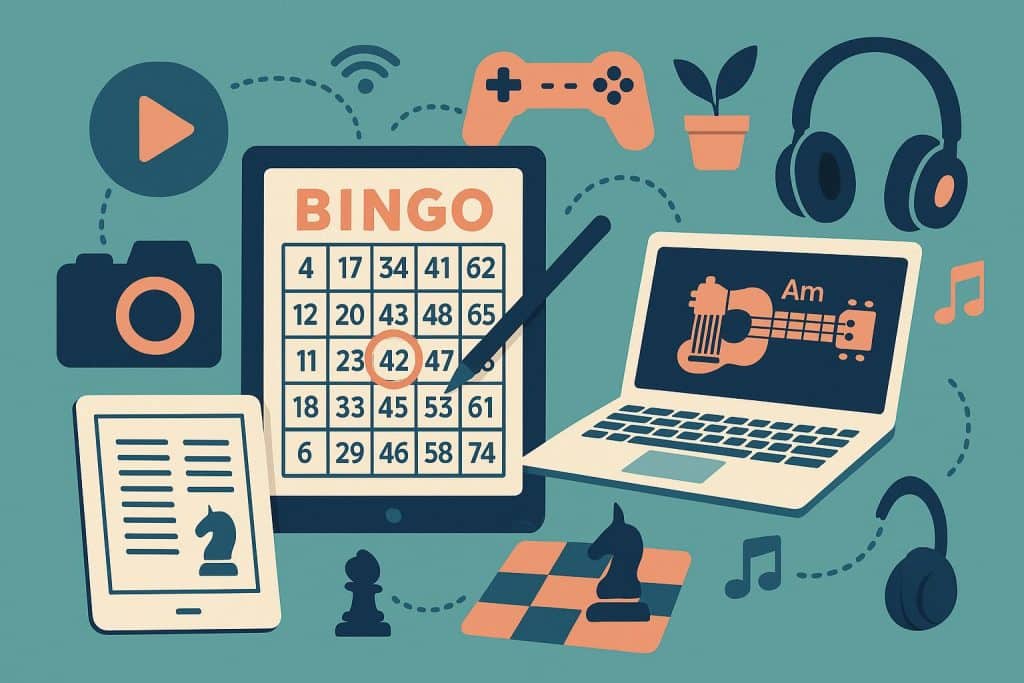
You know the stereotype. The confused grandparent poking at a smartphone screen with an index finger, wondering why the “Google” won’t open. But if you have actually looked around a coffee shop or a bus stop lately, you know that image is about ten years out of date.
My own dad, who swore he would never give up his flip phone, now sends me memes on WhatsApp at 2 AM. He is arguably more plugged in than I am.
The reality is that the “Silver Surfer” demographic isn’t just checking the weather. They are reshaping how tech companies think about UI, accessibility, and entertainment. And it’s not just about convenience. It is about keeping the brain active and the social circle alive when getting out of the house becomes a bit of a chore.
Let’s be real for a second. We are all getting older. The hobbies we love now will have to adapt when our knees start creaking. Here is how I see the landscape shifting for the senior crowd, from a guy who has spent way too much time staring at screens for a living.
The Tablet Takeover
Forget high-end gaming PCs. The absolute game-changer for seniors has been the tablet.
I’ve seen it time and time again. You hand a senior a mouse and keyboard, and they struggle. The disconnect between moving your hand on the desk and seeing the cursor move on the screen is weird if you didn’t grow up with it.
But a touchscreen? It’s intuitive. You want to open the book? You tap the book. You want the text bigger? You pinch the screen.
This hardware shift has revitalized reading as a hobby. E-readers and tablets allow for adjustable font sizes and backlighting. No more struggling with tiny print in the evening newspaper. Plus, it is a lot lighter than lugging around a hardcover Tom Clancy novel.
Keeping the Brain Sharp: The Puzzle Craze
If you look at the stats, seniors are dominating the casual gaming market. I’m talking about:
- Wordle: It’s practically a morning ritual now.
- Sudoku apps: No need for a pencil and eraser.
- Candy Crush: Yeah, it sounds silly, but the pattern recognition is legit brain exercise.
There is a lot of talk in the medical field about neuroplasticity. Basically, “use it or lose it.” My aunt claims that beating level 400 on her puzzle game gives her the same rush as winning a game of bridge. I believe her. It’s that dopamine hit. We all chase it, whether we are 20 or 70.
The Shift from the RSL to Digital Gaming
Here is where my background in iGaming comes in. I have analyzed player demographics for years, and the biggest spike isn’t the 21-year-old crypto bros. It is the older crowd.
In places like Australia or the UK, going to the club or the bingo hall was the standard Friday night. You have a drink, you catch up with mates, maybe you play the pokies. But things happen. Maybe mobility is an issue, or maybe the local venue shut down.
This is where the transition happens. The tech savvy senior realizes they can get a similar experience from the couch.
We are seeing a massive migration towards online casinos Australia based players specifically, where the culture of “having a slap on the pokies” is deeply ingrained. It makes sense. Why drive twenty minutes and pay for over-priced drinks when you can spin a few reels on an iPad while watching the footy?
A Word of Warning (Because I’m Cynical)
Now, I have to put my serious hat on. I’ve tested hundreds of these sites. I know how the math works. The House Edge is a mathematical certainty. It doesn’t matter if you are playing at the Crown or on an iPhone. The casino has the advantage.
For seniors making this digital shift, there are a few things that worry me.
- The Screen Trance: It is easy to lose track of time (and money) when there are no physical coins clinking in the tray. Digital credits don’t feel like “real” money until they are gone.
- Predatory Terms: I hate reading Terms and Conditions, and I do this for a living. For a senior just wanting to play some bingo, the wagering requirements on bonuses can be a nightmare.
- Scams: Seniors are prime targets for phishing. If a site looks dodgy or asks for weird info, run.
If you or a senior you know is getting into this, set hard limits. Most reputable sites let you cap deposits. Use those tools. Seriously.
The Social Connection
It isn’t all just games and books. The most vital part of this tech shift is combating loneliness.
I remember setting up a Zoom call for my parents during the lockdowns. It was a disaster at first (“Can you hear me? I think I’m on mute”). But once they got it, it changed everything.
Video calls, Facebook groups for niche hobbies (like gardening or knitting), and even multiplayer interaction in games allow seniors to maintain a community. It is not the same as a hug or a handshake, but it beats staring at the wall.
The Learning Curve is Worth It
There is a bit of a learning curve. I’ve spent hours trying to explain to my neighbor that he doesn’t need to double-click links on a smartphone.
But the payoff is huge. Technology allows seniors to maintain independence. They can order groceries, manage their bank accounts (carefully), and keep entertained without relying on someone else to drive them around.
The Bottom Line
We need to stop treating seniors like they are allergic to technology. They are adopting it at a rapid pace because it solves real problems in their lives.
Whether it is reading a thriller on a Kindle, Facetiming the grandkids, or playing a few hands of digital blackjack, the digital shift is here.
Just remember the golden rule of the internet, which applies to everyone from Gen Z to the Greatest Generation: If it looks too good to be true, it probably is. And never share your password with anyone, not even if they claim to be a Nigerian Prince.