

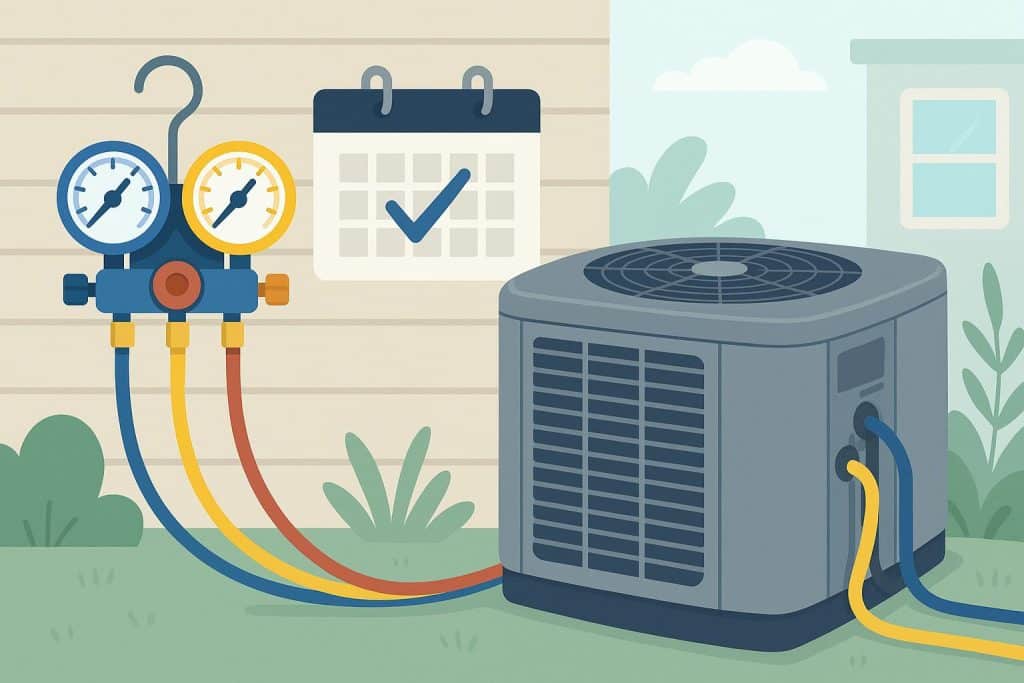
HVAC tune-ups are often treated as optional, but they play a major role in how long heating and cooling equipment lasts and how reliably it performs through each season. Systems that operate daily in extreme heat or cold experience gradual wear that most homeowners don’t notice until comfort declines or the unit stops working. Filters clog, coils collect dust, parts loosen, and electrical components weaken over time. These issues usually build slowly, which is why tune-ups matter. A tune-up is designed to catch small problems early, clean performance-limiting buildup, and confirm that the system is operating safely. Scheduling tune-ups at the right frequency prevents unexpected breakdowns, keeps energy bills steadier, and helps the system heat or cool the home without running under strain. The question isn’t whether tune-ups help—it’s how often to schedule them, based on the home’s conditions and system usage.
Tune-Up Timing Basics
- The Standard Rule: Two Tune-Ups Each Year
For most homes, the general recommendation is two HVAC tune-ups per year—one before cooling season and one before heating season. This schedule works because the system shifts into heavy workload periods twice a year, and performance issues typically occur at the start of those seasons. A spring tune-up helps prepare the system for summer demand, while a fall tune-up prepares heating equipment for winter. Even homes with mild winters or limited heating use benefit from a fall inspection because furnaces and heat pumps still operate under electrical and airflow stress when temperatures drop. Two tune-ups per year allow technicians to detect wear on electrical components, verify airflow, and clean coils before heavy runtime worsens issues. This schedule also supports consistent indoor comfort by keeping the system stable during the months it works hardest.
- When Once a Year Is Not Enough
Some homes need more than two tune-ups, while others may struggle even with one annual service if conditions are demanding. Homes with heavy pet hair, higher dust levels, or frequent cooking can cause filters and coils to clog more quickly. Houses with older ductwork or airflow imbalance may place extra strain on blower motors and compressors. Systems used year-round, such as heat pumps in warmer regions, experience a constant workload and may require more frequent inspections. It’s also common for older systems to require more attention because components wear faster and minor issues escalate into repairs more quickly. In these cases, scheduling service more frequently can prevent breakdowns and improve comfort and stability. The tune-up schedule should align with actual usage patterns, not just the calendar.
- Maintenance Frequency Follows System Stress
The harder a system works, the more often it should be checked. More runtime, more dust, and more comfort complaints usually mean tune-ups should be scheduled more frequently.
- What a Tune-Up Actually Covers
Knowing what happens in a tune-up helps explain why timing matters. A proper tune-up includes electrical inspection, checking capacitor strength, tightening wiring connections, testing safety controls, verifying thermostat response, and evaluating system cycling behavior. Technicians also inspect indoor and outdoor coils for buildup, clear drain lines, and confirm airflow output. Filters are checked, and replacement is recommended if needed. In heating mode, safety is a major focus: flame sensors, ignition systems, heat exchanger integrity, and ventilation safety are evaluated. These steps prevent sudden no-start issues during extreme weather and reduce the risk of unsafe operation. Because tune-ups include both cleaning and measurement, they support both efficiency and equipment reliability.
- Why Tune-Ups Are Most Important Before Peak Season
Scheduling matters because tune-ups work best when completed before the system is stressed. Many homeowners wait until temperatures rise or fall sharply, only to discover issues such as weak airflow, poor cooling performance, or unusual noise. At that point, the system is already under load, making service appointments harder to book due to high demand. A pre-season tune-up prevents this problem by ensuring the system is ready before heavy use begins. It also gives homeowners time to address recommended repairs without rushing. Pre-season service helps avoid emergency calls during peak weather when parts shortages and scheduling delays are more common.
- How Usage Patterns Affect Tune-Up Frequency
Households prioritize HVAC systems in different ways. A home that stays occupied all day, for example, tends to run HVAC longer because temperature setbacks are minimal. A home with multiple people and pets generates more indoor dust and hair, which can affect filters and indoor coils. Homes with open windows during mild weather may allow pollen and outdoor debris to enter, loading filters faster. Cooking routines also contribute to indoor particulate matter, which settles into return vents and blower components. These details change how quickly a system accumulates buildup and how soon performance begins to decline. Homes with higher system stress often benefit from consistent professional support and reminders, which is why many people work with an HVAC contractor for scheduled seasonal maintenance rather than waiting for performance problems to appear.
- Signs It’s Time for an Extra Tune-Up
Even if a homeowner follows a normal twice-yearly schedule, there are situations where an additional tune-up is worthwhile. If the system becomes louder, cycles more frequently, or runs longer than normal, service may be needed sooner. Uneven room temperatures can signal airflow imbalance or duct restriction that worsens with time. Rising utility bills often indicate declining efficiency. A musty smell can point to drainage or coil moisture issues. If the system has recently undergone repairs, a follow-up tune-up may help confirm everything is running properly and that airflow and refrigerant conditions are stable. Extra tune-ups are especially helpful during extreme heat seasons, when prolonged runtime can push weak components into failure.
Tune-Up Scheduling Should Match Your Home
Most homeowners should schedule HVAC tune-ups twice per year—once before summer and once before winter. This timing supports performance during peak seasons, improves comfort and stability, and reduces the chance of emergency breakdowns. However, tune-up frequency should also reflect real conditions. Homes with heavy HVAC usage, higher dust levels, pets, or older equipment may benefit from more frequent service. Tune-ups work because they combine cleaning with inspection and performance testing, allowing small issues to be corrected before they grow into costly repairs. The right schedule keeps the system running smoothly, protects equipment life, and makes heating and cooling more predictable throughout the year.