

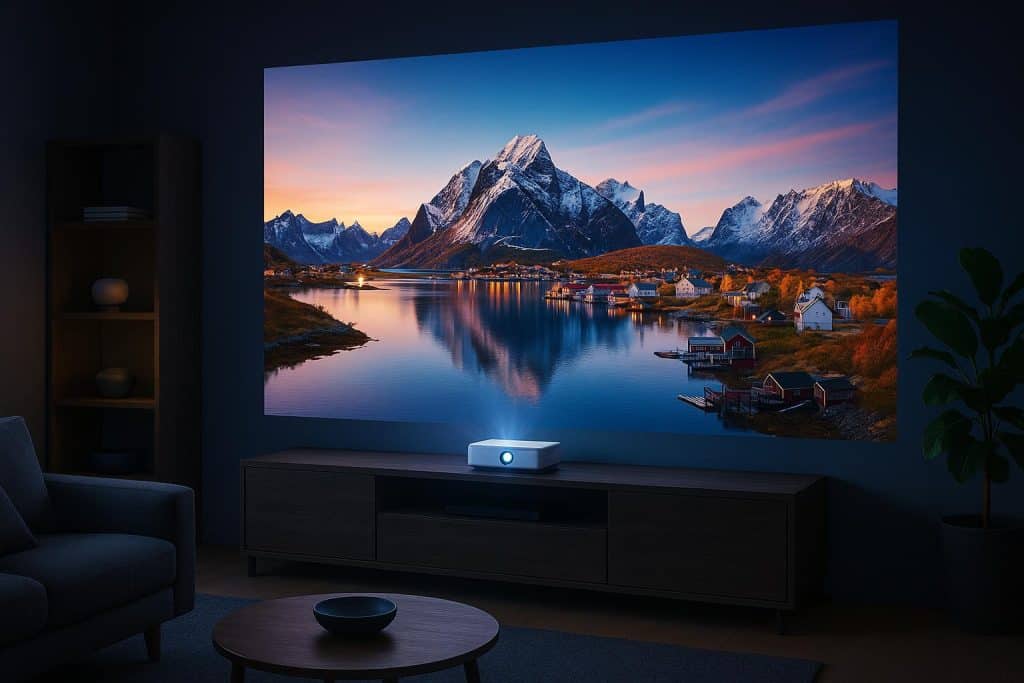
Home entertainment has undergone a significant transformation over the past decade. What was once centred around fixed television screens and dedicated media rooms has evolved into a more flexible, software-driven ecosystem. Advances in intelligent projection technology are playing a major role in this shift, offering users new ways to experience visual content without being tied to permanent installations or rigid layouts.
Modern projectors are no longer simple display devices. They are increasingly integrated systems that combine hardware efficiency with intelligent software, enabling seamless connectivity, adaptive image processing, and compatibility with a wide range of digital platforms. This convergence of technology has allowed projection systems to move from niche use cases into mainstream home environments.
The Shift From Static Displays to Adaptive Viewing
Traditional televisions offer consistency, but they lack adaptability. In contrast, smart projectors provide a dynamic viewing experience that can be tailored to different spaces, lighting conditions, and usage scenarios. Advances in compact optics, LED light sources, and digital signal processing have made it possible for smaller devices to deliver high-quality visuals previously associated only with large, fixed installations.
This adaptability aligns well with modern living spaces, particularly in urban environments where flexibility and space efficiency are priorities. Instead of dedicating a single wall or room to a screen, users can project content where and when it is needed, whether for entertainment, presentations, or casual viewing.
Platforms focused on modern home projection technology demonstrate how these systems are becoming a practical alternative to traditional displays, blending portability with performance in a way that suits contemporary lifestyles.
Software-Driven Features Enhancing User Experience
One of the defining characteristics of today’s smart projectors is their reliance on software to enhance usability. Built-in operating systems allow devices to run streaming applications directly, reducing the need for external media players. Wireless connectivity enables screen mirroring, cloud access, and integration with other smart home devices.
Automatic image correction is another area where software plays a crucial role. Intelligent focus adjustment, keystone correction, and obstacle avoidance help ensure that projected images remain properly aligned, even when devices are placed at unconventional angles or distances. These features significantly reduce setup complexity, making projection technology more accessible to non-technical users.
Manufacturers such as Lumivision highlight how intelligent design choices can simplify the user experience while maintaining technical sophistication.
Image Processing and Display Quality Improvements
While early compact projectors often struggled with brightness and colour accuracy, recent advancements in image processing have narrowed the gap between projection systems and traditional displays. Modern devices employ algorithms that optimise contrast, colour balance, and motion handling in real time, adapting output based on content type and ambient conditions.
LED and laser light sources have further improved consistency and longevity. These technologies not only extend operational lifespan but also reduce energy consumption and heat output. As a result, projectors are better suited for frequent, everyday use rather than occasional viewing.
For readers interested in how intelligent systems are shaping the future of displays, resources covering smart entertainment systems for home use provide valuable insights into how projection technology continues to evolve.
Portability as a Core Design Principle
Portability has become one of the most compelling advantages of smart projectors. Unlike fixed installations, portable projection systems can be easily relocated, allowing users to adapt their viewing setup to different rooms or environments. This flexibility supports a wide range of use cases, from casual movie nights to immersive gaming or collaborative work sessions.
Design considerations such as compact form factors, integrated speakers, and wireless connectivity contribute to this versatility. As hardware becomes more efficient, manufacturers can balance performance with mobility, ensuring that portability does not come at the expense of image quality.
Educational and editorial discussions around portable smart display platforms often emphasise how these systems support changing consumption habits without requiring permanent infrastructure.
Integration Within Smart Home Ecosystems
As smart homes become more interconnected, projection technology is increasingly being designed to integrate seamlessly with existing ecosystems. Voice assistants, automation platforms, and IoT devices can now interact with projection systems, enabling hands-free control and coordinated behaviour across multiple devices.
This level of integration supports scenarios such as automated lighting adjustments during playback, synchronised audio output, and scheduled content access. By functioning as part of a broader digital environment, smart projectors enhance convenience while contributing to a cohesive user experience.
Future Outlook for Intelligent Projection
Looking ahead, continued improvements in processing power, AI-driven image enhancement, and connectivity standards are expected to further expand the capabilities of projection technology. As software updates become more central to device longevity, smart projectors are likely to benefit from ongoing enhancements long after initial deployment.
Rather than replacing traditional displays outright, intelligent projection systems are carving out a complementary role within the home entertainment landscape. Their ability to adapt, integrate, and evolve positions them as a flexible solution for modern digital living.
As consumer expectations continue to shift toward adaptable, software-enabled devices, intelligent projection technology stands out as a key driver in the next phase of home entertainment innovation.