

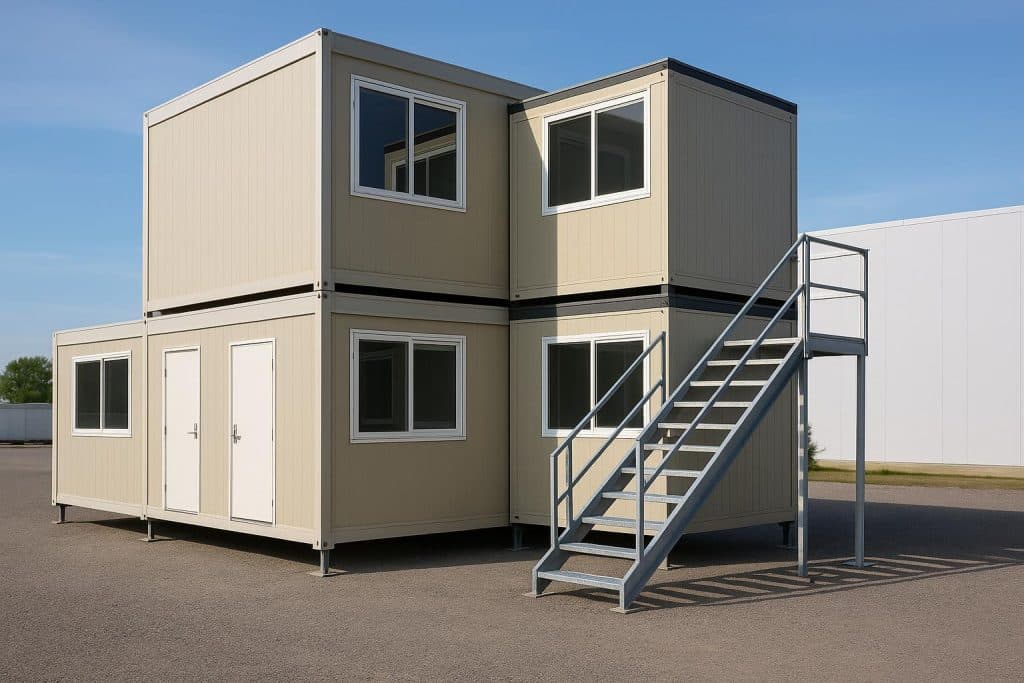
Growth is usually a positive sign. It suggests progress, new opportunities and expanding teams. However, it also brings practical challenges, particularly when it comes to space. Many organisations reach a point where their existing buildings simply cannot keep up with demand. At that stage, a key question emerges. Do you invest in permanent additional space, or does modular building hire offer a better solution for where your organisation is right now?
Buying modular buildings certainly has its place, and for some organisations it is the right long-term decision. That said, an increasing number of businesses are choosing to hire instead. Modular buildings for hire offer flexibility, speed and financial clarity, helping organisations keep projects moving without committing large amounts of capital or locking themselves into fixed arrangements.
The appeal of flexible space
For many organisations, space pressure builds gradually. Teams expand, workloads increase, or new contracts come in, and suddenly existing buildings feel stretched. Modular buildings are designed to respond to this kind of pressure quickly and efficiently.
With modular building hire, you can select a layout that suits your immediate needs and have it delivered within a relatively short timeframe. There is no need to wait through lengthy design stages or extended construction schedules. Instead, you receive a ready-to-use environment that supports work from day one.
This flexibility is particularly valuable for organisations that experience fluctuations in demand. Retailers often face seasonal peaks. Construction companies move between projects. Education providers deal with changing pupil numbers. Event organisers need short-term facilities that disappear once the event ends. In all of these cases, modular buildings provide the extra room needed during busy periods, without leaving behind unused space once activity slows.
Hiring ensures your buildings match your schedule rather than forcing your organisation to adapt around a permanent structure that may only be useful part of the time. When the need passes, the building goes back, and your site returns to normal.
Financial clarity that supports better planning
Buying modular buildings can work well when an organisation has stable, long-term requirements and a clear picture of future needs. Ownership brings control, but it also comes with ongoing responsibilities. Maintenance, repairs, upgrades, insurance and eventual storage or disposal all form part of the true cost of owning a building.
These expenses do not always arrive conveniently. Unexpected repairs or compliance requirements can disrupt budgets and make long-term planning more difficult. For organisations that prefer predictable spending, this uncertainty can be challenging.
Modular buildings for hire offer a different approach. Costs are agreed upfront and spread across a defined hire period. This creates immediate financial clarity. You know what you are paying, how long you are paying it for, and what support is included.
Hiring also makes it easier to adjust spending as circumstances change. If your space needs increase, you can add additional units. If demand reduces, you can scale back. This ensures your financial commitment remains aligned with actual use rather than assumptions about future requirements.
For many organisations, this predictability is one of the strongest reasons to choose modular building hire. It frees up capital that would otherwise be tied up in buildings, allowing investment in staff, equipment or growth opportunities instead.
A practical way to test and adapt
Not every space decision needs to be permanent from the outset. Some organisations are exploring new ways of working, trialling different layouts, or expanding into unfamiliar areas. In these situations, committing to ownership too early can feel risky.
Hiring modular buildings provides a practical way to test ideas without pressure. You can bring in a building, use it in real conditions, refine workflows and assess how well it supports your team. Once you have a clearer picture, you can decide whether long-term investment makes sense.
This approach allows decisions to be made at a comfortable pace. Instead of committing large sums upfront, organisations can gather insight and build confidence before moving toward permanent solutions.
Keeping projects moving on tight schedules
Many projects operate against strict timelines. Delays can have knock-on effects, impacting productivity, staffing, and revenue. Traditional construction is often slow, involving multiple stages and dependencies that can extend completion dates.
Modular building hire significantly shortens this process. The buildings already exist and are fully equipped. Once delivered, they require minimal setup before becoming operational. This speed is invaluable when teams are arriving on site or when unexpected changes disrupt existing facilities.
Organisations commonly use modular buildings for hire in scenarios such as:
- Site offices that need to be operational immediately
- Welfare units that support staff wellbeing from day one
- Meeting and briefing spaces on active sites
- Secure storage for tools, materials or equipment
- Portable classrooms during school refurbishments or periods of growth
- Additional healthcare space during times of increased patient demand
All of these situations share the same requirement. They need space quickly, without compromising on comfort, safety or quality.
Buildings that support real day-to-day work
There is a lingering misconception that hired buildings feel temporary or basic. In reality, modern modular buildings are designed to meet the demands of everyday use. They feature secure construction, durable materials, and well-planned interiors that support productivity and comfort.
Inside, modular buildings typically include proper heating, lighting, insulation and ventilation. They feel bright, warm and professional. Many hire options also allow for customisation, enabling layouts to be adapted, facilities to be added, or multiple units to be joined together to create larger spaces.
This versatility allows modular buildings to support a wide range of environments. For example:
- Secure site units that protect equipment and provide safe areas for staff
- Comfortable classrooms that help pupils concentrate and feel settled
- Quiet meeting or training rooms during office refurbishments
- Temporary administrative hubs during relocation or expansion
Modular buildings for hire are designed to adapt to these varied needs. Importantly, hiring also removes the burden of long-term upkeep. Maintenance and support sit with the provider, ensuring issues are resolved quickly and professionally.
This level of support keeps sites running smoothly and reduces the time internal teams spend managing facilities rather than focusing on their core responsibilities.
Reducing long-term risk and commitment
One of the key differences between hiring and buying lies in commitment. Purchasing modular buildings adds assets to your balance sheet and ties you to a long-term decision. This works well for organisations with stable operations and predictable space requirements.
However, for organisations navigating change, this level of commitment can feel restrictive. Markets shift, projects end, and priorities evolve. Modular building hire offers a way to remain agile during these transitions.
If plans change, hired buildings can be returned. There is no need to worry about storage, resale or repurposing. This reduces risk and ensures your organisation only pays for space that actively supports current work.
For businesses that value flexibility and responsiveness, this can make a significant difference to both operational efficiency and financial health.
When buying modular buildings makes sense
While hiring suits many scenarios, buying modular buildings still has a clear role. Long-term projects with consistent space requirements often benefit from ownership. If you plan to remain in the same location for many years and need permanent additional facilities, purchasing can deliver strong value over time.
Buying also makes sense when complete control over design is required, or when the building will become an integral part of your wider estate. In these cases, ownership allows for deeper customisation and long-term integration.
The decision ultimately depends on understanding your timeline, budget and appetite for flexibility. Neither option is inherently better. They simply serve different purposes at different stages of an organisation’s journey.
Choosing the right approach for your organisation
Deciding between buying and modular building hire is not just about cost. It is about aligning space with strategy. Hiring offers speed, flexibility and financial clarity. Buying offers permanence and control. Understanding where your organisation sits today, and where it is likely to be tomorrow, is key.
Many organisations find that modular buildings for hire provide the breathing space they need. They support growth without overcommitment and allow teams to focus on delivering results rather than managing buildings.
Speak to the GCS Hire team
If you are considering modular building hire and want to understand how modular buildings for hire could support your next project, the team at GCS Group is here to help.
We work with organisations of all sizes to find the right modular buildings for their site, timeline and goals. Get in touch to explore your options and start creating the space your business needs to move forward with confidence.