

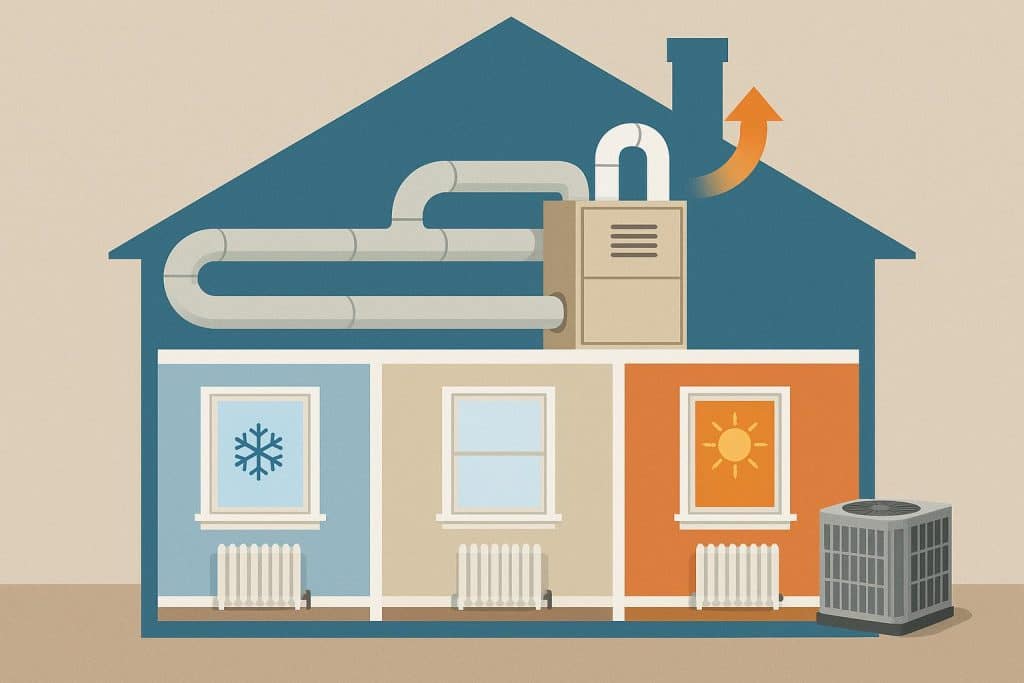
Uneven heating is one of the most common comfort complaints during cold weather. One room feels warm and comfortable, while another feels chilly no matter how high the thermostat is set. This imbalance can make the home feel frustrating to live in, as people repeatedly adjust the thermostat, move portable heaters from room to room, or avoid certain areas altogether. The problem often develops gradually, making it easy to ignore until the temperature difference becomes obvious. Uneven heating is not always caused by a failing furnace. Often, it results from airflow issues, duct restrictions, insulation gaps, thermostat placement, or the way heat naturally rises and circulates through the house. HVAC services for uneven heating focus on diagnosing the cause rather than guessing. By measuring airflow, inspecting duct conditions, and testing system performance, technicians can determine why heat reaches some rooms but not others. Understanding the causes of uneven heating helps homeowners know what to expect and how targeted HVAC work can restore comfort throughout the home.
What Causes Uneven Heating
- Why Heated Air Doesn’t Reach Every Room Equally
Heating systems work as a whole network, not as a single appliance. Even if the furnace or heat pump is producing heat correctly, that heat still needs to travel through ducts and registers to each room. When airflow is restricted or unbalanced, heated air takes the easiest path, leaving some rooms underserved. Common reasons include closed or partially blocked vents, dirty filters that reduce airflow, or leaks or crushed sections in the ductwork. Some homes have duct layouts that were never balanced properly, especially if renovations changed room use or added walls. Room size and window exposure also matter. Rooms with large windows, exterior walls, or poor insulation lose heat faster than interior rooms, making them feel colder even when airflow is normal. A Heating contractor often begins diagnosis by comparing temperatures and airflow from room to room to identify whether the issue is mechanical, duct-related, or caused by home heat loss.
- Airflow and Duct Imbalance as the Main Culprit
Airflow imbalance is one of the most common causes of uneven heating. If one part of the duct system receives high airflow while another receives low airflow, rooms will heat at different rates. This can happen when dampers are incorrectly positioned, ducts are undersized, or the blower system is not tuned to the home’s needs. Return airflow is just as important as supply airflow. If a room has a limited or no return path, heated air may not circulate properly, making the space feel stagnant and cold. HVAC technicians may measure static pressure to determine whether the duct system is restricting flow. They can also inspect for duct leaks in attics, basements, or crawl spaces where warm air may be escaping before reaching rooms. Fixing duct imbalance often creates immediate improvement without major equipment changes.
- Heat Production vs Heat Delivery
Uneven heating does not always indicate a weak furnace. Often, the system produces enough heat, but the home cannot distribute it evenly due to airflow restrictions, duct leakage, or return-air problems.
Thermostat Placement and Control Issues
Thermostat placement can cause uneven heating, even when the equipment is operating correctly. If the thermostat is placed in a hallway, near a draft, or close to a heat source