


Local SEO is a specialized digital marketing strategy that helps businesses appear in location-based search results when customers search for products or services “near me” or in specific geographic areas. Unlike traditional SEO, which targets broad audiences, Local SEO focuses on connecting nearby customers with local businesses at the exact moment they’re searching, using location signals like Google Business Profiles, citations, reviews, and region-specific content to determine rankings.
The local search algorithm evaluates businesses based on three primary factors: relevance (how well your business matches search intent), distance (physical proximity to the searcher), and prominence (your overall online reputation and visibility). Google pulls data from your Google Business Profile, website, citations, reviews, and behavioral signals to determine when and how prominently to display your business in local search results, map listings, and the coveted Local Pack that appears at the top of search pages.
Local SEO is critically important because 46% of all Google searches have local intent, and 98% of consumers use the internet to find local businesses. The conversion rates are exceptional—76% of people who search locally on smartphones visit a business within 24 hours, and 28% of searches lead directly to purchases. With an average ROI of 2.5 times the initial investment and 75% of businesses generating more leads from local SEO than paid advertising, this strategy delivers sustainable, cost-effective growth that compounds over time.
The benefits extend beyond rankings to include enhanced visibility, immediate foot traffic, high-intent customers ready to buy, superior ROI compared to traditional advertising, increased trust and credibility through reviews, competitive advantages against larger corporations, and sustainable long-term growth through permanent digital assets.
Optimizing for local SEO requires a systematic twelve-step approach: claiming your Google Business Profile, conducting local keyword research, maintaining NAP consistency, building citations, optimizing your website for local search, creating location-specific content, implementing schema markup, generating customer reviews, building local backlinks, optimizing for mobile and voice search, leveraging social media, and continuously monitoring performance to refine your strategy based on measurable results.
If you are looking for professional guidance in implementing these local SEO strategies, Vasp Digital stands as one of Canada’s premier SEO companies, having helped numerous businesses across the country dominate their local markets and achieve measurable growth through comprehensive digital marketing solutions. With proven specialization in local search optimization, citation management, review generation, and technical SEO implementation, Vasp Digital delivers customized strategies that transform local visibility into tangible business results for Canadian enterprises of all sizes.
What is Local SEO?
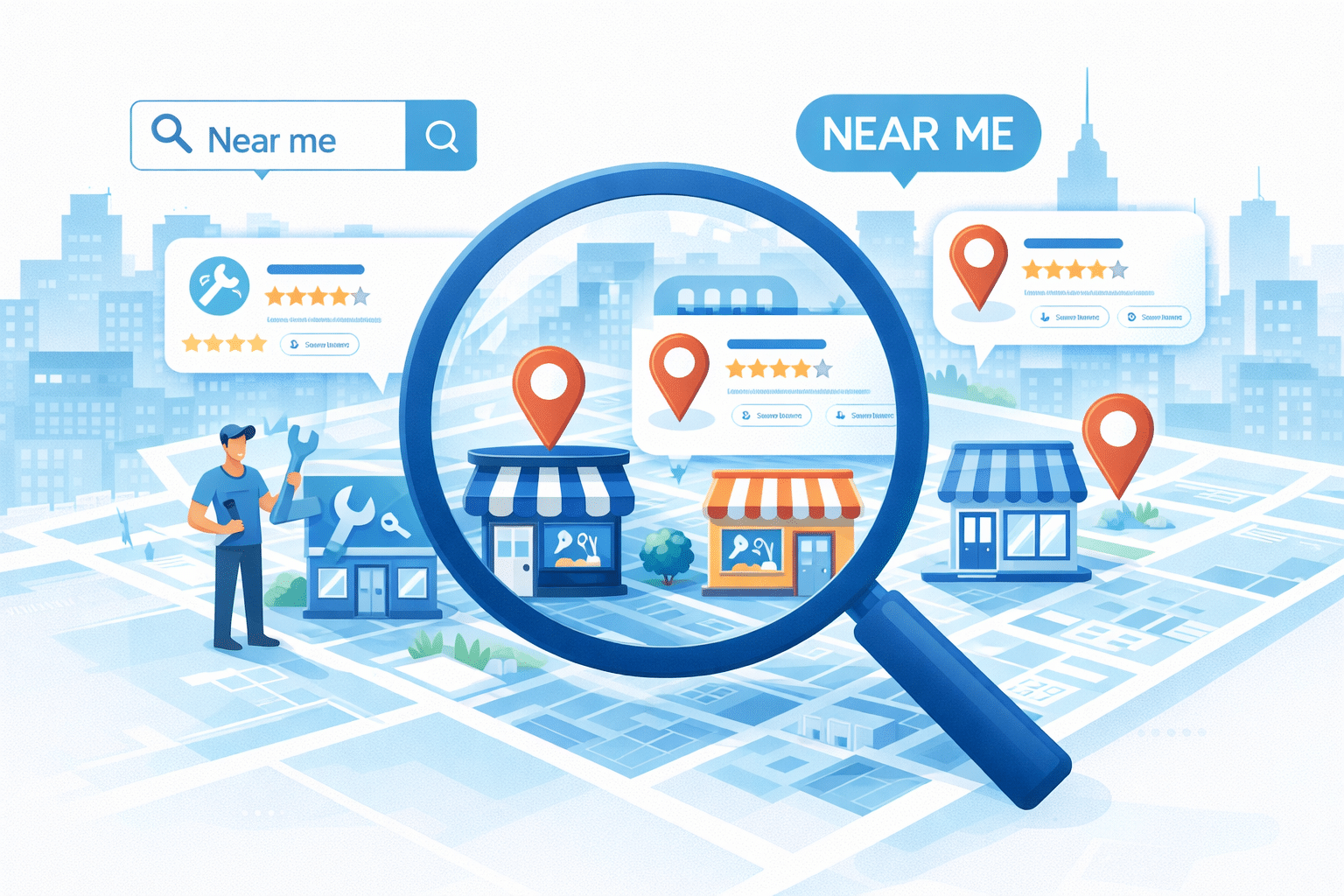
Local SEO is a digital marketing strategy that helps businesses appear in search results for location-based queries. It focuses on improving visibility when people search for products or services “near me” or in a specific city, area, or neighborhood.
Search engines use location signals to deliver relevant local results. These signals include the user’s location, business listings, online reviews, and local keywords.
Local SEO targets customers who are ready to take action. It connects nearby users with businesses that match their intent, such as visiting a store, calling a service provider, or requesting directions.
At its core, Local SEO optimizes a business’s online presence across local search platforms. This includes Google Business Profile, local citations, maps, and region-specific content.
Local SEO differs from traditional SEO because it prioritizes geographic relevance. While standard SEO focuses on global or national rankings, Local SEO ensures visibility within a defined service area.
In simple terms, Local SEO helps local businesses get found by local customers at the exact moment they are searching.
How Local SEO Works?
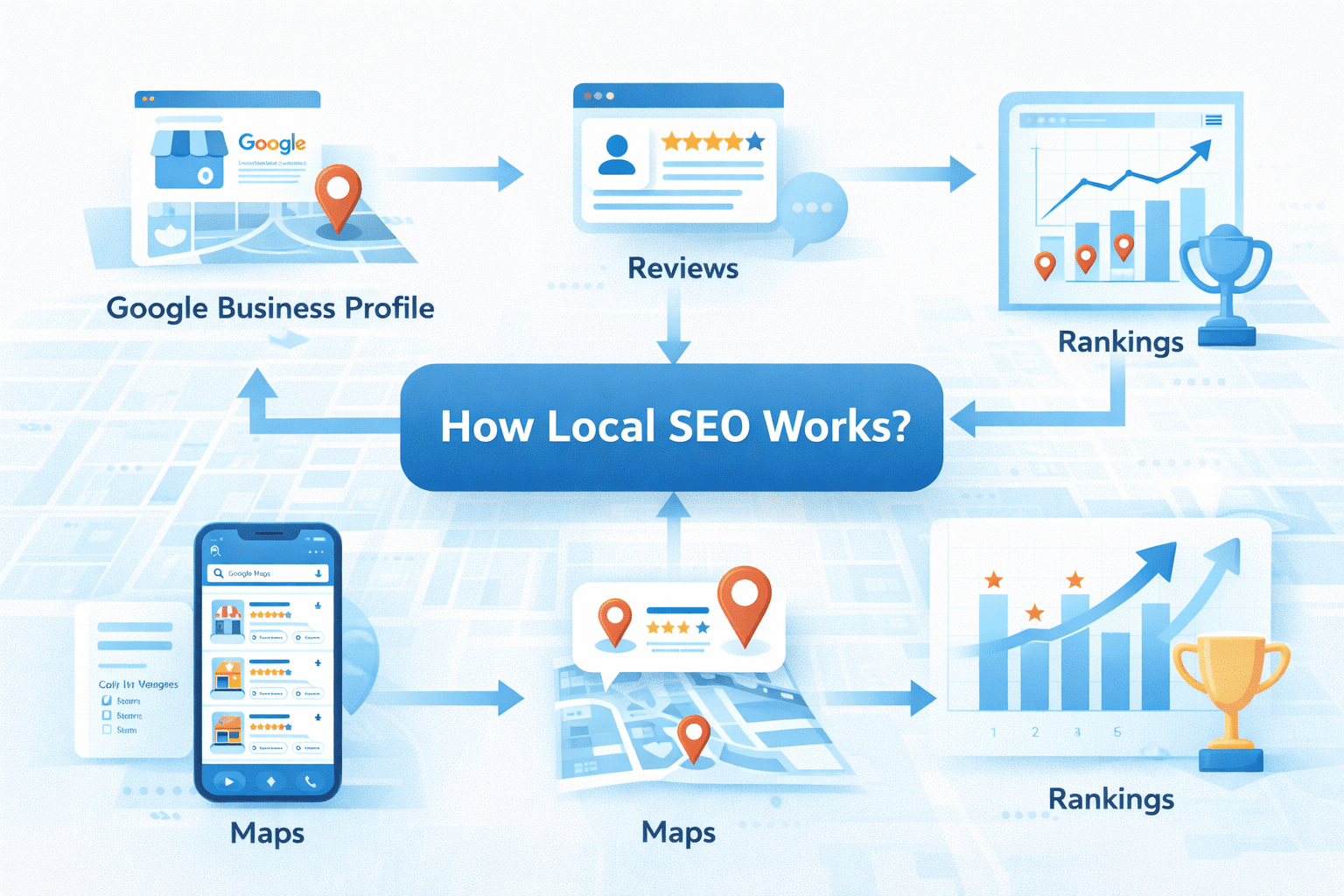
Local SEO operates through a complex system where search engines evaluate, rank, and display businesses based on geographic relevance, authority signals, and user intent. Understanding this mechanism helps you optimize each component strategically to dominate local search results and capture customers actively searching for your products or services.
Google’s Local Search Algorithm
Google uses a specialized algorithm for local searches that differs fundamentally from traditional organic search—this algorithm prioritizes proximity and local relevance over domain authority alone. When someone performs a local search, Google’s system instantly analyzes your Google Business Profile, website content, citations, reviews, and behavioral signals to calculate three primary ranking factors: relevance (how closely your business matches the search intent), distance (physical proximity between your business and the searcher), and prominence (your overall visibility and reputation across the web).
The Role of Google Business Profile
Your Google Business Profile serves as the foundation of local SEO—it’s the direct data source Google uses to populate map results, Knowledge Panels, and local pack listings. Google extracts information from your profile including business category, services, attributes, photos, hours, and reviews to determine when and how to display your business in search results. Businesses with complete, accurate, and regularly updated profiles receive significant ranking advantages because Google can confidently match them to relevant searches, while incomplete profiles signal uncertainty and typically rank lower regardless of other SEO efforts.
How Search Intent Triggers Local Results
Search engines identify local intent through explicit signals (phrases like “near me,” city names, zip codes) and implicit signals (search patterns, device location, past behavior)—someone searching “pizza” on a mobile device at 7 PM likely wants nearby options, even without saying “near me.” Google has become sophisticated at recognizing local intent in ambiguous queries: searches for “plumber,” “dentist,” or “auto repair” automatically trigger local results because these services inherently require physical proximity, while queries like “how to fix a leaky faucet” receive informational results instead.
The Geographic Ranking Radius
Local SEO operates within invisible ranking radiuses that vary by business type, competition density, and search specificity—a restaurant might rank for searches within 3-5 miles, while a specialized medical practice could appear for searches 20+ miles away in areas with fewer competitors. Your physical location relative to searchers creates a natural ranking boundary: businesses located in city centers typically rank across broader areas, while those in suburbs or rural locations must work harder to appear for searches in nearby towns. Google also considers your service area settings, meaning a plumber serving multiple cities can rank across a wider geographic footprint than a brick-and-mortar retail store.
Citation Consistency and NAP Data
Search engines verify your business legitimacy by cross-referencing your Name, Address, and Phone number (NAP) across hundreds of online directories, social platforms, and websites—consistent NAP data across these citations builds trust and confirms your business exists at a specific location. When Google finds matching NAP information on authoritative sites like Yelp, Yellow Pages, Facebook, and industry directories, it gains confidence in your business details and boosts your local rankings accordingly. Conversely, inconsistent citations (different phone numbers, address variations, outdated information) create confusion, dilute your SEO efforts, and can prevent Google from associating all your online mentions with a single business entity.
Review Signals and Social Proof
Online reviews function as both ranking factors and conversion drivers—Google’s algorithm considers review quantity, recency, rating average, review velocity, and keyword mentions within review text when calculating local rankings. A business with 200 reviews averaging 4.5 stars will typically outrank a competitor with 20 reviews at 5 stars because the volume signals popularity and active customer engagement. Google also analyzes review responses, sentiment, and user interaction patterns: businesses that respond to reviews promptly demonstrate engagement, while specific keywords in reviews (like “fast service,” “affordable prices,” “emergency repair”) help Google understand what you’re known for and match you to relevant searches.
On-Page SEO for Local Search
Your website must communicate location relevance through strategic on-page optimization—this includes location-specific title tags, meta descriptions, header tags, and body content that naturally incorporate city names, neighborhoods, and service areas. Creating dedicated location pages for each service area you target (like separate pages for “Seattle Plumbing Services” and “Tacoma Plumbing Services”) helps you rank in multiple geographic markets simultaneously. Schema markup, particularly LocalBusiness schema, provides search engines with structured data about your name, address, phone, hours, service area, and business type, making it easier for algorithms to understand and categorize your business accurately.
Backlink Authority in Local Context
While backlinks remain important for local SEO, their value differs from traditional SEO—a link from a local news outlet, chamber of commerce, or community organization carries more local ranking weight than a high-authority national site with no geographic connection. Search engines evaluate backlink relevance through geographic proximity: links from websites within your city or region signal local authority and community involvement, while links from nationwide sites provide general authority but less location-specific value. Earning citations and links from locally-relevant sources like community event pages, local blogs, business associations, and neighborhood websites builds the geographic trust signals that power local rankings.
Mobile Optimization and User Experience
Local searches happen predominantly on mobile devices—Google’s data shows that 76% of people who search for something nearby visit a business within 24 hours, and 28% of those searches result in purchases. Your website’s mobile performance directly impacts local rankings because Google uses mobile-first indexing (evaluating the mobile version of your site as the primary ranking signal) and considers Core Web Vitals like loading speed, interactivity, and visual stability. A slow, poorly optimized mobile site creates friction when users are actively looking to contact or visit your business, leading to high bounce rates that signal poor user experience and ultimately harm your local search visibility.
Behavioral Signals and Engagement Metrics
Google tracks how users interact with your business listings and website—metrics like click-through rates from search results, phone calls from your GBP listing, direction requests, website visits, time on site, and repeat visits all feed into ranking algorithms. When users consistently choose your business over competitors in search results, click through to your website, spend time engaging with your content, and return later, these behavioral signals indicate relevance and quality, prompting Google to rank you higher. Conversely, if users click your listing but immediately return to search results (called “pogo-sticking”), Google interprets this as dissatisfaction and may lower your rankings, making user experience and content relevance critical components of sustained local search success.
Real-Time Ranking Fluctuations
Local search rankings constantly fluctuate based on factors including searcher location, time of day, search history, device type, and recent business updates—you might rank #1 for someone searching from downtown but #5 for the same query from a suburb 10 miles away. Google personalizes results using real-time data: if your competitors recently received numerous positive reviews, updated their GBP with new photos, or published fresh website content, they may temporarily outrank you until you take similar actions. This dynamic nature means local SEO requires ongoing monitoring and optimization rather than one-time setup, as your ranking position represents a constantly recalculated score based on hundreds of signals that change daily.
Why is Local SEO Important for Your Business?
Local SEO transforms how nearby customers discover and choose your business, directly impacting your revenue, competitive position, and long-term growth potential in ways that traditional marketing cannot match.
Capturing High-Intent Local Searches
Nearly 46% of all Google searches contain local intent, meaning almost half of everyone searching online wants something nearby—these aren’t casual browsers but active customers ready to take action. Data shows that 98% of consumers now use the internet to find local businesses, representing a dramatic increase from 90% in 2019, demonstrating that local search has become the default method for discovering service providers, restaurants, retailers, and professionals in your area. When your business ranks prominently in these searches, you capture customers at the precise moment they’re seeking what you offer.
Driving Immediate Real-World Results
Research shows that 76% of people who search for local businesses on their smartphones visit a physical location within 24 hours, meaning local SEO doesn’t just generate awareness—it drives foot traffic with remarkable speed. Further data indicates that 88% of local mobile searches result in either a store visit or phone call within one week, while 28% of local searches lead directly to a purchase. These conversion rates prove that local search traffic represents some of the highest-quality leads your business can acquire.
Delivering Exceptional Return on Investment
Local SEO delivers an average return on investment of 2.5 times the initial investment, with businesses reporting that 75% of local companies generate more leads from local SEO efforts than from paid advertising. Studies show that 40% of SEO campaigns achieve returns of 500% or better, compared to just 22% of PPC campaigns reaching similar returns. Unlike paid ads that require continuous spending, local SEO builds cumulative authority—your rankings strengthen over time, reviews accumulate, citations multiply, and your digital presence becomes increasingly difficult for competitors to displace.
Outperforming Competitors Who Neglect Local Optimization
Surprisingly, 56% of retailers still haven’t claimed their Google Business Profile, leaving massive competitive gaps that savvy businesses can exploit. Only 38% of small businesses have implemented a structured review management strategy, and approximately 45% of local business websites aren’t optimized for mobile devices. Businesses with complete Google Business Profiles receive up to seven times more clicks than incomplete profiles and are 70% more likely to generate store visits, demonstrating that even basic local SEO fundamentals create substantial competitive advantages.
Building Trust Through Online Presence
Research indicates that 83% of consumers use Google to find local business reviews, while 70% of consumers rarely visit an unfamiliar business before checking online reviews first. Your local SEO presence—including reviews, ratings, photos, and business information—serves as the first impression that determines whether customers choose you or competitors. Businesses with complete profiles appear 2.7 times more trustworthy to potential customers, making local SEO essential for establishing credibility.
Capturing Mobile and “Near Me” Searches
There are over 800 million monthly searches in the United States alone that contain some variation of “near me,” representing an enormous volume of high-intent customers actively seeking immediate solutions. Searches for “open now near me” surged by 400% in recent years, while 80% of US consumers search for local businesses weekly and 32% search multiple times daily. If your business doesn’t appear in these searches, you’re invisible to the majority of potential customers in your market.
Dominating the Google Local Pack
Studies reveal that 42% of searchers click on results inside the Google Local Pack—the map section displaying three businesses at the top of local search results. This prime real estate captures nearly half of all click-through activity for local queries, appearing above traditional organic results. Local SEO positions your business in this coveted placement where visibility translates directly into phone calls, direction requests, website visits, and store visits.
Adapting to Voice Search and Evolving Technology
Current data shows that 58% of consumers have used voice search to find local business information in the past year, with nearly one in three users performing voice searches daily. Voice searches tend to be more conversational and location-specific, meaning businesses optimized for natural language local queries will capture this growing segment. Additionally, 32% of US adults believe AI would provide a better experience than typical search when looking for local businesses.
Creating Sustainable Long-Term Advantages
Unlike paid advertising that stops working when you stop paying, local SEO builds permanent digital assets that compound in value over time—your Google Business Profile becomes more authoritative with accumulated reviews, your citations strengthen legitimacy, your content attracts backlinks, and your rankings become increasingly difficult for competitors to displace. Research confirms that 91% of marketers see positive impacts from SEO, and 96% of businesses report satisfaction with their local SEO return on investment, indicating that businesses who commit to local SEO achieve sustainable growth that outlasts trendy marketing tactics.
What Are the Benefits of Local SEO?
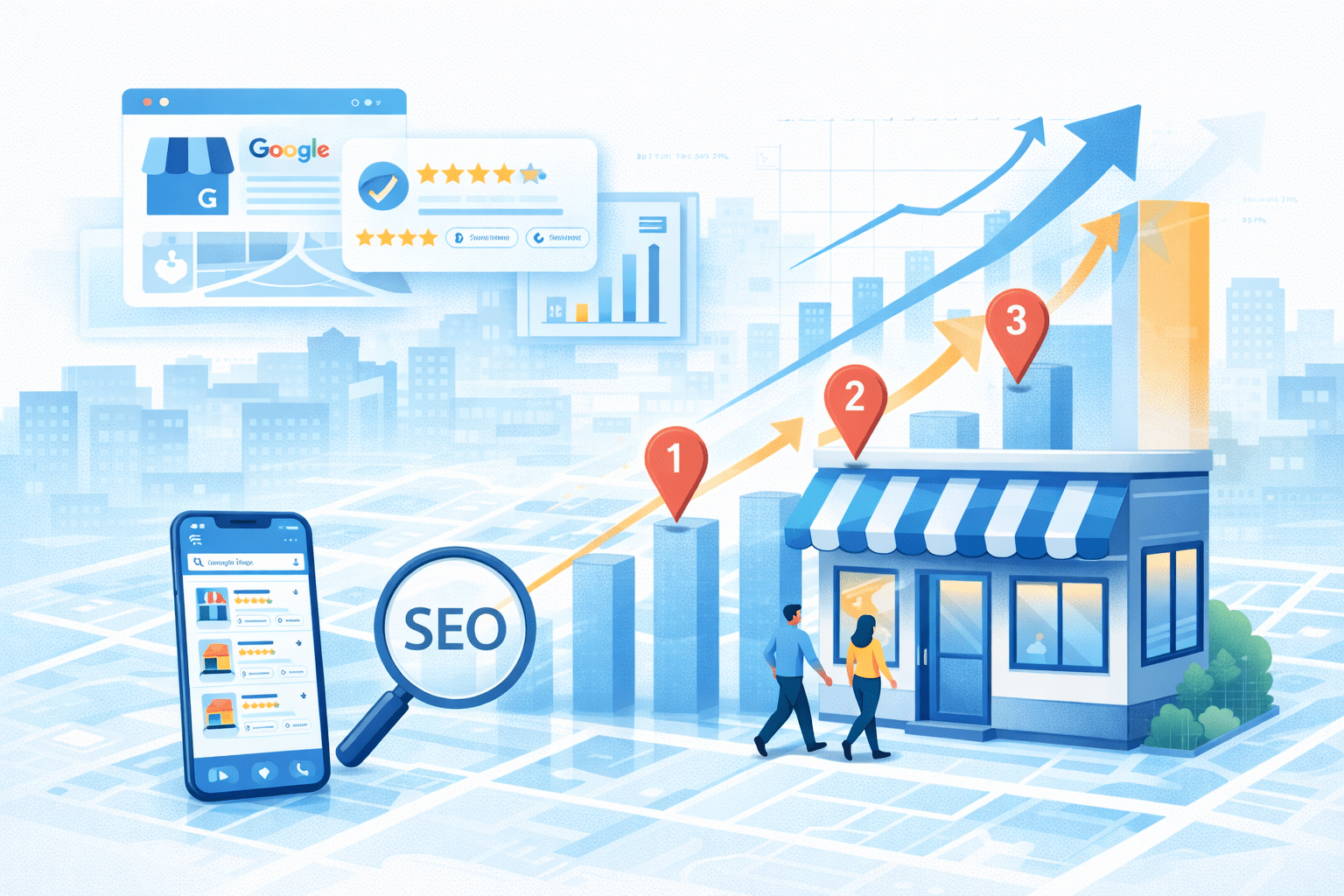
Local SEO delivers measurable advantages that extend far beyond search rankings, transforming how customers discover your business, strengthening your market position, and creating sustainable competitive advantages that compound over time.
Enhanced Online Visibility and Discoverability
Local SEO significantly boosts your business’s online presence by ensuring you appear prominently when potential customers search for products or services you offer in your area. Citation building, link acquisition from local sources, and Google Business Profile optimization all work together to make your business more easily discoverable by new customers who might never have found you otherwise. This enhanced visibility means when locals search for services you provide, your business appears front and center, capturing their attention at the exact moment they need what you offer, which creates unprecedented opportunities for customer acquisition that didn’t exist before location-based search became dominant.
Driving Immediate Foot Traffic and Store Visits
Local SEO excels at converting digital searches into real-world visits—research shows that people making local searches are actively seeking nearby solutions and are ready to take immediate action. When your business ranks well in local results, complete with accurate address information, directions, photos, and hours, customers can quickly decide to visit your physical location without friction or hesitation. For brick-and-mortar businesses, this means local SEO becomes instrumental in driving foot traffic to physical locations, as optimized profiles with accurate business information ensure potential customers can easily find and visit you, turning online visibility directly into in-store customers.
Attracting High-Intent, Ready-to-Buy Customers
The best leads are those actually likely to convert, and local SEO generates some of the hottest leads available because people searching for businesses locally are already highly motivated and ready to purchase. When someone searches for emergency services, immediate needs, or specific local solutions, they’re not casually browsing—they have genuine intent and are prepared to make decisions quickly, which makes local search traffic exponentially more valuable than general website visitors who may just be researching or comparing options without purchase intent. This targeted approach connects you with customers who are actively seeking your specific products or services in your area, dramatically increasing the likelihood that online searches convert into offline purchases, phone calls, or in-person visits.
Cost-Effective Marketing with Superior ROI
Local SEO stands as one of the most cost-effective marketing strategies available because unlike paid advertising that requires continuous budget allocation, the organic traffic generated through local SEO keeps flowing long after the initial investment. The average monthly investment for local SEO services ranges from $500 to $2,000, making it significantly more affordable than hiring an in-house SEO specialist at approximately $40,000 annually, and far more sustainable than traditional advertising methods like radio, television, or print ads that stop delivering results the moment you stop paying. Research demonstrates that local SEO provides better ROI than traditional advertising channels—a local plumbing company investing $800 monthly in local SEO optimization can attract 15 new emergency repair calls generating $12,000 in revenue, proving that this approach builds long-term organic visibility that continues generating results indefinitely.
Building Trust and Establishing Credibility
Positive reviews and high ratings encouraged through local SEO practices dramatically enhance your business’s online reputation, with data showing that 98% of consumers read online reviews of local businesses at least occasionally. Potential customers trust businesses with abundant positive reviews, leading to increased credibility and trustworthiness in the local market, while your consistent appearance in local search results helps build brand awareness within your community. When businesses appear prominently in local searches accompanied by strong reviews and complete business information, they gain credibility and become more likely to attract local customers, as modern consumers rarely visit unfamiliar businesses without first checking online reviews and verifying legitimacy through search visibility.
Leveling the Playing Field Against Larger Competitors
Local SEO allows small businesses to compete effectively against larger corporations without requiring enormous marketing budgets, as it focuses competition on specific geographic areas rather than nationwide markets. Instead of competing with massive national brands for general search terms, local businesses can dominate their immediate market by targeting location-specific queries where size and budget matter less than relevance and proximity. The competitive advantage becomes even more pronounced when you consider that many competitors neglect basic local SEO fundamentals—with data showing that only 38% of small businesses have implemented structured review management strategies and approximately 45% of local business websites aren’t optimized for mobile devices, leaving significant market share available for businesses that execute properly.
Creating Familiarity and Brand Recognition in Your Community
Ranking well in local search results helps businesses build substantial brand awareness within their community through repeated exposure in search results that creates familiarity and trust over time. When your business consistently appears in local searches, it increases familiarity with your brand among local consumers, boosting brand recall and recognition in ways that traditional advertising struggles to match. This repeated visibility across multiple search queries—appearing for various related searches throughout customers’ decision-making journey—compounds the recognition effect, making your brand the natural choice when customers are ready to purchase because they’ve encountered your business name multiple times during their research process.
Measurable Results and Actionable Data Insights
Local SEO provides valuable insights through tools like Google Analytics that show exactly how visitors interact with your site, which search queries drive traffic, which pages generate revenue, and which marketing channels deliver returns. By analyzing metrics like bounce rate, session duration, conversion paths, and traffic sources, you can better understand customer behavior and continuously refine your strategy for improved results, eliminating the guesswork that plagues traditional advertising. This data-driven approach allows you to track progress, compare your local SEO investment to the revenue generated from website traffic and leads, and make informed decisions about where to allocate resources for maximum impact, ensuring every optimization effort contributes measurably to business growth.
Improving User Experience and Website Performance
Local SEO isn’t merely about search engines—it fundamentally improves user experience through optimizations that make websites faster, more mobile-friendly, and easier to navigate. Good SEO practices involve optimizing website speed, mobile responsiveness, and overall usability, creating positive experiences that lead to longer site visits, higher engagement, and ultimately more conversions. When combined with local landing pages that provide relevant, location-specific information, local SEO ensures visitors find exactly what they need quickly and efficiently, which not only satisfies customers but also sends positive signals to search engines that your site deserves higher rankings.
Sustainable Long-Term Growth and Compounding Benefits
Unlike short-term marketing tactics or paid advertising campaigns that stop delivering the moment funding ceases, local SEO builds permanent digital assets that appreciate in value and become increasingly difficult for competitors to displace. Well-optimized content, established citations, accumulated positive reviews, earned backlinks, and strengthened domain authority all work together to create compounding advantages that grow stronger year after year. Once your site has built strong local SEO foundations, it continues driving traffic and generating leads for months or years with minimal ongoing investment, making it an affordable option for businesses with limited budgets who need sustainable growth strategies that deliver long-term value rather than temporary visibility spikes.
How To Optimize Your Business for Local SEO?
Optimizing your business for local SEO requires a systematic approach that addresses multiple ranking factors simultaneously, combining technical implementation, content strategy, and community engagement to dominate local search results and capture customers actively searching for your products or services.
Step 1: Claim and Optimize Your Google Business Profile
Your Google Business Profile serves as the cornerstone of all local SEO efforts—this free listing directly controls your appearance in Google Maps, the Local Pack, and Knowledge Panels, making it the single most important asset for local visibility. Visit the Google Business Profile website, search for your business name to check if a listing already exists, and if not, create a new profile by clicking “Add your business to Google” and following the verification process (Google typically requires video verification showing your physical location, equipment, and proof of management). Once verified, complete every available field with accurate information including your exact business name as registered with the state, full street address with proper formatting, primary phone number (preferably a local landline), website URL, business category (choose the most specific option available like “Italian Restaurant” rather than generic “Restaurant”), business description incorporating your primary local keywords naturally, service area if applicable, accurate hours of operation including special holiday hours, and high-quality photos showcasing your storefront, interior, products, staff, and completed work. Add all relevant business attributes like “wheelchair accessible,” “free Wi-Fi,” “outdoor seating,” or industry-specific features that help customers understand what makes your business unique, and enable messaging if you want customers to contact you directly through your profile.
Step 2: Conduct Local Keyword Research
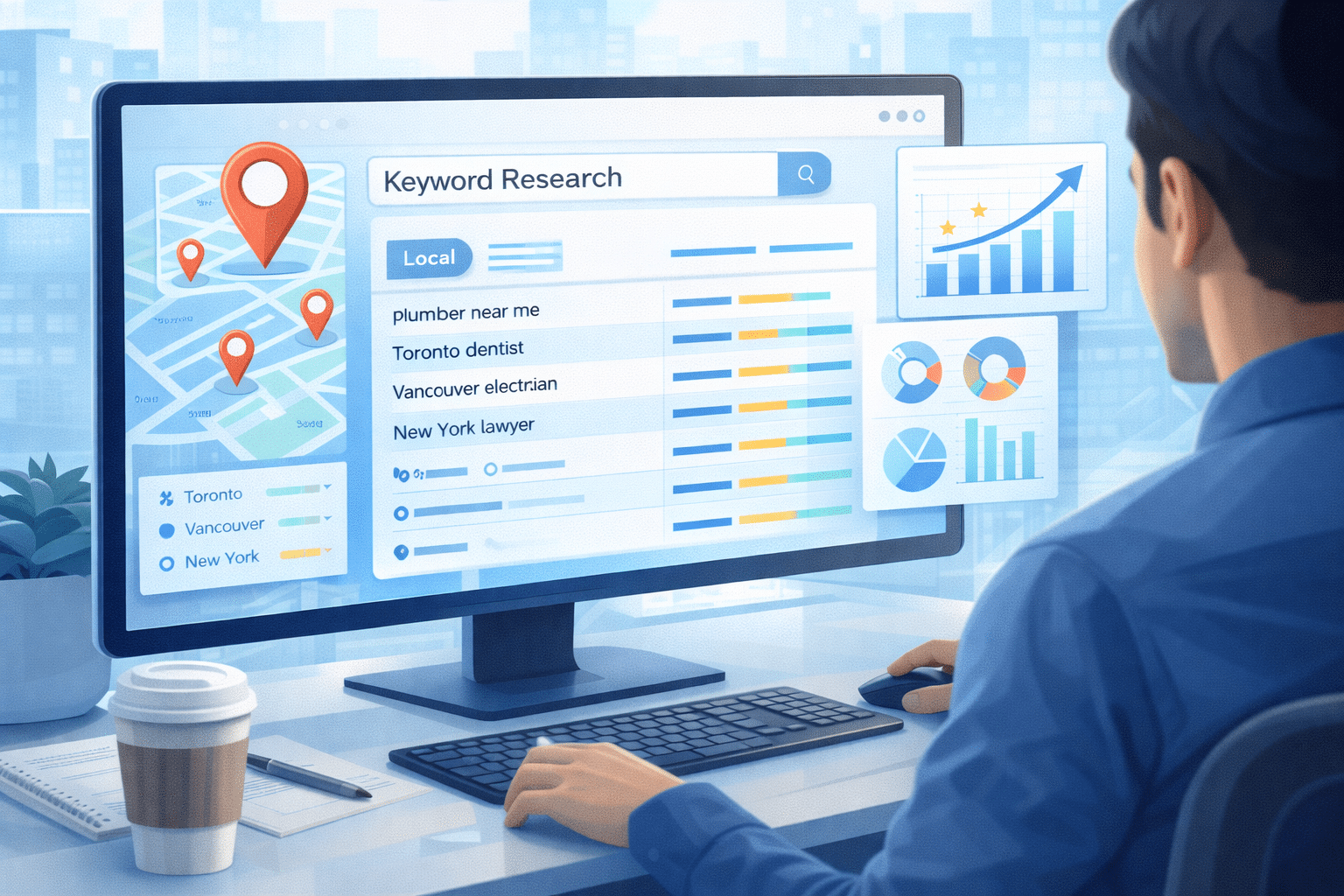
Identifying the right keywords that local customers actually use when searching ensures your optimization efforts target terms that drive real business results rather than irrelevant traffic. Use keyword research tools like Google Keyword Planner, Ubersuggest, SEMrush, or Ahrefs to discover search terms by entering seed keywords combining your business type with your location (like “plumber Chicago,” “divorce attorney Miami,” “wedding photographer Austin”), then analyze the search volume, competition level, and keyword difficulty for each term. Create a comprehensive list of keyword variations including your services paired with your city name, neighborhood names, nearby landmarks, zip codes, and phrases like “near me,” “in [city],” “best [service] [location],” “[service] [neighborhood],” and “[emergency/24-hour] [service] [city].” Research what your competitors rank for by entering their URLs into tools like SEMrush’s Organic Research feature to identify gaps in your own keyword targeting, and prioritize long-tail keywords (3-5 word phrases) that indicate high purchase intent like “emergency plumber Brooklyn 24 hour” or “affordable family dentist downtown Portland.” Consider user intent behind each keyword—informational searches (“how to fix leaky faucet”) require educational content while transactional searches (“hire plumber today”) indicate immediate service needs—and ensure your keyword list includes terms addressing both research-phase customers and those ready to purchase immediately.
Step 3: Build and Maintain NAP Consistency Across All Platforms
NAP consistency—having your Name, Address, and Phone number identical across every online mention—functions as a trust signal that search engines use to verify your business legitimacy and determine whether to confidently display your information to searchers. Create a master NAP document that serves as your single source of truth, recording your business name exactly as registered (without unnecessary keywords or promotional language), your complete mailing address formatted according to USPS standards, your primary business phone number (preferably a trackable local number rather than toll-free), and your website URL formatted consistently (with or without www, always using https). Audit your existing online presence by searching Google for your business name, phone number, and address in quotes to find all existing citations, then use citation management tools like BrightLocal, Moz Local, or Yext to scan major directories and identify inconsistencies. Manually correct any discrepancies you find—even minor variations like “Street” versus “St.” or missing suite numbers can confuse search engines and dilute your local SEO effectiveness—starting with high-priority platforms including your Google Business Profile, Bing Places, Apple Maps, Facebook Business Page, Yelp, Yellow Pages, BBB, Foursquare, and industry-specific directories relevant to your business type. For businesses with multiple locations, create separate, unique NAP records for each physical location and maintain them independently across all directories to avoid confusion between different branches.
Step 4: Submit Your Business to Local Directories and Citation Sites
Local citations—online mentions of your business name, address, and phone number on third-party websites—help search engines verify your business exists at a specific location while creating additional pathways for customers to discover your services. Start by claiming and optimizing your listings on major aggregators and data providers including Google Business Profile, Bing Places for Business, Apple Maps Connect, Facebook Business, Yelp, Yellow Pages, Foursquare, Angi, Nextdoor Business, and Merchant Circle, ensuring your NAP information matches your master document exactly. Submit your business to general directories that serve all industries like Better Business Bureau, Chamber of Commerce directories, Manta, Local.com, and Citysearch, then identify and target niche-specific directories relevant to your industry (restaurants should list on TripAdvisor, OpenTable, and Zomato; medical practices on Healthgrades and Zocdoc; contractors on HomeAdvisor and Thumbtack). Use Google search operators to find additional local directories by searching “[your city] business directory,” “[your state] [your industry] directory,” or “submit business [your city]” to uncover city-specific and regional directories your competitors might be using. Prioritize quality over quantity—20 accurate listings on authoritative, relevant sites outperform 100 listings on spammy, low-quality directories—and focus on directories that actual customers use to find businesses rather than SEO-only citation sites with no real traffic.
Step 5: Optimize Your Website for Local Search
Your website must explicitly communicate location relevance through strategic on-page optimization that helps search engines understand where you operate and what services you provide in specific geographic areas. Create dedicated location pages for each city, neighborhood, or service area you target, structuring each page with unique, valuable content that includes the location name in the H1 heading, title tag (formatted as “Service | Location | Brand Name”), meta description, first paragraph, and naturally throughout the body content without keyword stuffing. Include your complete NAP information in the website footer on every page formatted as text (not images) so search engines can easily crawl and index it, and add this information prominently on a dedicated contact page with an embedded Google Map showing your location. Incorporate local schema markup (LocalBusiness structured data in JSON-LD format) in your website code to explicitly tell search engines your business name, address, phone, hours, geo-coordinates, logo, service areas, accepted payment methods, and other relevant details—this structured data makes your business eligible for enhanced search result features like rich snippets, knowledge panels, and improved Local Pack visibility. Optimize for mobile devices since the majority of local searches happen on smartphones—ensure your site uses responsive design that adapts to smaller screens, loads quickly (under 3 seconds), has easily tappable phone numbers and direction buttons, and provides a seamless user experience for people searching while on the go.
Step 6: Create Location-Specific Content
Publishing high-quality content that demonstrates local expertise and relevance helps establish your business as an authoritative local resource while targeting long-tail keywords that capture customers throughout their decision-making journey. Start a blog on your website and publish articles addressing local topics, community issues, neighborhood guides, local event coverage, and location-specific frequently asked questions that incorporate your target keywords naturally (write “best neighborhoods for families in Austin” rather than generic “best family neighborhoods”). Create comprehensive service pages for each service-location combination you want to rank for (separate pages for “Kitchen Remodeling in Brooklyn,” “Kitchen Remodeling in Queens,” “Bathroom Remodeling in Brooklyn,” etc.) that include unique content describing how you serve each specific area, local customer testimonials, photos of completed projects in that location, and specific details about serving that community. Cover local news, events, sponsorships, and community involvement on your blog to build local relevance signals—if you sponsor a local sports team, write about it; if you participate in community events, document it with photos and descriptions; if local regulations or news affect your industry, explain how it impacts local residents. Incorporate local landmarks, neighborhood names, and geographic references naturally in your content to strengthen location signals, and include location modifiers in image file names and alt text (name photos “downtown-seattle-law-office.jpg” rather than “office1.jpg”). Update existing content regularly to keep it fresh since search engines favor recently updated pages, and ensure every piece of content provides genuine value to local readers rather than thin, keyword-stuffed pages created solely for SEO.
Step 7: Implement Local Schema Markup
Schema markup provides search engines with structured data that explicitly defines your business information in a format they can easily understand and display in enhanced search results. Add LocalBusiness schema (or a more specific subtype like Restaurant, LegalService, or MedicalBusiness) to your homepage and location pages using JSON-LD format—the code should include properties for @type (your business type), name (exact business name), image (logo or storefront photo URL), address (complete PostalAddress with streetAddress, addressLocality, addressRegion, postalCode), telephone, url, openingHoursSpecification (detailed hours for each day), geo (latitude and longitude coordinates), priceRange, and aggregateRating if you have reviews. For multi-location businesses, implement separate schema markup on each location page with unique information for that specific branch, and use the sameAs property to reference your social media profiles, Yelp page, and other verified business profiles across the web. Include additional schema types where relevant—add Review schema for customer testimonials, FAQ schema for frequently asked questions sections, Service schema for specific services you offer, and Event schema if you host or sponsor local events—to maximize your eligibility for rich results in search. Validate your schema implementation using Google’s Rich Results Test tool or Schema.org’s validator to ensure the code is error-free and properly formatted, checking that all required properties are present and that Google can successfully parse and understand your structured data.
Step 8: Generate and Manage Customer Reviews
Customer reviews function as both a direct ranking factor for local search and a critical trust signal that influences whether searchers choose your business over competitors, making review generation and management essential for local SEO success. Develop a systematic review solicitation process that asks satisfied customers for reviews at the moment they’re happiest with your service—immediately after successful project completion, following positive interactions, or when customers express satisfaction verbally. Make leaving reviews easy by creating short, branded URLs or QR codes that link directly to your Google Business Profile review page (use bit.ly or similar services to shorten the URL to something like “bit.ly/review-yourcompanyname”), and include these links in follow-up emails, text messages, receipts, business cards, and anywhere else customers interact with your business. Ask for reviews across multiple platforms including Google Business Profile (highest priority), Yelp, Facebook, industry-specific review sites, and your own website (using third-party review platforms to maintain authenticity) to diversify your review profile and capture customers who prefer different platforms. Respond to every review—both positive and negative—within 24-48 hours to show engagement and demonstrate you value customer feedback, thanking reviewers for positive feedback and addressing negative reviews professionally by acknowledging concerns, apologizing when appropriate, explaining what you’ll do differently, and offering to resolve issues offline. Never offer incentives, discounts, or payment in exchange for reviews as this violates platform policies and can result in review removal or business profile penalties, and never create fake reviews or use review generation services that violate terms of service.
Step 9: Build Local Backlinks

Backlinks from locally-relevant websites signal to search engines that your business is an established, trusted part of your local community, with links from local sources carrying more weight for local rankings than generic backlinks from national sites with no geographic connection. Start by analyzing competitor backlinks using tools like Ahrefs, SEMrush, or Moz’s Link Explorer to identify which local websites link to competing businesses—these represent proven opportunities where you can also earn links. Pursue local business association and chamber of commerce memberships that include website listings with backlinks, sponsor local events, sports teams, charities, or community organizations that acknowledge sponsors on their websites, and offer to host local meetup groups or community events at your business location to earn venue citations with backlinks. Create linkable local content including neighborhood guides, local market research or data studies, expert roundups featuring other local business owners, local resource lists, and location-specific tools or calculators that local bloggers, news sites, and community organizations will want to reference and link to. Reach out to local media including newspapers, magazines, radio stations, TV stations, and online publications with newsworthy stories about your business—new location openings, unique services, community involvement, expert commentary on local issues, or interesting customer stories—positioning yourself as a local expert available for quotes and interviews. Convert unlinked brand mentions to backlinks by using Google Alerts or monitoring tools to find instances where your business is mentioned online without a link, then contacting the website owner with a polite request to make the mention clickable. Build relationships with complementary local businesses and explore partnership opportunities like co-hosting events, cross-promotions, guest blogging on each other’s websites, or featuring each other in “recommended vendors” lists that include backlinks.
Step 10: Optimize for Mobile and Voice Search
Mobile optimization has become non-negotiable for local SEO since most local searches happen on smartphones and Google uses mobile-first indexing (evaluating the mobile version of your site as the primary ranking signal), while voice search optimization captures the growing segment of users asking assistants for local recommendations. Ensure your website uses responsive design that automatically adapts to different screen sizes, test it on multiple devices to confirm everything displays correctly, and use Google’s Mobile-Friendly Test tool to identify any issues that could harm mobile user experience. Optimize page speed relentlessly since mobile users expect instant loading—compress images, minimize code, leverage browser caching, use a content delivery network (CDN), and aim for page load times under 3 seconds as measured by Google PageSpeed Insights or GTmetrix. Make phone numbers immediately clickable with tel: links so mobile users can call with one tap, add click-to-call buttons prominently on mobile pages, ensure your address links to mapping applications, and prominently display action buttons like “Get Directions,” “Call Now,” or “Book Appointment” above the fold on mobile screens. Optimize for voice search by targeting conversational, question-based long-tail keywords that mirror how people actually speak (“where can I find a good Italian restaurant near me” rather than “Italian restaurant”), creating FAQ pages that directly answer common questions in natural language, and structuring content to provide concise answers to specific questions that voice assistants can easily extract and read aloud to users.
Step 11: Leverage Social Media for Local Engagement
Social media activity supports local SEO indirectly by increasing brand visibility, generating engagement signals, driving website traffic, and creating opportunities for customers to share and link to your business. Maintain active, optimized profiles on platforms your target customers use—Facebook, Instagram, LinkedIn, Twitter, and TikTok—ensuring your NAP information is consistent across all profiles and matches your other online listings. Post regularly about local topics, community involvement, customer success stories, behind-the-scenes content, local events you’re attending or sponsoring, and location-specific promotions to demonstrate your connection to the local community. Engage with local influencers, business partners, community organizations, and customers by commenting on their posts, sharing their content, and building genuine relationships that can lead to mentions, shares, and backlinks. Use location tags and local hashtags when posting to increase discoverability by users searching for content related to your area, and encourage customers to tag your location when they share photos or posts about your business. Join and participate in local Facebook groups, LinkedIn groups, and online community forums where your target customers gather, contributing helpful advice and establishing yourself as a local expert without overtly promoting your business in every post.
Step 12: Monitor, Measure, and Refine Your Performance
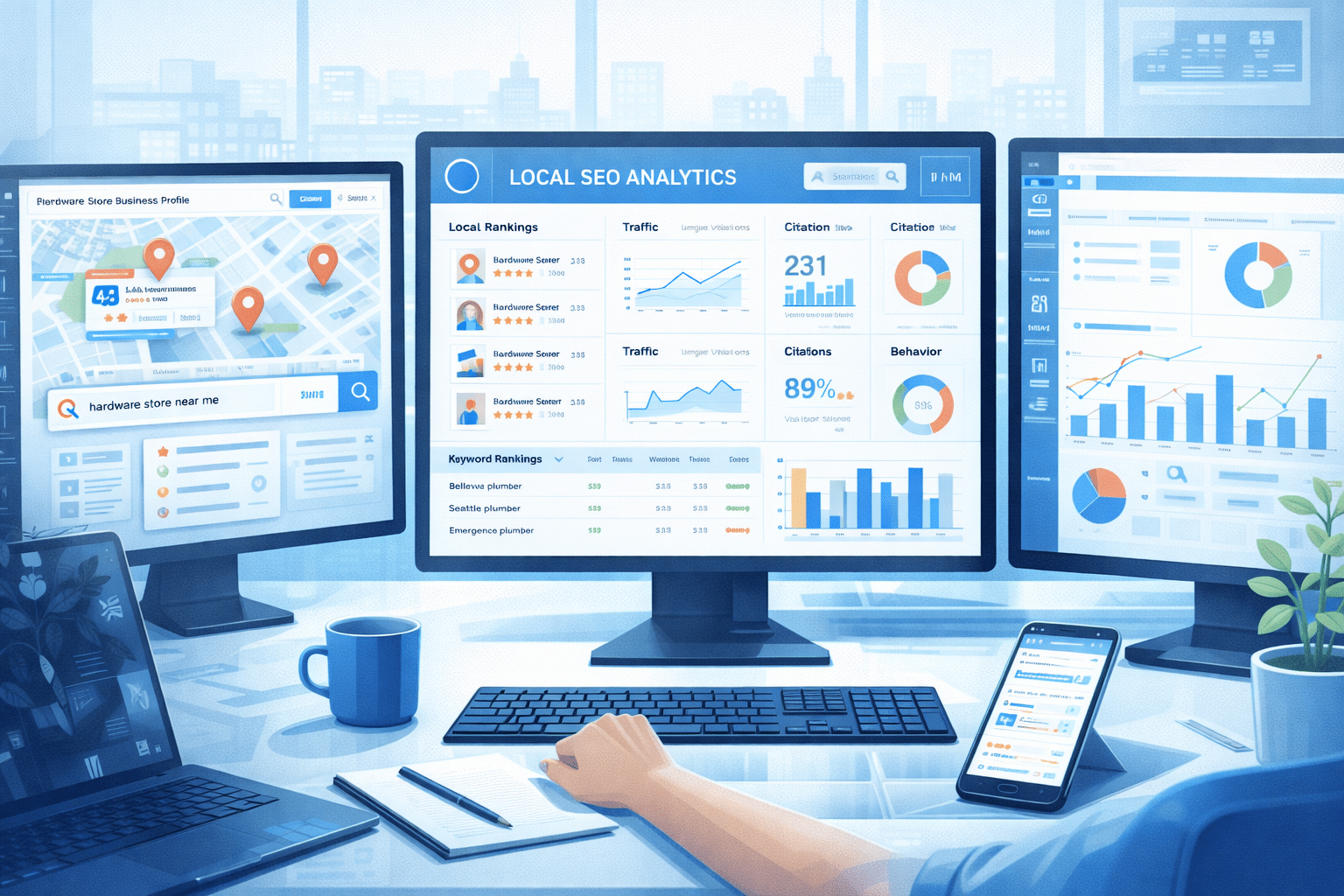
Tracking performance metrics reveals which optimization efforts drive results and which need adjustment, enabling data-driven decisions that continuously improve your local search visibility and customer acquisition. Set up Google Analytics 4 to track website traffic sources, user behavior, conversion events, and geographic data showing where visitors come from, then create custom reports showing traffic from local searches, direction requests from Google Business Profile, and conversions attributed to local SEO efforts. Monitor your Google Business Profile performance using the built-in Insights section to track how customers find your listing (through search versus maps), what search queries trigger your appearance, how many people view your profile versus competitors, phone call volume, direction requests, and website visits originating from your profile. Use rank tracking tools like BrightLocal, Local Falcon, or SEMrush to monitor your rankings for target keywords across different locations within your service area, checking both organic results and Local Pack positions to understand your visibility comprehensively. Track your backlink profile growth using tools like Ahrefs or SEMrush to see how many new local backlinks you acquire monthly, which links drive the most referral traffic, and whether any important links have broken or been removed. Conduct monthly citation audits to ensure your NAP remains consistent across directories, quarterly competitor analysis to identify new tactics they’re implementing that you should counter, and regular content audits to update outdated information and expand underperforming pages with additional valuable content.