

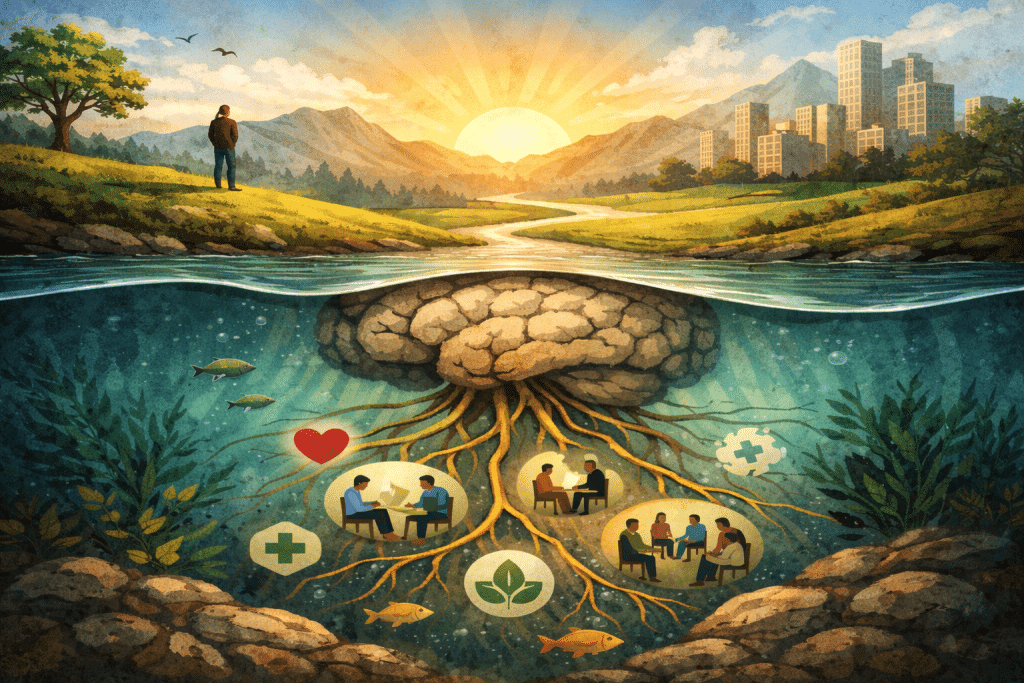
Recovery is often misunderstood as a single milestone, such as completing a treatment program or achieving sobriety. In reality, sustainable recovery goes far beyond surface-level change. It is a long-term process that requires ongoing care, emotional stability, and meaningful support systems. At the center of this process is integrated mental health support, an approach that addresses the full complexity of addiction and recovery rather than treating symptoms in isolation.
Understanding how mental health and addiction intersect is essential for building recovery that lasts. When treatment focuses only on behavior without addressing emotional and psychological needs, relapse risk increases. Integrated care recognizes that mental wellness is not optional in recovery. It is foundational.
Understanding the Connection Between Mental Health and Addiction
Addiction rarely exists on its own. Research consistently shows a strong link between substance use disorders and mental health conditions such as depression, anxiety, post-traumatic stress disorder, and chronic stress. Many individuals use substances as a coping mechanism for emotional pain, trauma, or untreated mental illness.
According to the National Institute on Drug Abuse, people with mental health disorders are significantly more likely to experience addiction. This relationship works in both directions. Substance use can worsen mental health symptoms, while untreated mental health issues can undermine addiction recovery efforts.
This overlap explains why effective addiction treatment must address both conditions together. Treating addiction without addressing mental health leaves a critical gap in care. Integrated mental health support closes that gap by treating the whole person.
What Integrated Mental Health Support Really Means
Integrated mental health support refers to coordinated care that addresses emotional, psychological, behavioral, and social needs alongside addiction treatment. Rather than separating mental health services from substance use treatment, integrated care combines them into a unified recovery plan.
This approach may include therapy, psychiatric care, medication management, peer support, and lifestyle interventions working together. The goal is not only sobriety but emotional stability, improved coping skills, and long-term mental wellness.
Integrated care also recognizes that recovery is not linear. Individuals may experience setbacks, emotional challenges, or life stressors that require ongoing support rather than punishment or discharge from care.
Why Surface-Level Recovery Is Not Enough
Many people appear stable on the outside while struggling internally. A person may maintain sobriety, hold a job, or meet responsibilities, yet still experience untreated anxiety, unresolved trauma, or emotional numbness. Without mental health support, these internal struggles often resurface through relapse or burnout.
Surface-level recovery focuses on outcomes such as abstinence alone. Sustainable recovery focuses on emotional resilience, self-awareness, and healthy relationships. Integrated mental health care helps individuals understand triggers, manage stress, and respond to challenges without returning to substance use.
Long-term studies show that individuals who receive combined mental health and addiction treatment have better outcomes, including lower relapse rates, improved quality of life, and stronger engagement in recovery programs.
The Role of Therapy in Sustainable Recovery
Therapy is a cornerstone of integrated mental health support. Evidence-based approaches such as cognitive behavioral therapy, trauma-informed therapy, and dialectical behavior therapy help individuals identify patterns that contribute to addiction and emotional distress.
Therapy supports recovery by teaching emotional regulation, stress management, and healthier thinking patterns. It also provides a safe space to process trauma, grief, and shame, which are common contributors to addiction.
For many individuals, therapy continues well beyond initial addiction treatment. Ongoing mental health support allows people to adapt as life circumstances change and new challenges emerge.
Medication and Mental Health Stabilization
In some cases, medication plays an important role in mental health and addiction recovery. Conditions such as depression, bipolar disorder, and anxiety may require pharmacological support to stabilize mood and reduce symptoms that interfere with recovery.
Medication assisted treatment for addiction, when combined with mental health care, has been shown to improve retention in treatment and reduce relapse risk. Integrated programs ensure that medications are managed alongside therapy and behavioral support, rather than used in isolation.
Medication is not a cure, but when used appropriately, it can support emotional balance and make therapeutic work more effective.
Community and Social Support as Part of Integrated Care
Mental health recovery does not happen in isolation. Social connection is a powerful protective factor against relapse and emotional decline. Integrated care often includes peer support groups, family involvement, and community resources that reinforce recovery goals.
Peer support programs allow individuals to share experiences, reduce isolation, and learn from others who understand the realities of addiction recovery. Family education and involvement also strengthen outcomes by improving communication and reducing conflict.
Community-based support helps individuals rebuild identity and purpose beyond addiction. Employment assistance, volunteer opportunities, and social engagement contribute to mental wellness and long-term stability.
Addressing Trauma and Emotional Pain
Trauma is a common underlying factor in addiction. Without addressing trauma, recovery remains fragile. Integrated mental health support places strong emphasis on trauma-informed care, which prioritizes safety, trust, and emotional regulation.
Trauma-informed treatment avoids re-traumatization and recognizes that behaviors associated with addiction often develop as survival responses. By addressing trauma directly, individuals gain insight into their emotional patterns and develop healthier coping strategies.
This approach reduces shame and fosters self-compassion, both of which are essential for sustainable recovery.
Measuring Success Beyond Abstinence
Integrated mental health support expands how success is measured in recovery. While sobriety remains important, it is not the only indicator of progress. Emotional stability, improved relationships, meaningful engagement in life, and personal growth are equally important outcomes.
Mental wellness assessments, patient-reported outcomes, and quality of life measures help providers and individuals track progress over time. These tools ensure that recovery plans remain responsive and effective.
By focusing on the full picture of well-being, integrated care supports recovery that is both sustainable and fulfilling.
Why Integrated Mental Health Support Matters Long Term
Addiction recovery does not end when treatment ends. Life continues to present stress, loss, and change. Integrated mental health support prepares individuals to navigate these challenges without returning to substance use.
Ongoing access to therapy, peer support, and mental health resources reduces relapse risk and supports long-term resilience. It also empowers individuals to seek help early when difficulties arise.
Sustainable recovery is built through consistent care, emotional awareness, and strong support systems. Integrated mental health care provides the structure needed to maintain progress over time.
Conclusion
Recovery that lasts goes beyond surface-level change. It requires addressing the emotional, psychological, and social factors that influence addiction and mental health. Integrated mental health support offers a comprehensive approach that treats the whole person, not just the symptoms.
By combining addiction treatment with mental health care, individuals gain the tools needed to build stability, resilience, and purpose. Sustainable recovery is not about perfection. It is about support, understanding, and the ongoing commitment to mental wellness.
When recovery goes beyond the surface, healing becomes not only possible, but lasting.