

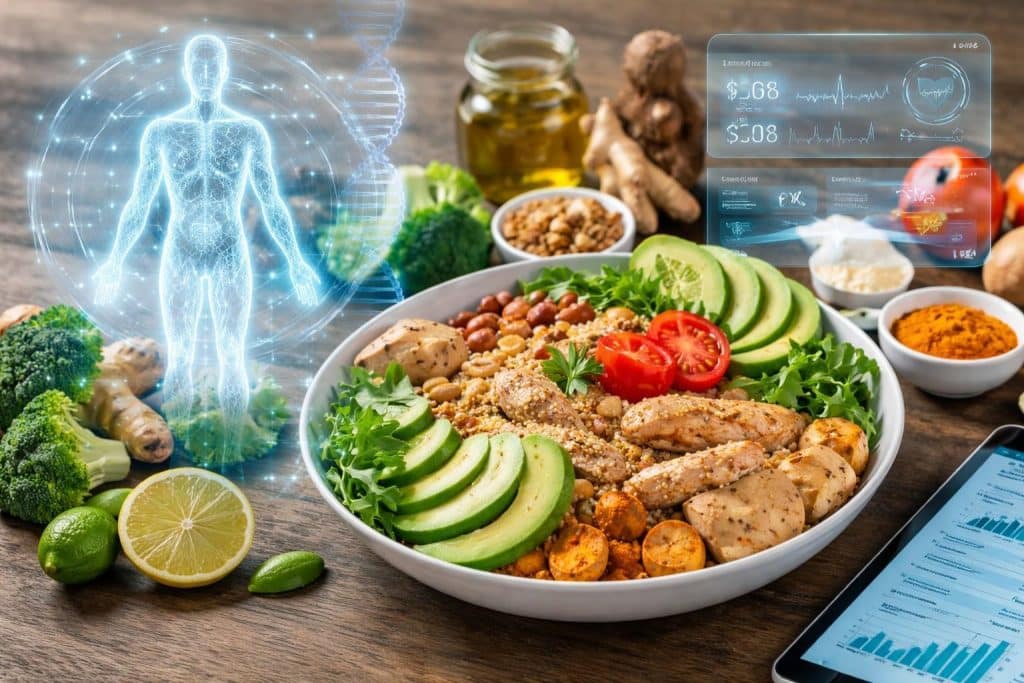
For decades, nutrition advice has followed a simple assumption: if a food is “healthy,” it should work for everyone. Yet real-world experience and modern research tell a different story. Two people can eat the same meal, at the same time, with very different outcomes — one feels energized, the other bloated, fatigued, or inflamed.
This inconsistency is not a failure of discipline. It is a failure of the one-size-fits-all model.
Modern science is now catching up to what traditional health systems recognized thousands of years ago: biology is individual, digestion is variable, and timing matters. Personalized nutrition is no longer a fringe idea. It is becoming the foundation of effective health interventions.
Why Universal Diet Advice Keeps Failing
Calorie-based models assume metabolism behaves uniformly. Food pyramids assume nutritional needs are static. Even popular “anti-inflammatory” or “gut-friendly” diets overlook a critical factor: digestive capacity differs between individuals.
Research in chrononutrition shows that meal timing alters glucose response. Microbiome studies demonstrate that people respond differently to the same foods based on gut composition. Metabolic phenotyping confirms that insulin sensitivity, fat oxidation, and inflammatory responses vary widely.
In short, food does not act in isolation. It acts through a biological system — and that system is not identical across people.
Digestion: The Missing Variable in Modern Nutrition
Most dietary frameworks focus on nutrients. Far fewer focus on digestive strength, which determines whether nutrients are absorbed efficiently or become metabolic stressors.
Weak digestion can turn “healthy” foods into irritants. Strong digestion can tolerate a broader range of inputs. This explains why raw salads energize some people but exhaust others, or why intermittent fasting works well for one individual and backfires for another.
Ignoring digestion leads to contradictory outcomes, frustration, and poor adherence. Addressing it restores coherence.
An Ancient Framework That Matches Modern Data
Long before biomarkers and wearable devices, Ayurveda classified individuals based on functional physiology — digestion speed, heat generation, elimination patterns, energy cycles, and stress response. These constitutional patterns (often described as Vata, Pitta, and Kapha) were not symbolic. They were early biological models.
What makes this framework relevant today is not its age, but its structure. Ayurveda operates on rules: how different foods behave in different bodies, at different times of day, and in different combinations. That is precisely how modern personalization engines function.
The difference is scale. Today, these rules can be digitized, validated, and applied consistently.
This is where education becomes critical. Programs that allow people to learn Ayurveda with CureNatural, for example, focus less on philosophy and more on practical pattern recognition
— understanding why the same dietary rule cannot apply universally.
Timing Matters More Than Most Diets Admit
Emerging research confirms that circadian rhythms influence digestion, hormone release, and metabolic efficiency. Late-night eating disrupts insulin sensitivity. Heavy meals are better tolerated mid-day than in the evening. These insights align closely with traditional meal-timing principles.
Personalized nutrition is not just about what you eat. It is about when your system can process it optimally.
Once timing is considered, many diet contradictions disappear.
Why Personalization Scales Better Than Generic Advice
Generic advice requires constant revision as new studies emerge. Personalized frameworks adapt automatically because they are built on individual response patterns, not population averages.
This is why modern health platforms are moving away from static content libraries and toward assessment-driven models. The goal is not more information, but better filtering.
Educational systems that integrate structured traditional knowledge with modern context — such as Ayurveda courses by CureNatural — illustrate how ancient logic can be translated into contemporary, evidence-aware learning without abandoning scientific rigor.
The Future of Nutrition Is Hybrid, Not Oppositional
The debate between traditional wisdom and modern science is largely artificial. Precision nutrition requires both data and frameworks that can interpret it meaningfully.
Ayurveda offers a classification system. Modern science offers measurement tools. Together, they create actionable personalization.
As healthcare continues shifting toward prevention and individualized care, nutrition will follow the same path. The question is no longer whether personalization works, but how intelligently it is implemented.
The era of universal diet rules is ending. What replaces it is not chaos, but clarity — rooted in biology, guided by timing, and tailored to the individual.