
Close Menu
    Facebook X (Twitter) Instagram
    • Contact Us
    • About Us
    • Write For Us
    • Guest Post
    • Privacy Policy
    • Terms of Service
    Metapress
    • News
    • Technology
    • Business
    • Entertainment
    • Science / Health
    • Travel
    Metapress

    Determining Liability When Pedestrians Are Struck Outside Crosswalks

    Lakisha DavisBy Lakisha DavisJanuary 21, 2026
    Facebook Twitter Pinterest LinkedIn Tumblr Email
    Key Takeaways Establishing liability in pedestrian accidents outside crosswalks depends on numerous factors, including the actions of both parties and environmental conditions. Comparative negligence often applies, meaning both the pedestrian and the driver can share fault and financial responsibility. Legal precedents illustrate that fault is rarely clear-cut—judges and juries carefully weigh all circumstances. Prevention through vigilance and adherence to laws by both drivers and pedestrians is crucial in reducing the number of accidents. Table of Contents Understanding Pedestrian and Driver Responsibilities Factors Influencing Liability in Pedestrian Accidents Comparative Negligence: Sharing the Blame Real-Life Examples of Liability in Action Legal Precedents and Case Studies Preventative Measures to Reduce Pedestrian Accidents Conclusion Understanding Pedestrian and Driver Responsibilities When a pedestrian is struck outside a crosswalk, questions of liability quickly arise. Both drivers and pedestrians owe each other a duty of care, but the specifics of this duty can vary depending on the location and circumstances. Pedestrians are expected, whenever possible, to use marked crosswalks and obey traffic lights, ensuring that they cross roads safely. Drivers, meanwhile, must maintain a constant lookout for pedestrians on foot, yielding the right of way when required and driving attentively in areas where pedestrians are frequently present. Navigating the legal nuances of these duties often requires analyzing the specific facts of each situation. Even when an accident happens outside a marked crosswalk, drivers are not automatically absolved of responsibility. Determining whether a driver or pedestrian—or perhaps both—was negligent is the core of most legal claims involving pedestrian injury liability. Courts look at whether both parties acted reasonably and foreseeably under the circumstances. State law sets standards, but all road users must exercise reasonable care. For example, a pedestrian suddenly stepping into traffic between parked cars may be negligent, but that doesn't absolve a speeding or distracted driver from liability. The facts are crucial and often contentious. Insurance companies and attorneys examine traffic signals, local ordinances, the driver's or pedestrian's history, warning signs, accident history, and roadway safety to determine liability. Factors Influencing Liability in Pedestrian Accidents Assigning fault in pedestrian accidents involves several interconnected factors. Firstly, pedestrian behavior is significant; actions such as jaywalking, crossing against red signals, or sudden movements can increase their liability. Additionally, wearing dark or non-reflective clothing during nighttime can further decrease their visibility, impacting fault determination. Secondly, driver conduct is critical; behaviors like speeding, failing to yield, texting while driving, or ignoring stop signs intensify a driver's liability. Reckless or inattentive driving is crucial in assessing responsibility, regardless of the pedestrian's actions. Lastly, environmental conditions must be considered; poor lighting, adverse weather conditions, obstructed views, and faulty signage can implicate not only the driver and pedestrian but also municipalities or property owners in liability. When unsafe infrastructure contributes to the incident, third parties may share responsibility. Comparative Negligence: Sharing the Blame In states with comparative negligence laws, both pedestrians and drivers can be partly at fault. The judge or jury assigns a percentage of negligence to each. For example, if a pedestrian is 30% responsible and the driver 70%, the pedestrian's compensation is reduced accordingly. This system ensures liability reflects the reality that both parties may contribute to a collision outside the crosswalk. While common across the U.S., specifics vary; some states have "pure" systems, while others bar recovery if the plaintiff is more than 50% at fault. Real-Life Examples of Liability in Action To illustrate the sensitivity of the liability context in pedestrian cases, three scenarios are presented to demonstrate varying levels of fault. In the first, a pedestrian in dark clothing crosses at night and is hit by a speeding driver; fault is shared due to limited visibility and reckless driving. The second involves an attentive pedestrian crossing outside a crosswalk in daylight, but a texting driver fails to notice, mainly blaming the pedestrian. The third features a child running between parked cars; despite its reckless appearance, drivers in residential or school zones must lower their speed and anticipate such movements, emphasizing how context influences liability. Legal Precedents and Case Studies Pedestrian accident lawsuit outcomes depend on the specifics. Some cases show drivers liable for hitting pedestrians outside crosswalks, especially when impairment or distraction is proven. However, pedestrians who ignore safety rules or make sudden moves into traffic may be mainly at fault. Courts expect drivers to exercise caution, especially in areas with a high concentration of pedestrians. For instance, in urban zones with high pedestrian activity, drivers must anticipate unexpected crossings. Such cases require strong evidence, such as eyewitness testimony, footage, and accident reconstructions, to establish liability. Preventative Measures to Reduce Pedestrian Accidents For pedestrians, it is essential to use crosswalks and follow pedestrian signals when available. Wearing bright or reflective clothing at night increases visibility, and individuals should avoid distractions such as mobile devices or headphones while crossing to remain alert. Drivers must adhere to speed limits, especially in areas with high pedestrian traffic, and remain vigilant for unexpected pedestrian movements near schools, bus stops, and urban intersections. It is also crucial for drivers to eliminate distractions to focus fully on the road. To reduce pedestrian accidents, municipalities must invest in public education campaigns, improved street design, better lighting, traffic calming measures, and clear road markings, all of which are essential to enhancing safety for all road users. Conclusion Determining liability when pedestrians are struck outside crosswalks is a nuanced process that requires a thorough investigation into the actions and circumstances of all parties involved. Both pedestrians and drivers must understand and fulfill their obligations to enhance road safety and prevent tragic incidents. By prioritizing awareness, attentiveness, and respect for traffic laws, both groups can work together to reduce the frequency and severity of these all-too-common accidents.
    Share
    Facebook Twitter LinkedIn Pinterest Email

    Key Takeaways

    • Establishing liability in pedestrian accidents outside crosswalks depends on numerous factors, including the actions of both parties and environmental conditions.
    • Comparative negligence often applies, meaning both the pedestrian and the driver can share fault and financial responsibility.
    • Legal precedents illustrate that fault is rarely clear-cut—judges and juries carefully weigh all circumstances.
    • Prevention through vigilance and adherence to laws by both drivers and pedestrians is crucial in reducing the number of accidents.

    Table of Contents

    1. Understanding Pedestrian and Driver Responsibilities
    2. Factors Influencing Liability in Pedestrian Accidents
    3. Comparative Negligence: Sharing the Blame
    4. Real-Life Examples of Liability in Action
    5. Legal Precedents and Case Studies
    6. Preventative Measures to Reduce Pedestrian Accidents
    7. Conclusion

    Understanding Pedestrian and Driver Responsibilities

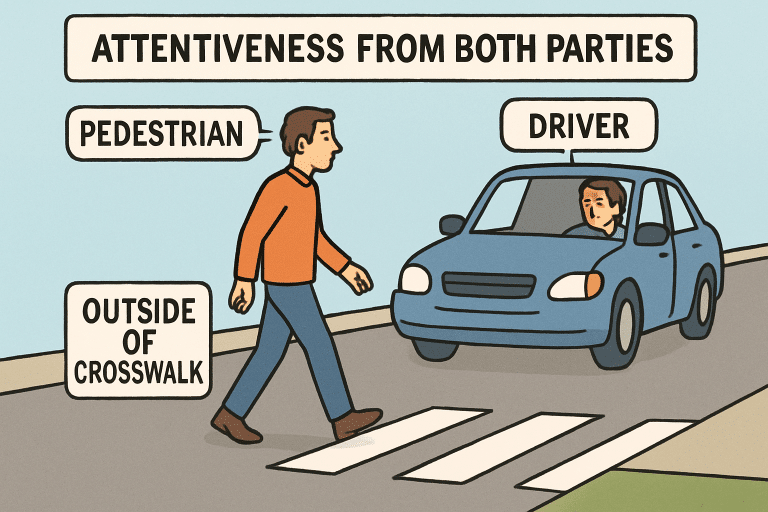
    When a pedestrian is struck outside a crosswalk, questions of liability quickly arise. Both drivers and pedestrians owe each other a duty of care, but the specifics of this duty can vary depending on the location and circumstances. Pedestrians are expected, whenever possible, to use marked crosswalks and obey traffic lights, ensuring that they cross roads safely. Drivers, meanwhile, must maintain a constant lookout for pedestrians on foot, yielding the right of way when required and driving attentively in areas where pedestrians are frequently present. Navigating the legal nuances of these duties often requires analyzing the specific facts of each situation.

    Even when an accident happens outside a marked crosswalk, drivers are not automatically absolved of responsibility. Determining whether a driver or pedestrian—or perhaps both—was negligent is the core of most legal claims involving pedestrian injury liability. Courts look at whether both parties acted reasonably and foreseeably under the circumstances.

    State law sets standards, but all road users must exercise reasonable care. For example, a pedestrian suddenly stepping into traffic between parked cars may be negligent, but that doesn’t absolve a speeding or distracted driver from liability. The facts are crucial and often contentious. Insurance companies and attorneys examine traffic signals, local ordinances, the driver’s or pedestrian’s history, warning signs, accident history, and roadway safety to determine liability.

    Factors Influencing Liability in Pedestrian Accidents

    Assigning fault in pedestrian accidents involves several interconnected factors. Firstly, pedestrian behavior is significant; actions such as jaywalking, crossing against red signals, or sudden movements can increase their liability. Additionally, wearing dark or non-reflective clothing during nighttime can further decrease their visibility, impacting fault determination. Secondly, driver conduct is critical; behaviors like speeding, failing to yield, texting while driving, or ignoring stop signs intensify a driver’s liability. Reckless or inattentive driving is crucial in assessing responsibility, regardless of the pedestrian’s actions. Lastly, environmental conditions must be considered; poor lighting, adverse weather conditions, obstructed views, and faulty signage can implicate not only the driver and pedestrian but also municipalities or property owners in liability. When unsafe infrastructure contributes to the incident, third parties may share responsibility.

    Comparative Negligence: Sharing the Blame

    In states with comparative negligence laws, both pedestrians and drivers can be partly at fault. The judge or jury assigns a percentage of negligence to each. For example, if a pedestrian is 30% responsible and the driver 70%, the pedestrian’s compensation is reduced accordingly. This system ensures liability reflects the reality that both parties may contribute to a collision outside the crosswalk. While common across the U.S., specifics vary; some states have “pure” systems, while others bar recovery if the plaintiff is more than 50% at fault.

    Real-Life Examples of Liability in Action

    To illustrate the sensitivity of the liability context in pedestrian cases, three scenarios are presented to demonstrate varying levels of fault. In the first, a pedestrian in dark clothing crosses at night and is hit by a speeding driver; fault is shared due to limited visibility and reckless driving. The second involves an attentive pedestrian crossing outside a crosswalk in daylight, but a texting driver fails to notice, mainly blaming the pedestrian. The third features a child running between parked cars; despite its reckless appearance, drivers in residential or school zones must lower their speed and anticipate such movements, emphasizing how context influences liability.

    Legal Precedents and Case Studies

    Pedestrian accident lawsuit outcomes depend on the specifics. Some cases show drivers liable for hitting pedestrians outside crosswalks, especially when impairment or distraction is proven. However, pedestrians who ignore safety rules or make sudden moves into traffic may be mainly at fault. Courts expect drivers to exercise caution, especially in areas with a high concentration of pedestrians. For instance, in urban zones with high pedestrian activity, drivers must anticipate unexpected crossings. Such cases require strong evidence, such as eyewitness testimony, footage, and accident reconstructions, to establish liability.

    Preventative Measures to Reduce Pedestrian Accidents

    For pedestrians, it is essential to use crosswalks and follow pedestrian signals when available. Wearing bright or reflective clothing at night increases visibility, and individuals should avoid distractions such as mobile devices or headphones while crossing to remain alert. Drivers must adhere to speed limits, especially in areas with high pedestrian traffic, and remain vigilant for unexpected pedestrian movements near schools, bus stops, and urban intersections. It is also crucial for drivers to eliminate distractions to focus fully on the road. To reduce pedestrian accidents, municipalities must invest in public education campaigns, improved street design, better lighting, traffic calming measures, and clear road markings, all of which are essential to enhancing safety for all road users.

    Conclusion

    Determining liability when pedestrians are struck outside crosswalks is a nuanced process that requires a thorough investigation into the actions and circumstances of all parties involved. Both pedestrians and drivers must understand and fulfill their obligations to enhance road safety and prevent tragic incidents. By prioritizing awareness, attentiveness, and respect for traffic laws, both groups can work together to reduce the frequency and severity of these all-too-common accidents.

    Share. Facebook Twitter Pinterest LinkedIn Tumblr Email
    Lakisha Davis

      Lakisha Davis is a tech enthusiast with a passion for innovation and digital transformation. With her extensive knowledge in software development and a keen interest in emerging tech trends, Lakisha strives to make technology accessible and understandable to everyone.

      Follow Metapress on Google News
      TTY Meaning Snapchat: Acronym and Accessibility Features
      January 21, 2026
      D2 Raid Rotation: Weekly Destiny 2 Dungeon Schedule
      January 21, 2026
      Choosing the Right Windows for Cold Climate Homes in Edmonton in 2026
      January 21, 2026
      Can You Dual Wield In Oblivion: Dual Wielding with Mods
      January 21, 2026
      Determining Liability When Pedestrians Are Struck Outside Crosswalks
      January 21, 2026
      The Benefits of Pet Boarding for Holiday Travelers: Peace of Mind for You and Your Pet
      January 21, 2026
      How to Make Smart Decisions When Shopping for a Used Car
      January 21, 2026
      What Is the Strongest Essential Oil for Pain? Our Top Picks
      January 21, 2026
      Why Modern Credit Risk Tools Matter For Thin-File Borrowers
      January 21, 2026
      7 Traditions and Learning Methods That Make a Boarding School Stand Out Globally
      January 21, 2026
      Top 10 Nearshore Development Companies in Latin America for 2026
      January 21, 2026
      What To Expect From Your VA Loan in 2026: Refinancing Outlook and Market Trends
      January 21, 2026
      Metapress
      • Contact Us
      • About Us
      • Write For Us
      • Guest Post
      • Privacy Policy
      • Terms of Service
      © 2026 Metapress.

      Type above and press Enter to search. Press Esc to cancel.