

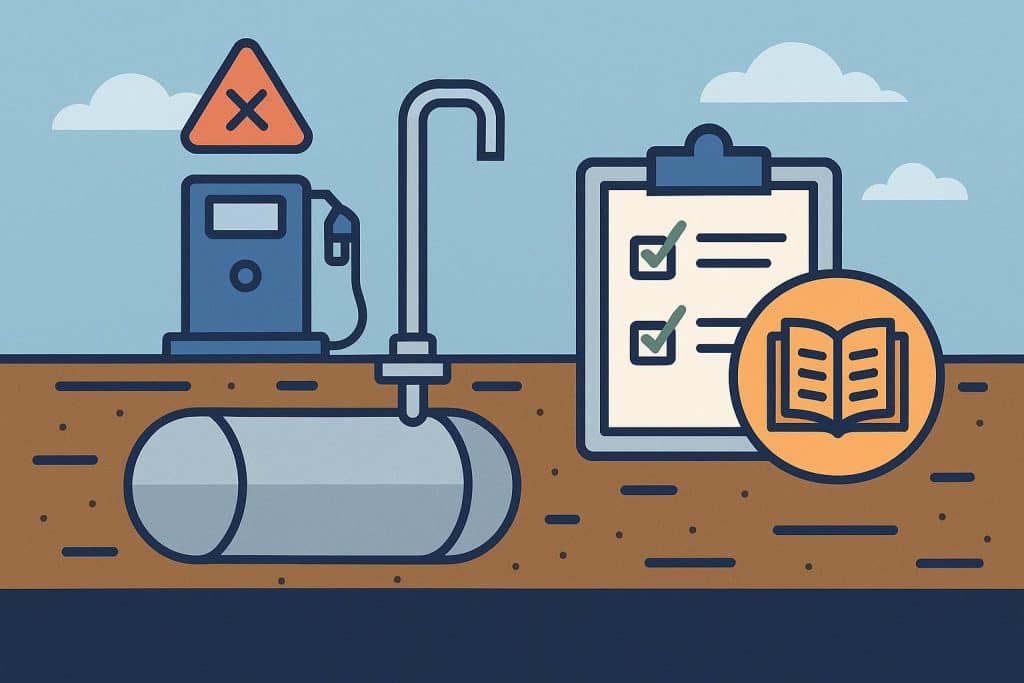
Underground Storage Tanks (USTs) play a critical role in storing fuels safely, but improper management can lead to environmental hazards, regulatory violations, and expensive repairs. Many incidents stem not from equipment failure but from operator errors. Understanding common mistakes and knowing how to prevent them is essential for every Class A and Class B UST operator in California.
Proper training equips operators with the knowledge and skills needed to manage UST systems safely, comply with state regulations, and protect the environment.
1. Failing to Perform Regular Inspections
Routine inspections are the backbone of safe UST operations. Common oversights include:
- Neglecting monthly tank and piping inspections
- Ignoring alarm system checks
- Failing to monitor corrosion protection
These small lapses can escalate into leaks or equipment failure. Training emphasizes inspection protocols, helping operators identify potential issues before they become serious problems.
2. Improper Recordkeeping
Regulatory agencies require detailed documentation of inspections, maintenance, and corrective actions. Common mistakes include:
- Missing inspection logs
- Incomplete maintenance records
- Failing to document spill or overfill incidents
Proper training teaches operators the importance of recordkeeping and provides practical strategies for staying organized and compliant.
3. Inadequate Spill and Overfill Prevention
Spills and overfills are among the most common causes of UST contamination. Mistakes include:
- Not following proper fueling procedures
- Ignoring overfill alarms or bypassing safety devices
- Using outdated or malfunctioning equipment
Training programs cover prevention techniques and emergency procedures, ensuring operators can respond effectively and minimize environmental impact.
4. Ignoring Leak Detection Requirements
UST operators must routinely monitor for leaks to prevent contamination of soil and groundwater. Common errors include:
- Not understanding leak detection equipment
- Delaying leak investigations
- Misinterpreting alarms or test results
California UST training equips operators with the knowledge to conduct leak detection properly, interpret results accurately, and take corrective action immediately.
5. Misunderstanding Regulatory Compliance
Many mistakes occur simply because operators are unfamiliar with state and federal regulations, including:
- Proper tank registration and certification
- Spill and leak reporting requirements
- Operator training and refresher requirements
The California Underground Storage Training course ensures that operators fully understand legal obligations and are prepared to maintain compliance.
6. Neglecting Corrosion Protection
Corrosion is a silent threat to UST integrity. Common mistakes include:
- Failing to monitor cathodic protection systems
- Ignoring tank coating inspections
- Not scheduling timely repairs or replacements
Training provides guidance on corrosion prevention methods and the importance of monitoring systems consistently.
How Training Helps Prevent These Mistakes
Completing a certified California UST training program offers operators:
- A comprehensive understanding of system components and safety protocols
- Step-by-step guidance on inspections, maintenance, and recordkeeping
- Practical strategies for spill prevention and leak detection
- Confidence to handle emergencies effectively
- Knowledge to stay compliant with all California regulations
Investing in training reduces the risk of costly errors, protects the environment, and ensures a safe workplace for employees.
Final Thoughts
Underground storage tank operations demand attention to detail, consistent maintenance, and strict adherence to regulations. Many common mistakes are preventable with proper knowledge, vigilance, and professional training.
By enrolling in a California Underground Storage Training program, operators gain the skills and confidence needed to manage UST systems safely, protect the environment, and maintain regulatory compliance. Proper training isn’t just a requirement—it’s an investment in safety, efficiency, and peace of mind.