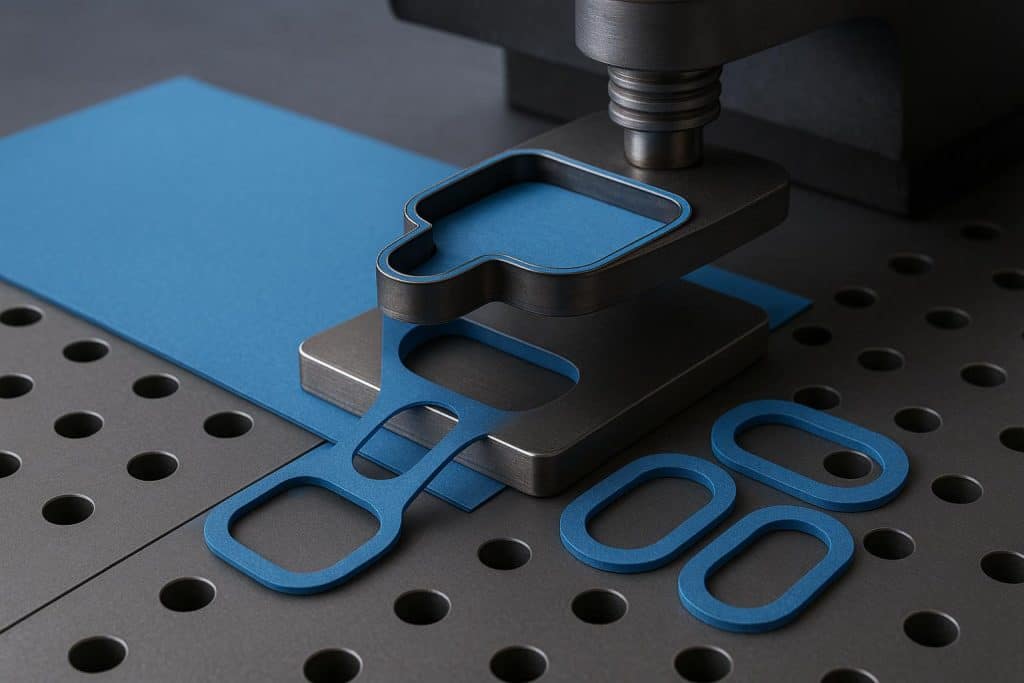
Manufacturing quality and reliability are determined by precision. Die cutting is one of the most critical processes in many of the industries for getting the precise shape and size of components. This approach enables consistent and repeatable outcomes from production, resulting in enhanced performance and reduced errors. To stay on top of the game and to get better outcomes, a lot of companies opt for custom die cutting.
Understanding Custom Die Cutting
Custom die cutting is a process in which specialized tools are used to cut materials into predetermined shapes. These tools match the precise measurements needed for any given project. This method guarantees that each component will seamlessly slot into a larger build. This method is commonly used in industries like electronics, automotive, and packaging to ensure uniformity.
Enhancing Product Precision
Certain items need to fit properly in a structure to perform as intended.
Die cut manufacturers offer you the required size for each piece. This consistency allows assembly and prevents waste by mitigating errors. Each item will comply with specification required by the manufacturers, minimizing costly adjustments later.
Supporting Consistent Quality
It can prove challenging to maintain high standards across production batches due to manual techniques. The solution to this issue comes with an automated custom die-cutting solution, which allows such repeatable results. This method has no variations, as each cut is a near-exact match to the template, removing any possibility of variability that may arise with hand-cut methods. That consistency results in reliable
product performance, which enhances brand reputation.
Boosting Production Efficiency
In every manufacturing environment, speed and efficiency matter. Custom die cutting speeds this process up for large quantities without as much of a lag. It saves time when it comes to repeated monitoring or correction, due to the automation involved. This allows production lines to operate much more quickly and with tight controls over quality.
Material Compatibility and Versatility
The flexibility of custom die cutting is one of its greatest benefits. This process includes working with different materials having different properties, such as plastics, foams, and metals. The process utilizes the best material for every project without losing accuracy. Flexible tooling drives innovation and responds rapidly to shifting design demands, giving companies more power.
Reducing Material Waste
Many organizations continue to be most concerned with resource optimization. Custom die cutting decreases the leftover scraps of raw materials by effectively using the cutting pattern. This strategy reduces costs and promotes sustainability. It results in a cleaner working area and also makes disposal or recycling a lot easier.
Improving Product Performance
Parts that fit snugly together work more fluidly and reliably. With custom die cutting, each part is suited for its purpose. Such accuracy minimizes the chances of failures and increases the lifespan of products. This leads to fewer service calls and more satisfied customers, thanks to consistently well-fitting parts.
Customization for Unique Applications
Some projects call for shapes or features beyond standard designs. Custom die cutting supports unique requirements by allowing for creative freedom. Engineers and designers can specify intricate details or unusual forms without added complexity. This capability gives products a distinctive edge and supports branding efforts.
Quality Control and Inspection
This strict oversight during production means each piece is just as perfect as you had envisioned. Built-in inspection steps are often incorporated into automated die-cutting systems. This catches defects early enough to prevent defective products from going on the assembly line. The trust between the manufacturers and clients is ensured by the intensive monitoring of quality.
Cost Savings Over Time
Although the initial investment in custom die cutting is relatively expensive, the customers save money in the long run. By lowering the amount of errors, material costs go down, and time spent on making corrections is minimized. Automation means higher production rates and lower overhead. One of the benefits of these savings is freeing up resources for innovation or expansion.
Meeting Industry Standards
Several sectors require compliance with specific requirements. Custom die cutting produces parts that conform neatly to stringent specifications, making compliance easy. Meeting these requirements inspires confidence in regulators and customers. It results in fewer recalls or penalties for products that consistently meet standards.
Conclusion
Die-cuts have major advantages for contemporary use. The precision, effectiveness, and flexibility provided by it enable better product outputs and improved satisfaction. Businesses that invest in this often see better results and a better reputation. With increasing expectations for quality, custom die cutting continues to be an invaluable manufacturing tool.