

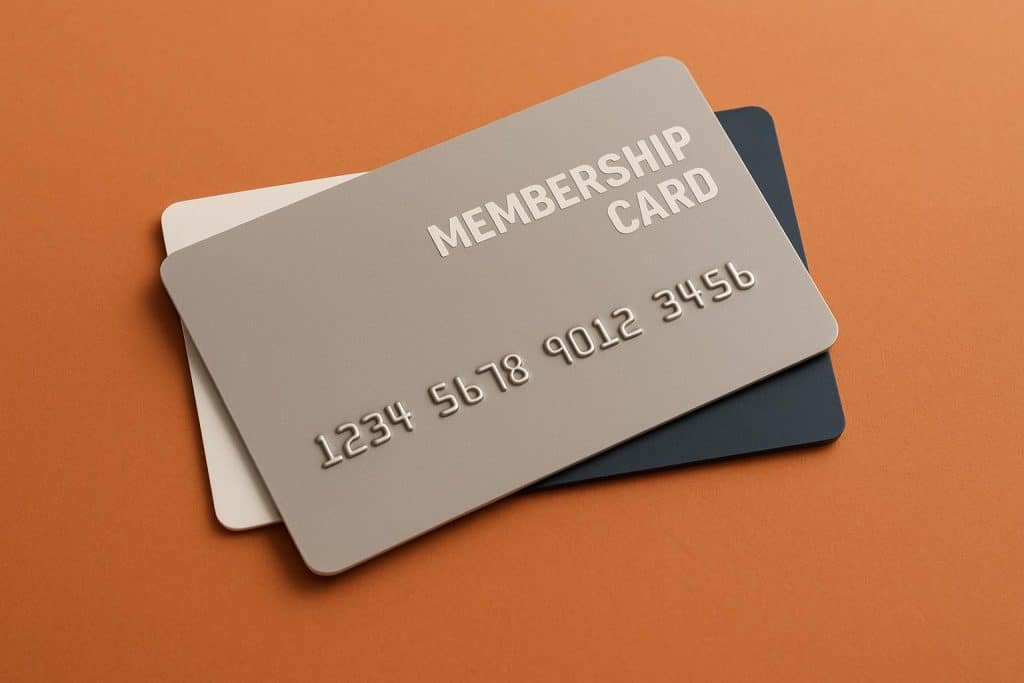
So you've decided your organization needs plastic membership cards. Smart move. But now you're staring at dozens of options PVC vs composite, 20 mil vs 30 mil, glossy vs matte and wondering what actually matters.
I've helped design these cards for hundreds of membership based organizations over the years. Want to know something interesting? Most people overthink this process. The basics are simple once you understand what you're actually buying.
Let me break down everything you need to know about plastic membership cards so you can make confident decisions without the confusion.
The Quick Version: What Plastic Membership Cards Actually Are
Plastic membership cards are credit card sized pieces of durable plastic printed with your organization's branding and member information. They are built to survive daily use while maintaining a professional look.
Most cards follow the CR80 standard size of 3.375 by 2.125 inches which fits easily into wallets, badge holders, and card readers. They are typically made from PVC plastic or composite laminate materials, depending on durability and budget needs.
The real difference between low quality cards and professional ones comes down to material thickness, print quality, and functional features like barcodes or magnetic stripes. Everything else is usually marketing noise.
Understanding Plastic Card Materials
PVC Plastic Cards (The Standard)
PVC membership cards feel almost identical to standard credit cards. Same weight, flexibility, and durability. At 30 mil thickness, they hold up well against spills, drops, and daily wallet use.
PVC supports advanced features such as foil stamping, embossing, magnetic stripes, and custom finishes. These cards are commonly used by membership organizations, private clubs, wellness programs, and country clubs where longevity and appearance matter.
Laminate Cards (Budget Option)
Laminate cards are printed on thinner plastic and then laminated on both sides. Final thickness usually lands at 20 mil or 30 mil. They cost less than solid PVC and have a glossy laminated finish.
These cards work well for nonprofits, schools, volunteer programs, and organizations where functionality is more important than premium appearance.
Card Thickness: 20 Mil vs 30 Mil
Card thickness is measured in mils which equals one thousandth of an inch. Most plastic membership cards are produced in either 20 mil or 30 mil thickness.
Twenty mil cards feel thinner and are easier to punch for lanyards or badge clips. Thirty mil cards match the thickness of standard credit cards and feel more substantial.
Use 30 mil cards for professional membership programs where image and durability matter. Use 20 mil cards for practical applications such as volunteer IDs, event credentials, or temporary access cards.
Printing and Encoding Features
Full Color and Variable Data
Full color CMYK printing allows for vibrant designs on both sides of the card. Variable data printing personalizes each card with unique names, membership numbers, or photos.
This personalization improves security and makes members feel more connected to your organization since their card is uniquely theirs.
Encoding Options
Barcodes are a cost effective option for check in and tracking. Magnetic stripes store more data and integrate with POS systems. QR codes connect physical cards with digital portals or member resources. RFID chips enable contactless tap access for secure environments and premium programs.
Industries Using Plastic Membership Cards Successfully
Membership based organizations rely on plastic cards for identification, access control, and engagement. Private clubs and associations use them to manage entry and member privileges.
Spas and wellness organizations often choose premium finishes to reinforce exclusivity. Country clubs commonly use tiered designs so membership levels are visually recognizable.
Nonprofits and loyalty programs benefit from plastic durability. Unlike paper cards that wear out quickly, plastic cards remain usable for years of daily carry.
Working With Print Robot for Quality Cards
Print Robot produces plastic membership cards at their Deerfield Beach, Florida facility. Keeping everything in house allows for consistent quality and faster turnaround.
Free design services are included on qualifying orders so you do not need a finished layout to get started. Simply provide your logo and basic direction and their team handles the rest.
Standard production typically takes 10 – 15 business days, with rush options available when timelines are tight. Most organizations begin with 100+ quantities and adjust as their membership grows. They even offer custom membership programs that allow for on-demand card personalization for both small and large quantities and can scale to include fulfillment services with a personalized letter.
Print Robot supports barcodes, magnetic stripes, QR codes, sequential numbering, embedded RFID chips, and variable data printing. Cards can be customized to be compatible with most access control and POS systems used today.
Cost Considerations
Pricing for plastic membership cards depends on several factors including quantity, upgrades selected, personalization, and encoding features. Organizations typically see better value per card at higher quantities, especially when planning for growth.
Rather than focusing on per card cost, it is more useful to consider long term value. Membership cards that improve retention, streamline access, and reinforce brand credibility often pay for themselves through stronger member engagement.
Making Smart Decisions
Start by deciding how the card will be used. Access control, identification, marketing, loyalty tracking, or all of the above.
Will your list of member names and/or numbers be ready all at once or do new members trickle in over time? Plan slightly above your current membership size so new members can be onboarded without delays.
Professional design matters because the card represents your organization every time a member uses it. Take advantage of the free, professional design services offered by Print Robot and see how your membership cards will look before they are printed.
Bottom Line on Plastic Membership Cards
Plastic membership cards create a physical connection between organizations and their members. They serve as practical tools for access and identification while reinforcing brand value every day. If you want a deeper look at design choices, personalization, and real world use cases. Read more about personalized membership cards.
Whether you are launching a new membership program or need to update your expired cards, professionally produced plastic membership cards from Print Robot provide durability, consistency, and long term value.
Focus on quality materials, clear design, and the right functionality. When done correctly, membership cards become assets that support retention, trust, and smoother operations.