

Sunset in Crete Is Not Just a View but a Sequence
Sunsets in Crete are rarely abrupt. They unfold in a series of transitions that feel almost choreographed by the island’s geography. In the late afternoon the sea shifts from bright turquoise into deeper mineral blues. Shadows form along limestone cliffs as sunlight strikes at a lower angle. Birds trace the coastline in lazy arcs while the sky begins to soften from white into warm gold. Observing these changes from land offers a cleaned-up version of the experience, but from the sea the process becomes immersive and unfiltered.
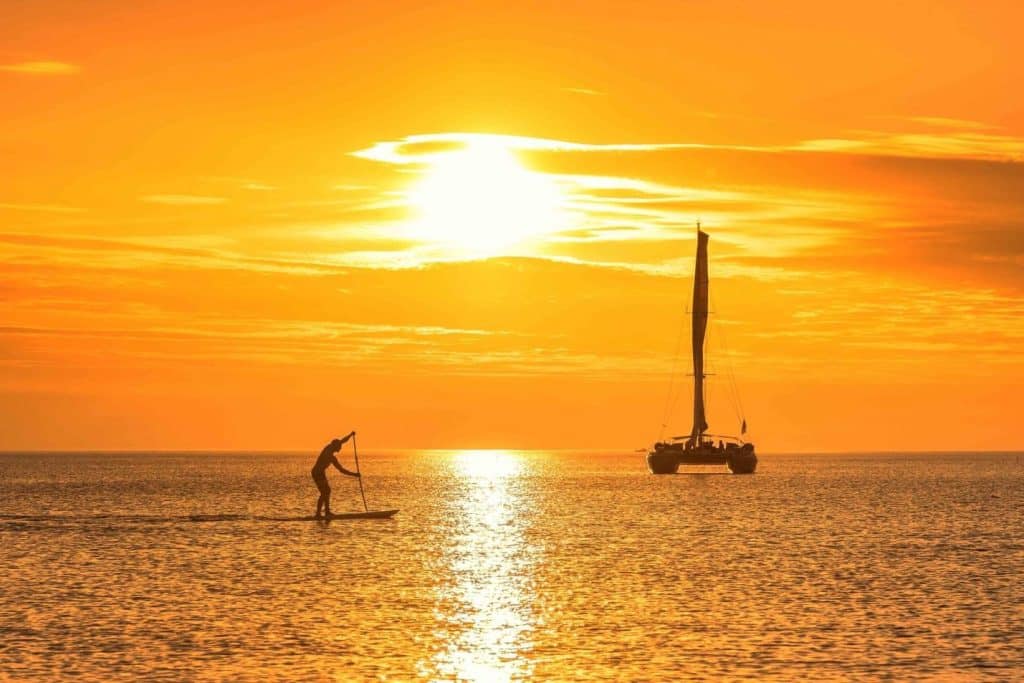
Timing matters. The sun does not simply “set” over the island; it interacts with the Mediterranean atmosphere in distinct phases. Dust particles, sea salt and summer humidity scatter light differently as the evening progresses. First the cliffs around Chania take on amber tones, then the horizon develops a copper gradient, and finally the sky burns into deep orange before cooling into violet. These transitions give a Crete catamaran cruise its emotional and aesthetic depth, making it feel less like an excursion and more like a maritime ritual rooted in time and light.
Why the Catamaran Amplifies the Experience
A catamaran gives sunset travel its own rhythm. The vessel remains steady even as mild evening winds pick up offshore, allowing travelers to remain above deck throughout the cruise rather than retreating indoors. The stability offers a more cinematic vantage point where passengers can watch the coastline drift past without jarring motion. Wide decks and open seating create space for observation, conversation and photography without crowding, turning the boat into a moving amphitheater.
The shallow draft also enables the vessel to remain relatively close to the coastline during golden hour, when the island’s features are at their most expressive. Rock formations, coves and beaches take on sculptural qualities as light strikes at oblique angles. For photographers and romantics alike, the combination of stability and open sightlines defines why the format of a bold Crete catamaran sunset cruise bold has become a hallmark of sunset travel in western Crete rather than just another boat outing tacked onto a travel itinerary.
Color, Atmosphere and Maritime Texture
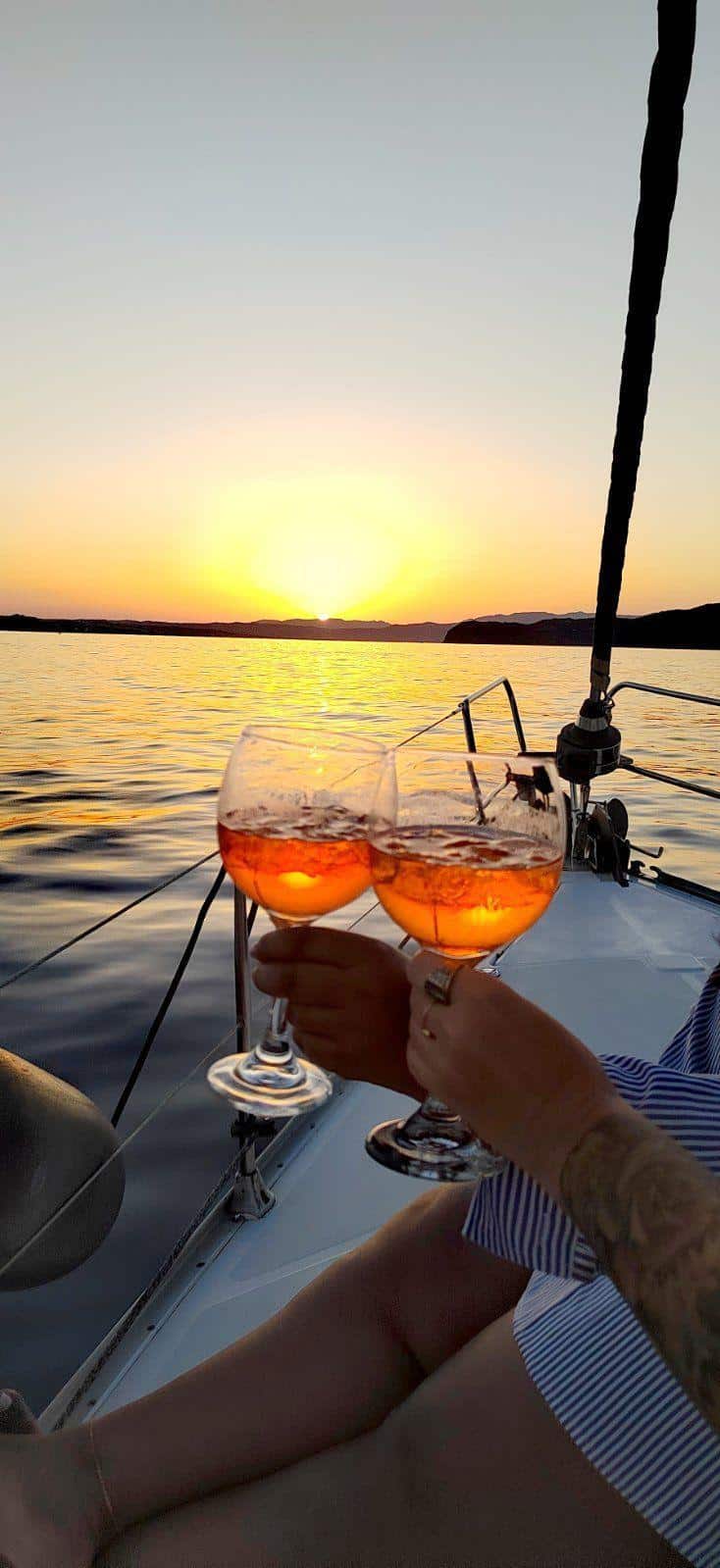
The most compelling aspect of sunset at sea is not the sun itself but the interplay of elements. When the sky transitions into saturated hues, the sea becomes a textured mirror that reflects and distorts color depending on wind and current. Gentle ripples break the light into streaks of crushed gold and copper, while calmer patches resemble pools of molten amber. The sensory experience is amplified by sound: the rhythmic hiss of water against the hull, the soft clap of sails or the subdued hum of the engine if conditions are still.
These details matter because they create memory. Travelers often remember how the air tasted of salt, how the breeze cooled as the sun sank, or how the island silhouette sharpened into a cutout against the horizon. The sea is rarely silent but never overwhelming. It supports the visual spectacle without drowning it. Sunset from land is a framed view. Sunset from the catamaran is a multi-sensory immersion.
A Coastal City That Understands Maritime Culture
Chania, the most common departure point for sunset sailing, has centuries of maritime heritage baked into its architecture and urban rhythm. The old Venetian harbor, with its lighthouse and stone walls, hints at the island’s history of trade and seafaring. Beneath the visible landmarks exists a deeper cultural familiarity with the sea—a sense that the coastline is not backdrop but character. This perspective quietly shapes how sunset cruises are designed and how they feel.
Modern sailing in Crete reflects this heritage without leaning into nostalgia. Captains and crews approach the sea as a living space rather than a theatrical set. The island’s maritime identity remains present even when the journey is purely recreational. This authenticity is one of the reasons sunset catamaran travel resonates more profoundly in Crete than in destinations where the sea is staged as accessory rather than integral to place.
Crete Catamaran Sunset Cruise to Balos Lagoon
A sunset voyage toward Balos Lagoon introduces a very different personality of the landscape compared to daytime cruising. In late afternoon, the lagoon’s shallow waters begin to reflect warmer tones as the sandbanks pick up amber highlights. The surrounding cliffs take on deeper reds as the sun lowers against the western horizon. The shift in color compresses the lagoon into a more dramatic composition, turning a place known for brightness into one defined by contrast. Sailing during this time of day also changes how travelers perceive distance and scale. The lagoon appears more intimate, as if it sits closer to the sea rather than floating above it in turquoise daylight.
The approach to Balos during sunset carries a sense of stillness unusual for such a well-known location. Winds typically calm in the evening, allowing the catamaran to move gently along the peninsula without urgency. The route emphasizes atmosphere rather than sightseeing, making the lagoon feel almost private despite its global profile. As twilight takes over, the lagoon transitions from illuminated landscape into silhouette. The sandbanks fade into shadow while the water retains streaks of copper and violet. It is a moment that underscores how maritime travel shapes memory: not through landmarks alone, but through light, temperature and time.
When Light Finally Breaks and Evening Takes Over
After the sun disappears below the horizon, the sky often delivers an encore. Colors that seemed saturated moments earlier dissolve into lavender, then into indigo. Islands on the horizon flatten into silhouettes. Stars begin to appear above the bow and the coastline retreats into darkness. For many travelers the return trip is the most memorable stage—not because of spectacle but because of tranquility. The sea cools, conversations soften and the island reclaims its quiet character.
Back on land, nightlife resumes with its louder rhythms, but the contrast highlights the cruise’s atmosphere. The experience emphasized pacing rather than urgency, observation rather than consumption. It offered a maritime version of what locals already understand: Crete rewards those who pay attention to its transitions.
About Crete Catamaran
Crete Catamaran is a maritime company based in Chania specializing in sunset and coastal sailing experiences around western Crete. The company focuses on scenic routes that highlight the island’s Mediterranean light, geology and maritime culture. By pairing stable catamaran vessels with local captains and thoughtfully paced itineraries, Crete Catamaran contributes to a style of travel that values atmosphere, geography and authenticity over spectacle or speed.