

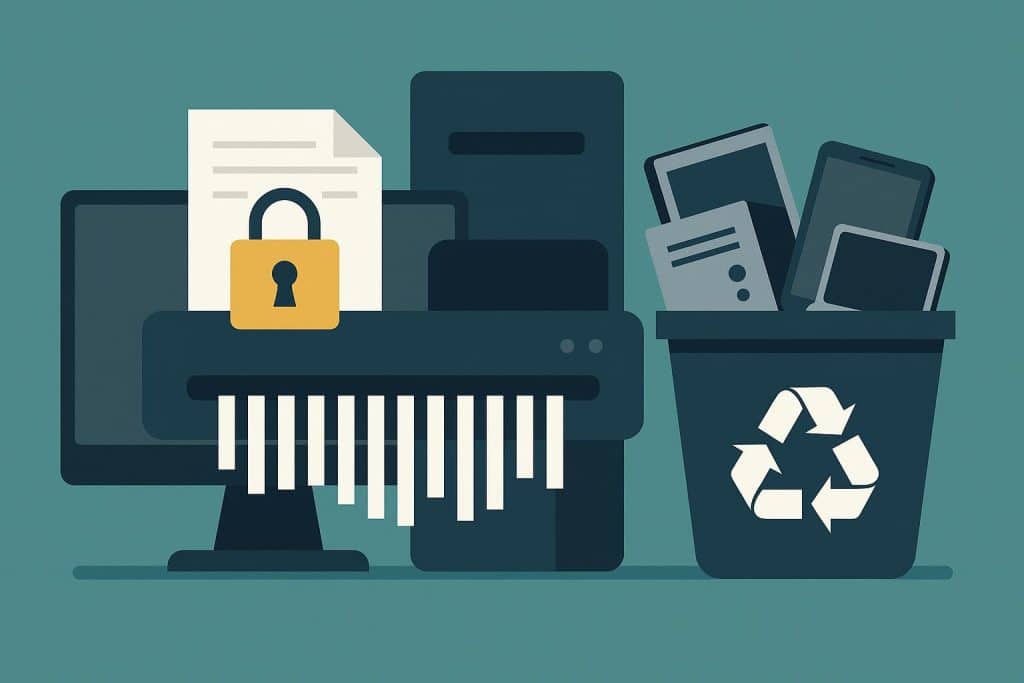
When businesses retire old computers, servers, and mobile devices, most focus on the environmental benefits of responsible recycling. Fewer stop to consider what happens to the sensitive information still stored on those hard drives and memory chips. The reality is that data security and e-waste recycling are inseparable concerns, and organizations that treat them as separate issues put themselves at serious risk.
The connection between protecting confidential information and disposing of electronics properly has never been more important. Businesses generate mountains of e-waste each year as technology refresh cycles accelerate, and every discarded device carries a digital footprint that needs careful handling. Understanding why data security matters in the recycling process helps organizations make smarter decisions about who handles their retired technology.
1. Old Devices Hold More Data Than Most People Realize
A laptop headed to recycling looks harmless sitting in a storage closet, but the information it contains tells a different story. Employee records, customer databases, financial spreadsheets, intellectual property, and years of email correspondence often remain intact on devices long after they’ve been replaced. This is precisely why choosing a qualified ITAD company becomes one of the most important decisions an organization makes during technology refresh cycles.
Simply deleting files or reformatting a hard drive doesn’t eliminate this data. Digital forensics experts can recover information from drives that appear empty to the average user. When businesses hand over old equipment without proper data sanitization, they’re essentially giving away keys to their entire operation. This risk extends beyond computers to include phones, tablets, multifunction printers, and even networking equipment that stores configuration data.
The problem grows more complex as storage capacity increases. A five year old server being retired today holds exponentially more data than similar equipment from a decade ago. Modern solid state drives present their own challenges since traditional data destruction methods designed for spinning hard drives don’t always work the same way on newer storage technology.
2. Regulatory Compliance Isn’t Optional
Organizations across industries face strict requirements about how they protect and dispose of sensitive information. Healthcare providers must comply with HIPAA regulations that govern patient data throughout its lifecycle, including destruction. Financial institutions answer to regulations that mandate secure handling of customer information even after account relationships end.
The penalties for non-compliance extend beyond fines. Regulatory violations damage reputations and erode customer trust in ways that take years to rebuild. When an organization can’t produce documentation proving data was properly destroyed, regulators assume the worst. This makes working with certified professionals who follow standards like NIST 800-88 and provide certificates of data destruction a necessity rather than a nice-to-have.
State level data privacy laws add another layer of complexity. California’s Consumer Privacy Act and similar legislation in other states impose specific requirements on how businesses handle personal information. These laws don’t make exceptions for data sitting on equipment bound for recycling. Organizations need clear audit trails showing what happened to every device and the data it contained.
3. A Quality ITAD Company Treats Security as Step One
Information Technology Asset Disposition services exist specifically to manage the intersection of data security and responsible electronics recycling. Professional providers understand that environmental compliance and data protection go hand in hand. Their facilities operate under strict security protocols, with access controls, surveillance systems, and chain-of-custody documentation that tracks every device from pickup to final disposition.
The best providers hold certifications that demonstrate their commitment to both environmental and data security standards. R2v3 certification indicates adherence to responsible recycling practices, while ISO certifications related to environmental management and data security show a comprehensive approach to asset disposition. These credentials aren’t just marketing tools; they represent audited, verified processes that organizations can rely on.
Certified professionals also stay current on evolving data sanitization techniques. As storage technology changes, so do the methods needed to ensure data is truly irrecoverable. What worked for hard drives five years ago might not be sufficient for today’s solid-state storage. Organizations that try to handle data destruction in-house often lack the expertise and equipment to keep pace with these changes.
4. Data Breaches From Improper Disposal Are More Common Than You Think
News headlines focus on sophisticated cyberattacks, but data breaches stemming from improper equipment disposal happen with alarming frequency. A study by the National Association for Information Destruction found that a significant percentage of used hard drives purchased from secondary markets still contained recoverable data, including medical records, financial information, and business documents.
These breaches happen because organizations underestimate the effort required to truly erase data. An IT manager who wipes drives using built-in operating system tools thinks the job is done, but forensic software can often recover that information. Small businesses without dedicated IT staff face even greater risks when they drop old computers at local recycling events without any data sanitization.
The financial impact of a data breach extends far beyond immediate remediation costs. Organizations face notification requirements, credit monitoring expenses for affected individuals, legal fees, and potential class-action lawsuits. The IBM Cost of a Data Breach Report consistently shows that lost business due to customer turnover and damaged reputation represents the largest portion of breach-related expenses.
5. Asset Recovery and Data Security Work Together
Responsible e-waste management involves more than just destruction. Many retired devices retain significant value and can be refurbished for reuse, extending their useful life and reducing environmental impact. However, maximizing this residual value requires secure data erasure methods that don’t physically destroy the equipment.
Organizations working with an ITAD company that specializes in both data security and asset recovery get the best of both worlds. Certified data erasure software can completely sanitize devices while keeping them functional for resale or donation. This approach supports sustainability goals, generates revenue from equipment buyback programs, and maintains data security standards.
The process requires expertise. Different devices need different sanitization approaches based on their storage technology, intended next use, and compliance requirements. A laptop being refurbished for resale needs thorough but non-destructive data erasure. A server that stored highly classified information might require physical destruction of storage media even if the rest of the equipment has value.
6. Environmental Responsibility Demands Professional Handling
E-waste contains hazardous materials that require specialized recycling processes. When organizations prioritize finding the cheapest disposal option or take shortcuts by dumping equipment in regular trash, they create environmental and legal problems. Many states prohibit disposing of electronics in landfills, and improper handling of e-waste can result in significant fines.
But environmental responsibility and data security aren’t competing priorities; professional ITAD companies address both simultaneously. Their processes ensure toxic materials are handled according to environmental regulations while data-bearing components receive appropriate security measures. Downstream tracking verifies that materials are processed at facilities meeting environmental standards, not shipped to developing countries where they’re dismantled under unsafe conditions.
Organizations increasingly face pressure from stakeholders to demonstrate environmental stewardship. Being able to document both responsible recycling practices and secure data destruction supports corporate sustainability goals and ESG reporting requirements. This documentation becomes particularly important for publicly traded companies and those in regulated industries.
7. The Right Partner Makes Compliance Simple
Navigating the complex landscape of data security requirements, environmental regulations, and asset recovery options overwhelms many organizations. Working with qualified professionals who handle all these aspects under one roof eliminates the guesswork and reduces risk.
A comprehensive approach includes secure logistics from the moment equipment leaves a facility, tracked processes at certified processing centers, and detailed reporting that documents every step. Organizations receive certificates confirming data destruction, environmental compliance documentation, and asset disposition reports that support audit requirements.
The peace of mind this provides has tangible value. IT managers can focus on strategic initiatives instead of worrying about compliance gaps. Finance teams get accurate information about asset values and disposal costs for budgeting purposes. Legal and compliance departments receive the documentation they need to demonstrate due diligence.
Businesses of all sizes benefit from professional ITAD services. Enterprise organizations with large-scale technology refreshes need the operational capacity and logistics expertise to handle complex projects. Smaller businesses gain access to enterprise-grade security and compliance processes they couldn’t replicate in-house.
Looking Forward
The relationship between data security and e-waste recycling will only grow more important as technology becomes further embedded in business operations. Organizations that establish relationships with certified ITAD providers now position themselves to handle future challenges more effectively. They build processes that scale with their needs, maintain compliance as regulations evolve, and protect themselves from the reputational and financial damage that comes with data breaches.
The cost of professional asset disposition services represents a small fraction of what organizations risk by taking shortcuts. When viewed as part of a comprehensive information security and environmental compliance strategy rather than an isolated expense, the value becomes clear. Protecting data throughout its entire lifecycle, including the end of that lifecycle, isn’t just good practice; it’s essential to operating a responsible, secure organization in the modern business environment.