

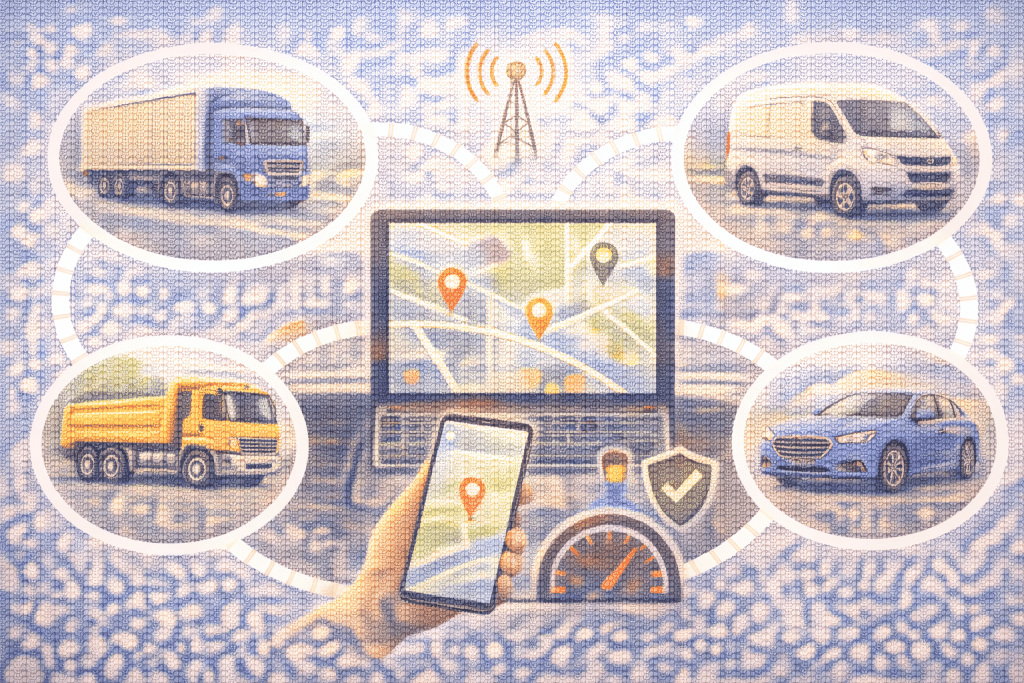
The use of a mixed fleet of vehicles brings with it some form of complexity that is hardly experienced in single-type fleets. The cars, vans, trucks, and specialised vehicles have various functions, wear and tear patterns, and costs of use. Whenever these cars are handled under one operational umbrella without customised management of these vehicles, inefficiency grows at a faster rate, and the impact becomes poor.
It is not only a matter of diversity, but also of inconsistency. Mixed fleets tend to be based on disconnected management strategies, with distinct processes for the various types of vehicles. Such dispersion results in an uneven performance, unreliable reporting and cost control blind spots. It becomes necessary to standardise technology in order to be able to impose unity without imposing artificial consistency on naturally diverse assets.
The Complexity of Managing Diverse Vehicle Types
There are operational requirements for each type of vehicle in a mixed fleet. Light cars can be more concerned with speed and flexibility. In contrast, heavy trucks are concerned with the capacity to carry and the regulatory requirements. In the absence of centralized understanding, managers will have a hard time relating performance among categories or the contribution of individual types of vehicles to the overall performance.
Such comparative inadequacy results in biased decisions. Investments can lean towards the most noticeable or recognisable type of vehicle other than the most cost-efficient. In the long run, this distorts fleet structure and the cost of operation. Managing them properly demands data that can be normalised to reflect the difference between the types of vehicles, but at the same time consider their individual limitations.
Unified Visibility Across a Mixed Fleet
A contemporary vehicle tracking system gives a single layer of visibility to all types of vehicles, irrespective of their size and purpose. This does not imply the equal treatment of all vehicles but rather the administration of the vehicles in an overall context. Location information, activity measures, and performance values can be considered as a whole and at the same time be divided by vehicle model.
Such cohesiveness facilitates coordination. Jobs can be allocated by the dispatchers according to the availability and suitability of the time, and not by habit. The managers are able to see the workload that is not utilised effectively and redistribute it to overworked vehicles. What is produced is an operating fleet as a whole and not a loose system of loosely joined components.
Operational Benefits for Mixed Vehicle Fleets
The benefits of the tracking technology are particularly evident when it is used with heterogeneous fleets. Although the advantages are similar to those observed in single-type fleets, their influence is only increased by the complexity:
• Optimised Asset Utilisation: The managers can ensure that the correct type of vehicle is deployed for the correct kind of task, and it does not use up more unnecessary wear and fuel.
• Standardised Reporting: The standardisation of metrics between the classes of vehicles will allow comparing the performances fairly and analysing the costs more accurately.
• Better Compliance Governance: Various vehicles may be governed by a variety of regulations, which may be tracked and controlled through the same platform.
• Scalable Fleet Growth: Due to the addition of new types of vehicles, they can be introduced without necessarily redesigning management processes afresh.
All these advantages decrease the operational friction. Fleet teams do not have to deal with exceptions, which leaves them with the opportunity to optimise and plan.
Cost Control in a Diverse Operating Environment
Mixed fleets are a big target of concealed expenses. Inefficiencies in fuel consumption, irregular maintenance processes, and misplaced vehicles are not noticeable as they are cross-categorised. These cost drivers are consolidated in tracking data, and hence, the inefficiencies can be seen and measured.
With heavy vehicles, it is possible to maintain a maintenance-intensive schedule. With light vehicles, it is possible to focus on utilisation efficiency. Such a control approach minimises waste and maintains operational flexibility, which mixed fleets find hard to balance without trusted data.
Enabling Strategic Decision-Making
In addition to efficiency of service on day-to-day operations, tracking systems also assist in strategic decisions across time. The information regarding the usage patterns, operating expenses, and performance trends is used to make decisions regarding the fleet composition.
This evidence-based practice disputes premises that tend to remain in fleet operations. Cars are not stored and disposed of by intuition. Rather, the choices are based on quantifiable results, which enhance financial performance and operational sustainability in the long run.
Conclusion
Mixed vehicle fleets increase inefficiencies as well as opportunities. It can be a source of their competitive advantage as they are diverse, but only when it is managed clearly and consistently. Complexity is a curse and not an asset in the absence of credible visibility.
Tracking technology would convert mixed fleets into coordinated systems by centralising control and making it operationally differentiated. The outcome is improved use and greater cost management, as well as informed strategic choices.