

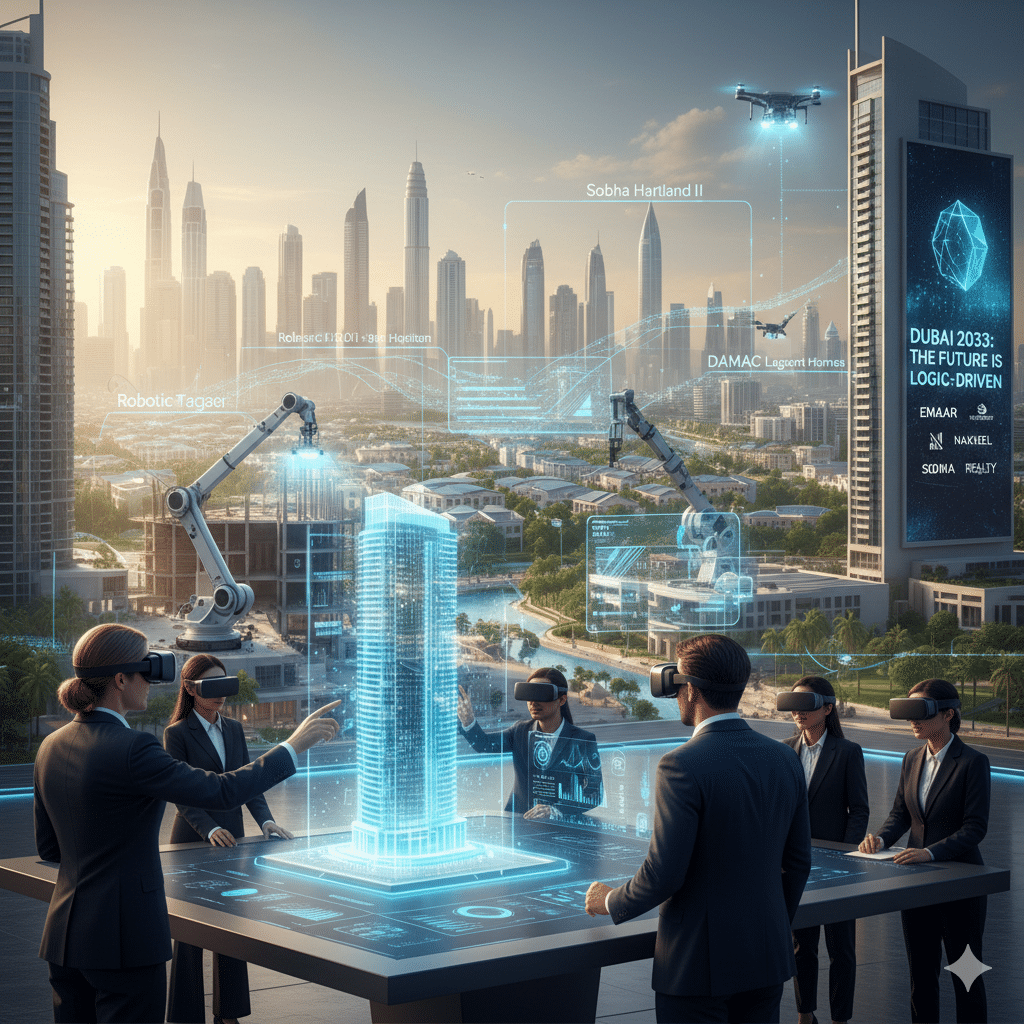
In the rapidly evolving landscape of 2026, Dubai has firmly established itself as the global epicenter of “PropTech” (Property Technology). While the city was once defined by the sheer height of its skyscrapers, today its skyline is defined by the intelligence embedded within them. Top developers like Emaar Properties, DAMAC, Nakheel, and Sobha Realty are no longer just builders; they have become technology integrators, utilizing a sophisticated stack of AI, Digital Twins, and Blockchain to redefine urban living.
The shift is palpable: the market has moved from “momentum-based” buying to “logic-based” investing, where the technological maturity of a project is a primary driver of its value.
1. Digital Twins: The Virtual Blueprint
One of the most significant shifts in 2026 is the universal adoption of Digital Twin technology. Led by partnerships between the Dubai Land Department (DLD) and private giants, developers now create a comprehensive virtual replica of every building before a single brick is laid.
- Predictive Planning: Developers use these 3D virtual models to simulate sunlight exposure, wind patterns, and even pedestrian flow. This ensures that a new tower in Dubai Creek Harbour, for instance, maintains optimal cooling efficiency naturally.
- Operational Efficiency: Once a project is completed, the Digital Twin remains active. Sensors throughout the physical building feed real-time data to its virtual counterpart, allowing facility managers to predict when an elevator motor might fail or where energy is being wasted, often fixing issues before residents even notice them.
2. Artificial Intelligence in Design and Sales
AI has moved from a buzzword to the “brain” of the development process.
Generative Design
Top-tier developers are utilizing AI-driven generative design to maximize “livability.” By inputting specific parameters—such as the number of units, required green space, and views of the Burj Khalifa—AI algorithms can generate thousands of floor plan iterations in seconds, selecting the one that offers the best natural light and most efficient use of space.
The Hyper-Personalized Buyer Journey
In 2026, the “off-plan” buying experience is almost entirely digital. Potential investors from London, New York, or Mumbai can walk through their future apartments using high-fidelity Virtual Reality (VR). AI assistants, like those integrated into the platforms of fäm Properties or Emaar, provide instant valuations and ROI forecasts based on millions of data points, removing the guesswork from international investing.
3. Blockchain: The End of Paperwork
The Dubai Real Estate Sector Strategy 2033 has accelerated the push toward a paperless, transparent ecosystem. Blockchain is the backbone of this movement.
- Smart Contracts: Transactions that used to take weeks now happen in minutes. Smart contracts automatically handle the transfer of titles and funds once specific conditions are met, eliminating the need for many traditional intermediaries.
- Fractional Ownership: Through tokenization, developers are allowing smaller investors to buy “shards” of high-value commercial or residential assets. This has democratized the Dubai market, allowing global investors to own a piece of a luxury villa in Palm Jebel Ali for as little as AED 5,000.
4. The Rise of “ConTech” (Construction Technology)
Efficiency on the construction site has reached new heights. Developers like Sobha Realty, known for their “backward integration” model, are leading the charge in:
- 3D Printing: Entire villas and structural components are now being 3D printed in Dubai, significantly reducing material waste and construction time.
- Robotic Automation: On-site robots are now commonly used for repetitive tasks like bricklaying, painting, and even structural inspections, ensuring a level of precision that exceeds manual labor.
- Drones: High-definition drones monitor construction progress daily, comparing the physical site to the BIM (Building Information Modeling) data to ensure every project stays on schedule.
5. Sustainability and the “Green Tech” Mandate
In alignment with the Dubai 2040 Urban Master Plan, technology is being leveraged to meet aggressive carbon-neutral goals.
- Smart Grids: New communities are being built with integrated smart grids that allow buildings to share energy. If one tower has excess solar power, it can automatically redirect it to a neighboring building.
- IoT-Enabled Resource Management: Smart irrigation systems in communities like The Sustainable City or Tilal Al Ghaf use soil moisture sensors to ensure not a drop of water is wasted—a critical innovation for a desert climate.
- AI Climate Control: Within individual units, AI-driven thermostats learn a resident’s habits, pre-cooling rooms before they arrive and powering down when they leave, reducing energy consumption by up to 30%.
Comparison of Tech Adoption Among Top Developers (2026)
| Developer | Primary Tech Focus | Iconic Tech-Forward Project |
|---|---|---|
| Emaar | Master-community IoT & Digital Twins | Dubai Creek Harbour |
| DAMAC | Branded AI-integrated smart homes | DAMAC Lagoons |
| Nakheel | Sustainable waterfront “Green Tech” | Palm Jebel Ali |
| Sobha | Robotic construction & precision engineering | Sobha Hartland II |
The Future: Toward 2033
As we look toward the next decade, the integration of technology in Dubai real estate is no longer about “luxury” but about resilience and logic. The winners in today’s market are those who provide data-backed transparency to investors and tech-enabled comfort to residents. With the Real Estate Sector Strategy 2033 aiming to double the sector’s value, technology will remain the primary engine driving that growth.