

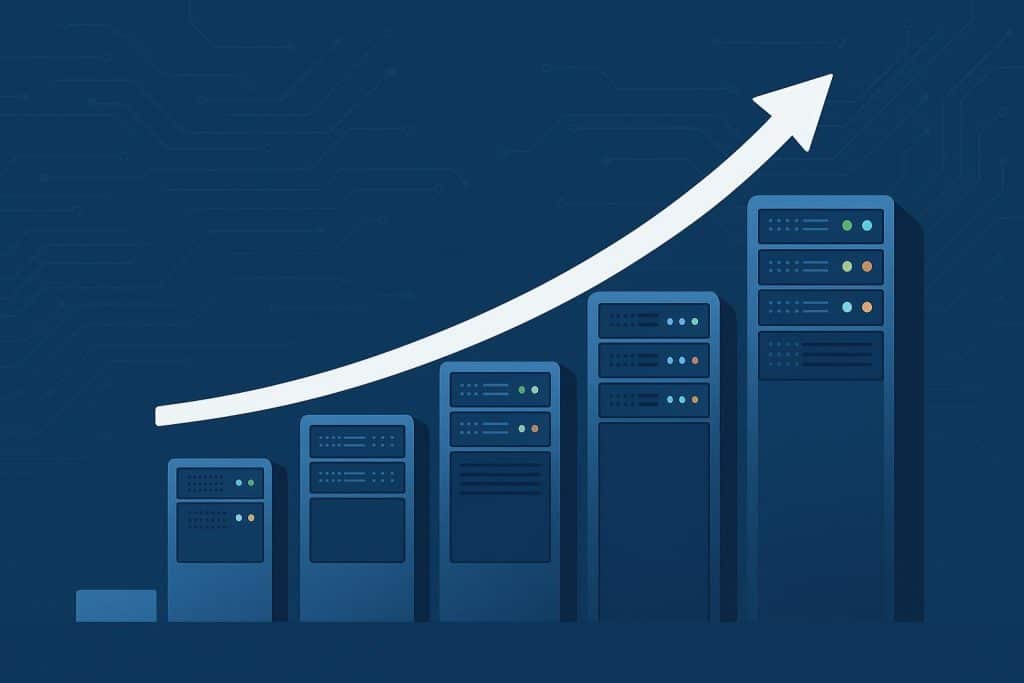
Every digital business eventually hits a moment of truth. Traffic grows. Users expect instant responses. Systems that once felt solid begin to slow down. At that point, technology stops being a background tool and becomes a direct factor in success or failure.
Scalable IT infrastructure solves this problem quietly. It allows systems to grow without drama and shrink without waste. Many companies reach this level by relying on Managed IT Services, which help them stay flexible while avoiding the cost and risk of managing everything internally.
How Infrastructure Thinking Has Changed
Not long ago, IT systems were built like fixed machines. Companies bought servers, installed software, and hoped demand would match capacity. If growth came faster than expected, systems struggled. If growth slowed, money sat idle in unused hardware.
Today, infrastructure works more like a living system. It adjusts to real conditions instead of guessing the future. Capacity increases when users arrive and eases back when demand drops. This shift has changed how businesses plan, invest, and compete.
The impact is especially visible in healthcare platforms, media services, and fast-growing digital companies. In these environments, delays and outages are not just inconvenient. They damage trust.
What Scalability Really Means In Practice
Scalability is often described in abstract terms, but its value is very concrete.
A scalable system:
- Stays responsive during sudden traffic spikes
- Keeps running while updates roll out
- Recovers quickly when something breaks
- Uses resources only when needed
Think of it as a delivery service that adds drivers during peak hours and reduces routes when streets are quiet. Packages arrive on time, and nothing goes to waste.
Different Ways Systems Scale
There are two main approaches.
Vertical scaling makes one machine stronger.
Horizontal scaling spreads work across multiple machines.
Modern platforms usually prefer horizontal scaling. It spreads risk and improves reliability. If one part fails, others continue without interruption. Users often never notice the problem.
The Building Blocks Of A Scalable Setup
Cloud Infrastructure As A Starting Point
Cloud platforms changed the economics of IT. Instead of buying hardware upfront, companies rent computing power as needed. This model removes long planning cycles and lowers entry barriers.
For entertainment platforms, this means handling peak viewing hours smoothly. For healthcare systems, it means processing large datasets without slowing clinical work. Flexibility becomes the default, not a special feature.
Automation That Keeps Systems Calm
Manual processes introduce delays and errors, especially at scale. Automation removes much of that risk.
Automated tools handle deployments, monitor performance, and trigger fixes when thresholds are crossed. Orchestration layers coordinate these actions so systems respond consistently, even under pressure.
Data Architecture That Does Not Collapse Under Growth
Data growth often exposes weak design. Scalable infrastructure avoids this by separating storage from processing. Data can grow independently, while applications access only what they need.
This approach keeps systems fast even as databases expand. It also simplifies analytics, backups, and compliance workflows.
Security That Grows Without Getting In The Way
As infrastructure scales, security challenges multiply. More users, more services, and more connections create more opportunities for failure.
Effective scalable systems bake security into every layer:
- Zero-trust access policies
- Continuous monitoring
- Encrypted data flows
These controls work quietly. They protect systems without slowing legitimate users or complicating daily operations.
The Business Effects Leaders Actually Care About
Faster Product Iteration
Scalable infrastructure shortens feedback loops. Teams release updates, observe results, and adjust quickly. Innovation becomes routine instead of risky.
Predictable Spending
Usage-based pricing replaces large capital expenses. Companies pay for what they use instead of guessing future demand. This clarity helps with budgeting and long-term planning.
Stronger Operational Stability
Redundancy and load balancing remove single points of failure. When one component fails, traffic reroutes automatically. Downtime becomes rare and brief.
Where Scaling Often Goes Wrong
Scalability requires intention.
Problem: Growing without visibility
Fix: Use clear metrics and real-time alerts.
Problem: Building overly complex systems too early
Fix: Start simple, design for expansion.
Problem: Lacking internal expertise
Fix: Train teams or rely on experienced external partners.
When mistakes happen, the key is speed. Acknowledge the issue, correct the architecture, and move forward before users feel the impact.
Why External Expertise Matters
Very few companies want to become infrastructure specialists. Strategic IT partners fill that gap.
A reliable partner:
- Designs systems around business priorities
- Maintains operations continuously
- Adjusts infrastructure as demand changes
This support allows internal teams to focus on product, customers, and growth instead of firefighting technical issues.
Infrastructure As An Invisible Advantage
When scalable infrastructure works well, users never think about it. Pages load quickly. Services stay available. Problems resolve quietly in the background.
That invisibility is the goal. Businesses that achieve it move faster, recover quicker, and earn trust over time. The real competitive edge is not size or complexity, but adaptability.
In a digital economy where demand shifts constantly, scalable IT infrastructure is no longer optional. It is the quiet system that allows everything else to work.