

Key Takeaways
- Automation and AI are streamlining freight brokerage operations, enhancing efficiency and decision-making.
- Real-time tracking and predictive analytics provide greater visibility and proactive management of shipments.
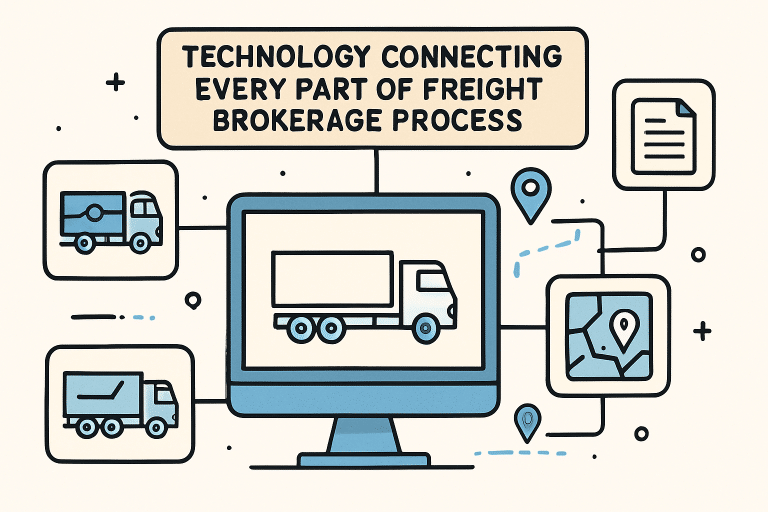
- Digital platforms and IoT devices are transforming traditional freight brokerage into a more agile and responsive industry.
Introduction
The freight brokerage industry stands at the crossroads of innovation and tradition, as technology rapidly transforms every aspect of logistics. Tools like LoadPilot now provide brokers with unprecedented capabilities, fundamentally changing how freight is managed and moved. The latest digital advancements are streamlining complex processes, driving improved operational efficiency, and elevating customer expectations across the board.
In years past, freight brokerage often relied on manual communication, paperwork, and limited visibility over shipments. Today, however, technological progress offers a seamless, transparent, and data-driven landscape. Digital integration isn’t just a convenience—it’s a strategic necessity for brokers wanting to remain relevant and competitive. From automation and real-time data analytics to decentralized ledger technology, the future of freight brokerage is brighter, faster, and more innovative than ever before.
Innovation in this space ensures that every shipment, contract, and communication is optimized for speed and accuracy. The shift toward digitalization creates a level playing field for smaller brokerages, who can now access the same powerful tools as industry giants—ushering in an era of empowerment and opportunity.
As more firms adopt these advanced solutions, technology-driven platforms redefine the relationships between shippers, carriers, and brokers, bringing fresh efficiency across supply chains.
For those seeking to improve their operational workflows with modern tools, exploring powerful freight broker software can offer significant competitive advantages.
Automation Enhancing Operational Efficiency
Automation is at the core of the freight brokerage transformation. Manual tasks—such as booking loads, generating invoices, and tracking shipments—can now be handled by sophisticated software algorithms. These systems not only reduce human error but also expedite routine operations, enabling teams to manage a larger volume of shipments with fewer personnel. Companies like C.H. Robinson utilize AI-powered virtual agents to process vast numbers of transactions, maintain schedules on track, and manage exceptions efficiently, resulting in enhanced productivity and reliability for customers worldwide.
The introduction of robotic process automation (RPA) means data entry, pricing, and documentation no longer require continual oversight, freeing brokerages to focus on value-added activities such as personalized customer service and strategic negotiation. According to research from McKinsey, logistics automation is also driving profit margins upward by removing costly bottlenecks from the supply chain.
Advanced Analytics Driving Decision-Making
Freight brokerage thrives on the ability to make fast, informed decisions—often in the face of rapidly changing conditions. Today’s data analytics platforms synthesize millions of data points from sources like driver telematics, weather feeds, and market rates. These analytics can optimize routing, identify cost-saving opportunities, and alert brokers to upcoming demand surges or supply chain disruptions.
Modern analytics tools use machine learning to detect hidden patterns within operational data. These insights enable brokers to negotiate more favorable rates, accurately predict market behavior, and even anticipate customer needs before they arise. The emphasis on evidence-based decision-making fosters a culture of continuous improvement and measurable results across every tier of the logistics ecosystem.
Real-Time Tracking and Visibility
One of the most significant breakthroughs in technology for freight brokerage has been the evolution of real-time shipment tracking. Leveraging IoT-enabled sensors, GPS, and cloud-based dashboards, brokers gain instant access to the precise location and status of shipments in transit. Early problem detection—such as route delays, temperature fluctuations, or equipment malfunctions—leads to actionable responses that minimize disruptions and enhance customer confidence.
End-to-end visibility means all stakeholders, from shippers to receivers, can monitor progress and receive automated status updates, reducing the constant back-and-forth inquiries that once burdened brokerage offices. By maintaining a digital chain of custody throughout the shipping journey, modern freight brokerage builds trust and accountability at every stage. For more on how technology boosts service levels and customer transparency, see this in-depth piece from CNBC.
Blockchain Technology for Enhanced Transparency
Blockchain is poised to revolutionize freight brokerage by delivering immutability, security, and total transparency to shipping documents and financial transactions. This decentralized ledger records every exchange, approval, or invoice change with unalterable accuracy—relegating disputes and data manipulation to the past. Smart contracts built on blockchain frameworks automate payment settlements, detention fees, and compliance checks, ensuring contracts are executed precisely as intended without third-party oversight.
The technology’s adoption streamlines auditing, reduces paperwork, and creates a unified source of truth accessible by all authorized parties. As regulatory and cybersecurity concerns increase in global transport, blockchain provides a robust, future-ready infrastructure for secure business.
Digital Platforms Revolutionizing Freight Brokerage
The rise of integrated digital platforms enables brokers to efficiently manage the entire lifecycle of a shipment on a single interface. From matching loads to submitting bids, communicating with carriers, and providing real-time customer updates, these platforms eradicate silos and foster seamless collaboration. Automation minimizes paperwork and manual handoffs, boosting speed-to-market and customer satisfaction.
Marketplaces and digital portals empower shippers and carriers with transparent pricing, performance ratings, and instant access to capacity. Such advancements lower barriers for smaller firms to compete and expand their reach without the overhead of legacy systems, fundamentally leveling the playing field for brokers of all sizes.
Future Implications and Trends
The digital revolution in freight brokerage is just beginning. Artificial intelligence and machine learning will continue to drive deeper efficiencies—automating dynamic pricing, optimizing multimodal shipments, and forecasting demand at unprecedented speed and accuracy. As more brokers digitize operations and share data seamlessly, logistics networks will become increasingly agile, sustainable, and customer-focused.
Next-generation solutions are also bringing sustainability to the forefront, utilizing data to minimize empty miles, carbon emissions, and resource waste. As industry adoption accelerates, stakeholders must remain agile, keeping pace with regulatory shifts, new technology rollouts, and the rising bar for customer expectations. More on upcoming logistics technology shifts can be found at McKinsey.
Conclusion
Technology is fundamentally changing the freight brokerage industry, fueling efficiency, transparency, and innovation. For brokers, the move toward digitalization isn’t merely an upgrade—it’s a transformation that is vital for continued relevance in a fast-paced, data-driven world. Staying ahead means embracing these advances, leveraging modern tools, and adapting to new models of service that prioritize the needs of customers, shippers, and carriers.