

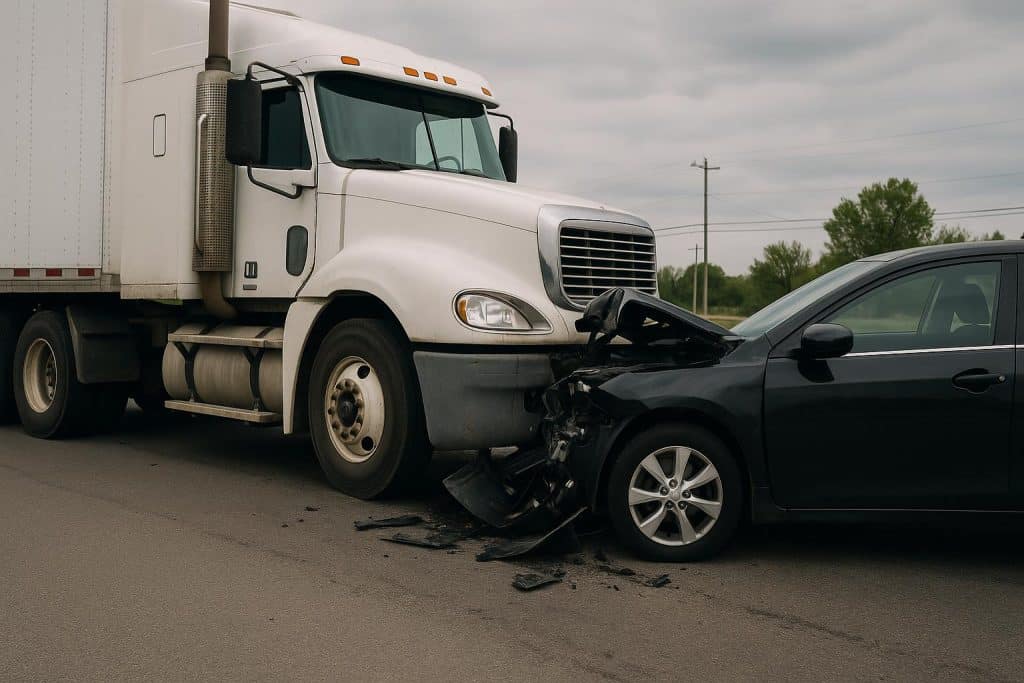
Roads feel different when a commercial truck is involved in a crash. The size, the weight, the sheer force behind these vehicles change everything in an instant. What might have been a minor collision between two cars can become a life altering event when a semi truck is part of the picture. In the middle of the confusion and shock, a question tends to surface quietly but persistently, Who can be held liable after a truck accident, and the answer is rarely as simple as pointing to one driver.
Truck accidents carry a kind of complexity that most people never think about until they are forced to. There is a natural assumption that fault rests with whoever was behind the wheel. That might be true in some cases, but commercial trucking operates inside a web of responsibilities that stretches far beyond the driver’s seat. Untangling that web takes careful investigation, legal knowledge, and a clear understanding of how negligence works in these situations.
Why Truck Accidents Are Different From Other Crashes
Ordinary car accidents usually involve two drivers, two vehicles, and a relatively straightforward review of traffic laws and insurance policies. Truck accidents are built differently. Commercial trucks are part of a regulated industry with strict rules, layered responsibilities, and multiple parties connected to a single vehicle’s operation.
A truck on the highway is not just a driver traveling from one place to another. It is part of a business operation. The vehicle is owned or leased. The cargo is loaded by someone. Maintenance is performed by someone else. Parts are manufactured, inspected, and replaced over time. Each of these steps introduces a new layer of potential responsibility.
Because of this, determining liability becomes less about a single moment on the road and more about everything that led up to it.
The Truck Driver’s Role in Liability
The truck driver is often the first person considered when fault is discussed, and for good reason. Drivers are responsible for operating these massive vehicles safely, obeying traffic laws, and following federal regulations designed to reduce risk.
Driver fatigue is one of the most common issues that appears in truck accident investigations. Long hours behind the wheel, pressure to meet delivery deadlines, and inadequate rest can create dangerous conditions. Federal rules limit how long a driver can be on the road without breaks, but violations still occur.
Distractions, speeding, impaired driving, and simple inattention can also contribute to crashes. When a driver fails to operate the truck responsibly, personal negligence becomes a central factor in determining liability.
Still, the story rarely ends there.
How Trucking Companies Can Be Responsible
A trucking company is not just an employer, it is often a key player in how the truck is operated and maintained. In many situations, the company may be held vicariously liable for the actions of the driver. This means that even if the driver made the mistake, the company can share legal responsibility because the driver was acting within the scope of their job.
Beyond that, trucking companies have their own duties. They are responsible for hiring qualified drivers, providing proper training, maintaining vehicles, and ensuring that safety regulations are followed. When a company cuts corners, ignores maintenance schedules, or pressures drivers to violate rest rules, liability begins to shift.
A company that fails to perform background checks, overlooks a driver’s poor safety record, or encourages unrealistic delivery schedules may be found negligent, even if they were not present at the crash scene.
The Often Overlooked Role of Cargo Loaders
Cargo loading might not seem like a critical issue at first glance, but it plays a significant role in how a truck handles on the road. Improperly loaded cargo can cause a truck to become unbalanced, making it more difficult to steer, stop, or control.
When cargo shifts during transit, it can lead to rollovers, jackknifing, or loss of control. If a separate company or team is responsible for loading the truck, they may share liability if improper loading contributed to the accident.
Investigators often examine weight distribution, securement methods, and whether the load exceeded legal limits. These details, while technical, can have a major impact on who is ultimately held accountable.
Maintenance Providers and Their Responsibility
Trucks travel thousands of miles every week. With that kind of usage, regular maintenance is not optional, it is essential. Brakes, tires, lights, and steering systems must be inspected and serviced frequently.
When a mechanical failure contributes to a crash, attention turns to the maintenance records. If a repair shop or maintenance provider failed to perform necessary work or performed it incorrectly, they may be partially responsible.
Worn brake pads, underinflated tires, faulty steering components, and neglected inspections can all turn into evidence of negligence. These issues often surface only after a thorough review of service logs and repair histories.
When Defective Parts Become a Factor
Sometimes the issue is not with the driver, the company, or the maintenance, but with the equipment itself. A defective tire, brake system, or mechanical component can fail without warning.
In these situations, the manufacturer of the faulty part may be brought into the case. Product liability becomes part of the discussion. Investigators and legal professionals examine whether the part was designed properly, manufactured correctly, and tested for safety before being placed into service.
This layer of liability can be surprising for those involved in the accident, but it is an important part of understanding the full picture.
The Importance of Investigating Negligence
Negligence is the thread that connects all these parties. It is not enough that a crash happened. There must be evidence that someone failed to act with reasonable care.
Investigations into truck accidents often involve reviewing driver logs, black box data, maintenance records, hiring practices, and cargo documentation. This process is far more detailed than in a typical car accident case.
Every document, inspection report, and logbook entry becomes a piece of the puzzle. Together, they reveal whether safety rules were followed or ignored.
Why Vicarious Liability Matters
Vicarious liability is a legal concept that plays a large role in truck accident cases. When a driver is working for a trucking company, their actions can legally extend to the company itself.
This is important because trucking companies often have far greater resources and insurance coverage than individual drivers. Holding the company responsible can make a significant difference in how victims are compensated for injuries and losses.
Understanding this concept is crucial for anyone trying to make sense of how liability is assigned in these situations.
Why These Cases Require Legal Experience
Truck accident cases are rarely straightforward. Multiple parties, extensive documentation, and complex regulations make them challenging to navigate without professional guidance.
An experienced lawyer knows where to look for evidence, how to request critical records, and how to identify all potentially responsible parties. This is not a situation where assumptions should guide decisions. Thorough investigation and legal knowledge are essential.
Without this level of attention, important details can be overlooked, and responsible parties may avoid accountability.
The Emotional Weight Behind the Legal Process
Beyond the legal questions lies the human side of these accidents. Serious injuries, financial stress, and emotional trauma often follow a collision with a commercial truck. Trying to understand liability while dealing with recovery can feel overwhelming.
Clear answers and a structured legal approach can bring a sense of order during a chaotic time. Knowing that every angle is being examined helps people focus on healing rather than chasing paperwork.
Bringing the Pieces Together
Truck accidents involve more than a moment on the road. They involve decisions made days, weeks, or even months before the crash. Hiring practices, maintenance schedules, loading procedures, and equipment manufacturing all play a role.
Liability may rest with one party, or it may be shared among several. Identifying those parties requires patience, investigation, and a careful review of every detail connected to the truck’s operation.
Understanding this complexity helps explain why these cases are treated differently from ordinary car accidents, and why experienced legal help is so often recommended.