

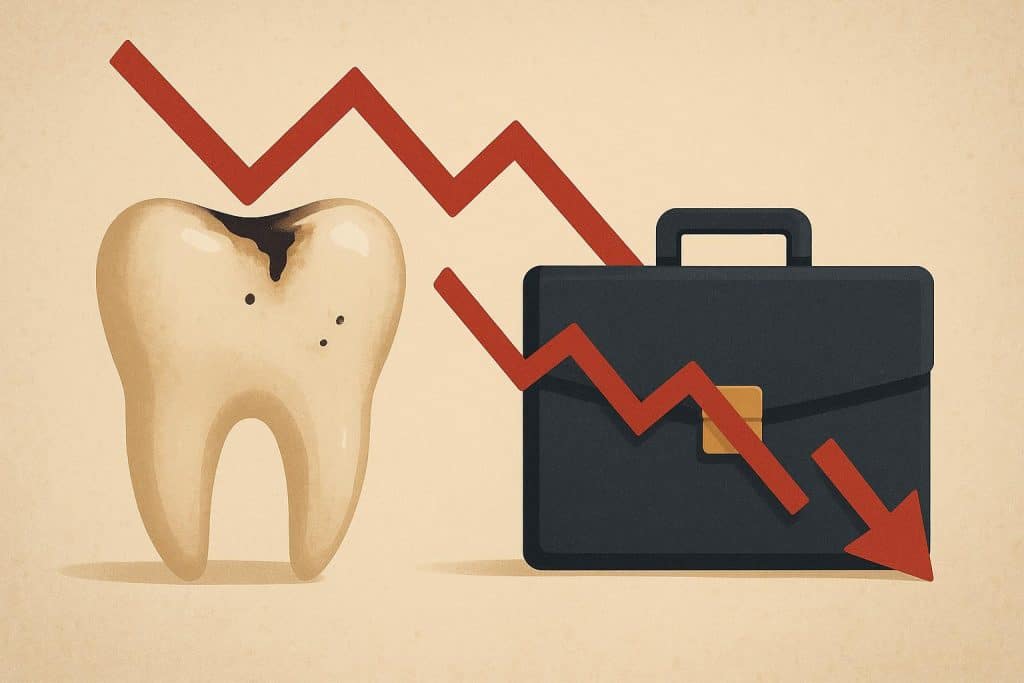
Most entrepreneurs obsess over productivity hacks, morning routines, and cognitive optimization. Yet few recognize that one of the most significant drains on executive performance might be sitting right in their mouth. Poor dental health doesn’t just cause toothaches—emerging research suggests it may undermine professional effectiveness in ways most business leaders never connect.
The stakes are higher than you think. Dental pain creates physiological stress responses that can affect concentration and decision-making. That critical investor pitch or high-stakes negotiation becomes exponentially harder when managing acute discomfort alongside complex business discussions.
Beyond the physical discomfort lies an equally important factor: the psychological impact. Research indicates that professionals with untreated dental issues often report lower confidence in client-facing situations. In business, where first impressions and executive presence can influence deal outcomes, visible dental concerns may become a competitive disadvantage.
Quick Answer: Poor dental health is associated with three professional challenges: reduced cognitive performance in observational studies of chronic oral inflammation, decreased confidence in high-stakes situations, and productivity loss from dental emergencies. Prevention through proper oral care and adequate nutrition offers better long-term outcomes than reactive emergency treatments.
The Inflammation Connection
Your oral health and overall systemic health are interconnected through inflammatory pathways. Periodontal disease, affecting nearly half of adults over 30, is a well-established inflammatory condition. Research has shown that periodontitis is associated with elevated C-reactive protein and interleukin-6 levels—key markers of systemic inflammation throughout the body.
For entrepreneurs making dozens of critical decisions daily, chronic low-grade inflammation may have compounding effects. Observational studies have found associations between poor oral health and reduced cognitive performance on tests measuring concentration and information processing. While these studies show correlation rather than proven causation, the pattern suggests oral health may be one factor among many influencing cognitive function.
The biological mechanism is well-established: oral bacteria, particularly Porphyromonas gingivalis, can enter the bloodstream and trigger inflammatory responses. Research has confirmed that these bacteria and their associated inflammatory molecules can be detected in systemic circulation. While the direct impact on executive decision-making requires more study, reducing unnecessary sources of chronic inflammation represents a sound strategy for anyone optimizing performance.
The Nutritional Foundation Most Executives Overlook
Here’s where conventional dental advice may fall short for busy professionals: brushing and flossing alone can’t compensate for nutritional deficiencies that may affect dental tissue health. The minerals that compose tooth enamel—primarily calcium and phosphate—require adequate vitamin levels for proper absorption and metabolism.
Many executives may operate with suboptimal nutrient status. High-stress lifestyles, excessive coffee consumption, and irregular eating patterns can all interfere with nutrient absorption. Research on vitamins that support tooth structure reveals that adequate levels of specific nutrients—particularly vitamin D for calcium metabolism and vitamin C for connective tissue health—play foundational roles in maintaining oral tissues. These aren’t exotic supplements; they’re well-studied nutrients that many professionals consume inadequately through diet alone. Ensuring adequate intake represents a low-friction approach to supporting the biological systems that maintain dental health.
The evidence for specific nutrients varies. While vitamin D’s role in calcium metabolism is well-established, claims about some other nutrients for dental health remain more preliminary and require further clinical validation before strong recommendations can be made.
The Real Cost of Dental Emergencies
Let’s talk hard numbers. The average dental emergency costs entrepreneurs far more than the treatment bill when you factor in opportunity cost. A dental abscess requiring emergency treatment typically demands 4-6 hours across multiple appointments, not counting recovery periods where you may be operating below peak capacity.
For a professional billing $200-500 per hour, that represents $800-3,000 in direct opportunity cost, plus the strategic cost of rescheduled meetings, delayed projects, and potential impacts on professional presence during recovery. Unlike planned procedures, emergencies strike at inconvenient times—right before quarterly presentations or during critical product launches.
The preventive investment? Significantly more predictable. While rigorous ROI calculations in executive populations don’t exist, the general principle that prevention costs less than emergency intervention is well-established in healthcare economics. Maintaining oral health through regular care and adequate nutrition avoids both the financial costs and the productivity disruption of emergencies.
Why Traditional Prevention Advice May Fall Short
Standard dental recommendations assume people have unlimited time and attention for oral care. Floss regularly. Brush twice daily for two minutes each. Use mouthwash. Schedule cleanings every six months.
For time-compressed executives, this creates friction. What busy professionals need is efficiency: interventions with maximum impact for minimal time investment. This is where nutritional adequacy offers advantages—ensuring your body has necessary nutrients works continuously without requiring additional time blocks in an already packed schedule.
Understanding the role of adequate nutrition in oral health provides leverage points beyond time-intensive external care. When your body has adequate nutritional building blocks for maintaining tissue health, you’re supporting natural protective mechanisms. It’s the difference between constant micromanagement and establishing systems that work reliably.
Research on dental nutrition suggests that adequate levels of certain vitamins may support the biological processes that maintain oral tissue health. Beyond the well-known nutrients, emerging research on lesser-known vitamins for oral health has identified additional factors like vitamin K2 that may play roles in calcium utilization, though clinical evidence remains preliminary and more research is needed. While this doesn’t replace professional care or proper hygiene, understanding nutritional adequacy represents a complementary approach that fits well with demanding schedules and emphasizes working with your body’s natural mechanisms.
The Strategic Approach to Dental Health
Smart entrepreneurs approach dental health the same way they approach business: strategically, emphasizing prevention and systems over reactive firefighting. This means maintaining adequate nutritional foundations alongside basic oral hygiene and professional care.
The benefits extend beyond avoiding emergencies. Research has shown associations between oral health and cardiovascular health markers, inflammation levels, and metabolic function—factors that may influence energy, focus, and long-term health. You’re not just preventing dental problems; you’re maintaining one of many biological systems that support sustained performance.
Consider it this way: would you run a business without maintaining your infrastructure? Oral health is personal infrastructure, and like any infrastructure, neglect compounds until problems become inevitable. The professionals who maintain long-term performance are those who invest in sustaining their health systems—including the one that affects every interaction, every meal, and every confident presentation.
Your mouth is often among the first things people notice in professional settings. In a world where presence, confidence, and professionalism influence outcomes, oral health isn’t vanity—it’s maintaining the tools you use to communicate and lead effectively.
FAQ
Q: How quickly can nutritional improvements impact oral health?
A: Individual responses vary, but some research suggests that addressing vitamin D deficiency may support reduced periodontal inflammation over weeks to months. Adequate nutrition works gradually rather than producing instant results. Think of it as long-term infrastructure maintenance rather than a quick fix, and always in conjunction with proper oral hygiene and professional care.
Q: What’s the minimum effective intervention for busy executives?
A: Focus on ensuring adequate vitamin D levels (important for calcium metabolism) and sufficient mineral intake through diet. Regular professional dental care remains essential. These foundations require minimal time to implement but work continuously. The goal is supporting your body’s natural mechanisms, not replacing professional dental care.
Q: Can nutrition replace regular dental visits?
A: No—nutritional adequacy complements professional care but cannot replace it. Proper nutrition may reduce the severity of some issues, but regular professional evaluation and cleaning remain essential. Think of adequate nutrition as one component of a comprehensive approach to oral health, not a substitute for professional care.
Q: How does oral health affect professional presence?
A: Research shows people form rapid impressions based on appearance, with smile quality being one factor in perceived competence and approachability. While specific studies in investor contexts are limited, the general principle that appearance affects first impressions is well-established. Maintaining oral health helps ensure you present confidently in professional situations.
Final Thought
Poor dental health isn’t a productivity hack or a silver bullet—but it is part of the biological infrastructure that supports focus, confidence, and consistency. For high-performing professionals, maintaining oral health is less about vanity or perfection and more about reducing avoidable friction in a system where small inefficiencies compound over time.