

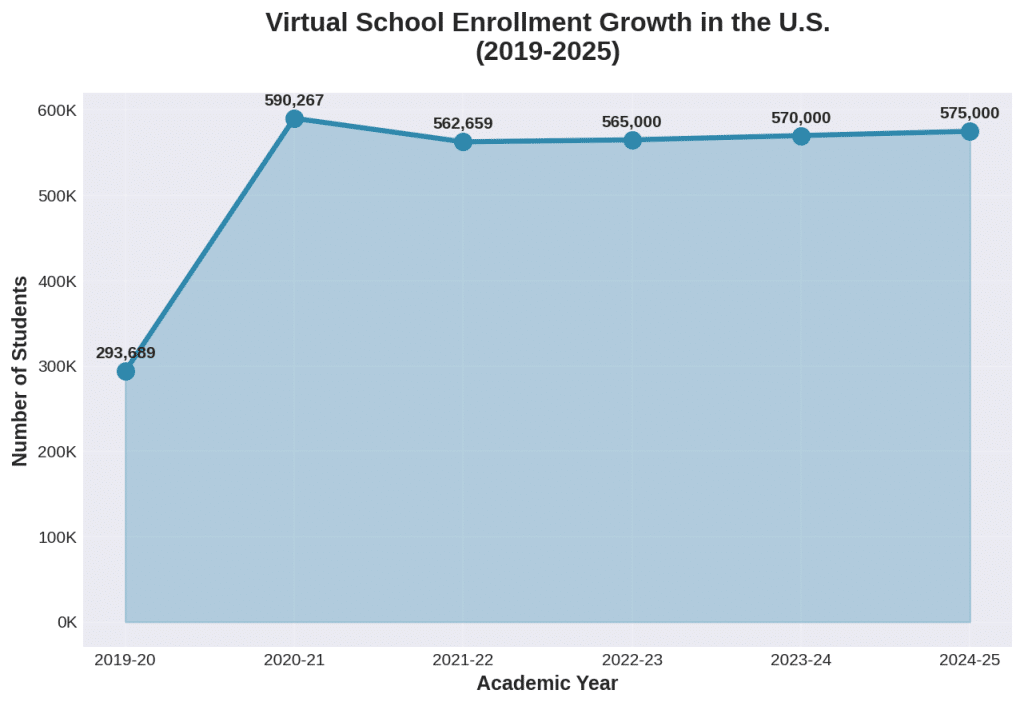
The traditional classroom isn’t the only path forward anymore. Across America, families are making a different choice—one that involves laptops instead of lockers, video calls instead of hallways, and learning from home instead of commuting to campus. Virtual school enrollment has surged to over 562,000 students nationwide, nearly doubling since before the pandemic. Parents cite everything from safety concerns to schedule flexibility as reasons for the switch.
Some students thrive on personalized pacing. Others need refuge from bullying. Many families discovered during remote learning that their children actually performed better outside traditional settings. The question isn’t whether virtual schools work anymore—it’s why so many families are choosing them. The answers reveal fundamental shifts in how we think about education, safety, and what children truly need to succeed.
The Safety Factor Driving the Virtual School Movement
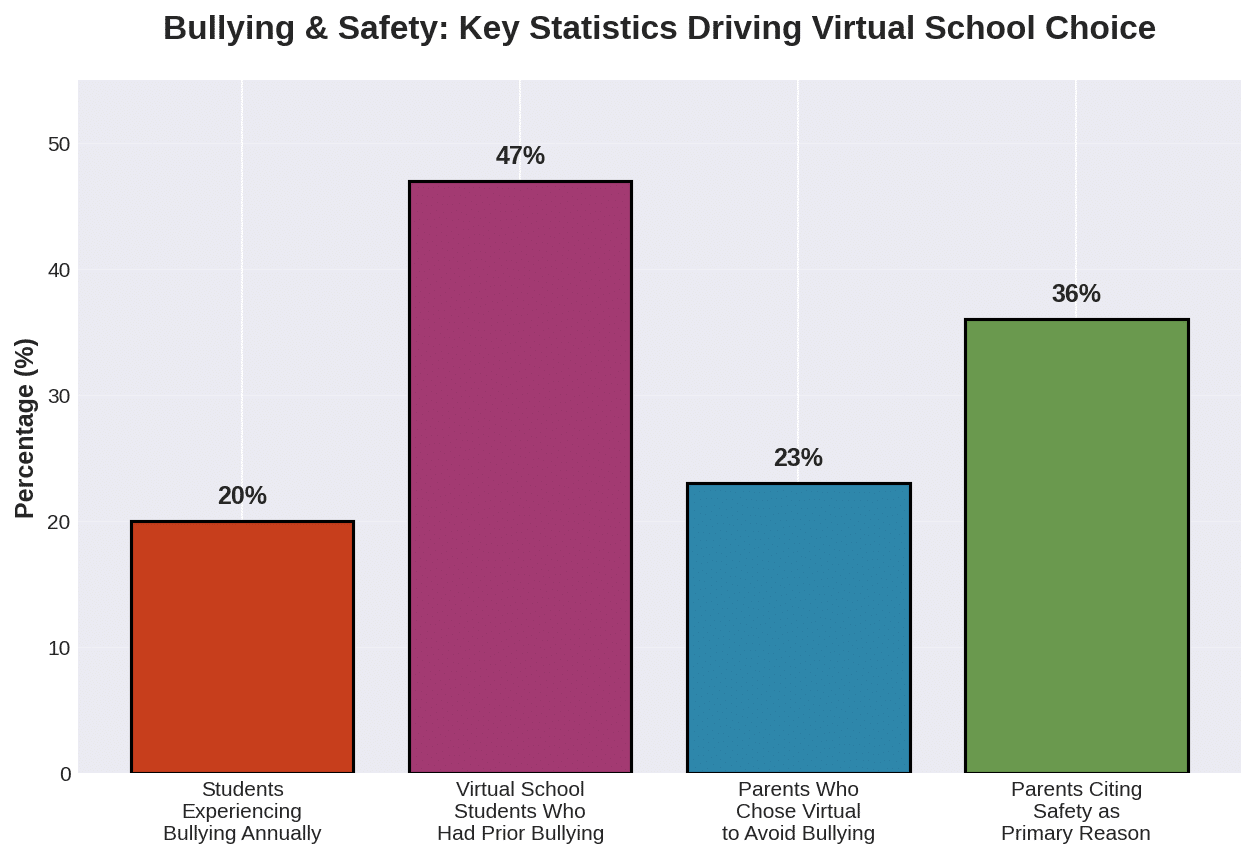
School safety concerns top the list. Bullying affects one in five students annually. That translates to roughly 13 million children nationwide experiencing harassment, intimidation, or worse. The statistics get darker when you dig deeper.
Nearly half of students who enrolled in virtual programs like K12 reported experiencing bullying at their previous schools. Another 23 percent specifically chose online education to avoid bullying altogether Parents see virtual schooling as a refuge.
Research shows 36 percent selected online education specifically to ensure a safe environment for their kids. Platforms like https://www.joinprisma.com/ eliminate the physical proximity that enables harassment, giving students space to focus on academics rather than survival strategies.
One mother shared how her son faced cyberbullying so severe he required hospitalization—switching to virtual school turned everything around.
The mental health component cannot be ignored. Current data reveals 42 percent of high school students experience persistent sadness or hopelessness that disrupts normal activities—a figure that has climbed 14 percent since 2011. Traditional school environments, with their social pressures and rigid structures, can amplify these struggles. Virtual settings provide breathing room.
Physical safety matters too. School threats, lockdown drills, and violence create constant anxiety. Virtual school removes children from these immediate dangers entirely. While online platforms face their own challenges with cyberbullying, research suggests rates actually decreased during remote learning periods—likely because in-person bullying often drives online harassment.
Flexibility That Works for Real Life
Rigid schedules don’t fit modern families.
Traditional school hours assume one parent stays home or works standard hours. That model collapsed decades ago. Single parents, families with non-traditional work schedules, and households where both parents work unconventional hours need alternatives. Virtual schooling provides exactly that flexibility.
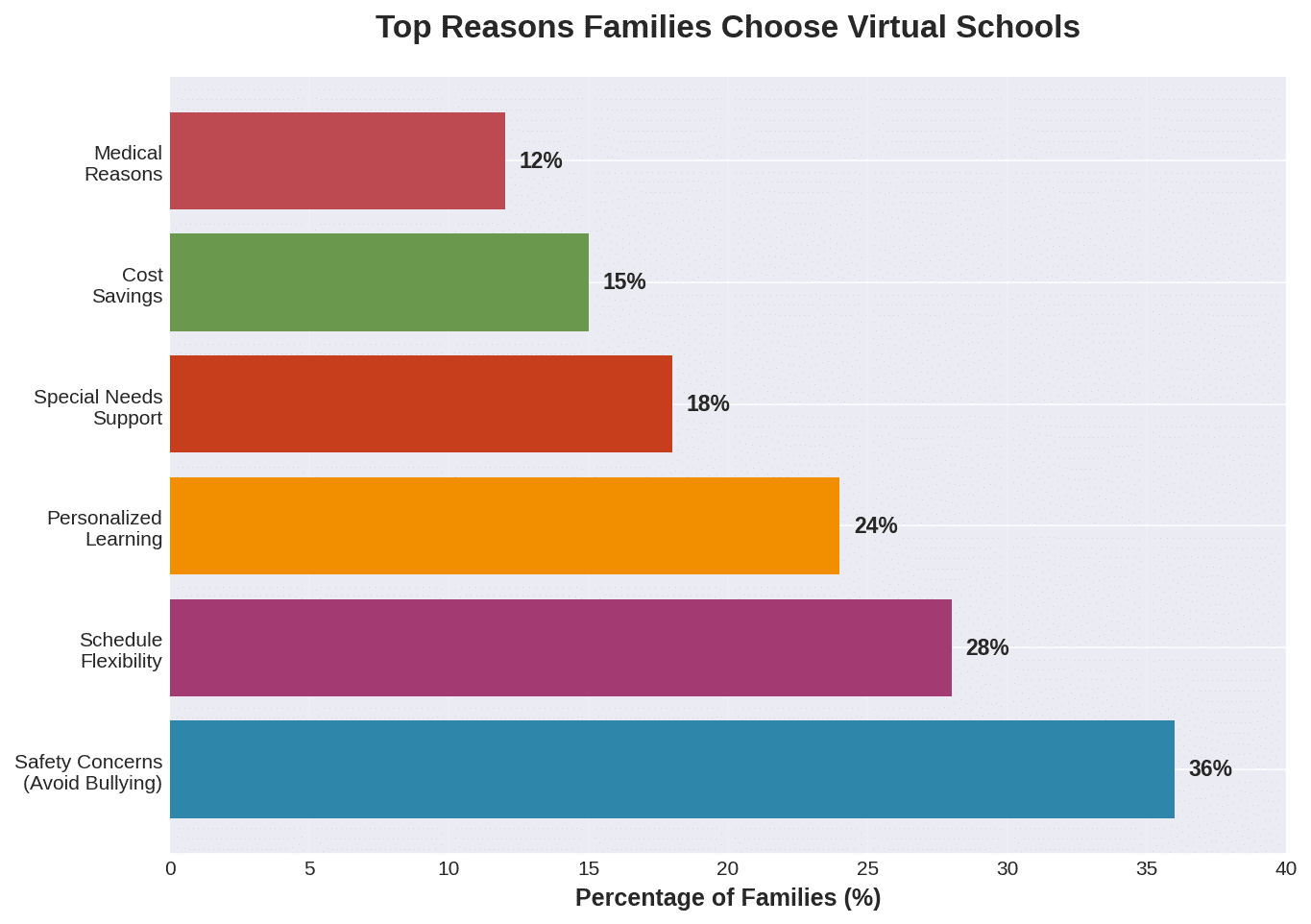
Elite athletes and performers particularly benefit. Competitive sports demand morning practices, afternoon training sessions, and frequent travel. Young performers require flexibility for rehearsals and auditions. Traditional schools force these students to choose between their passions and education. Virtual schools eliminate that false choice.
Medical appointments become manageable. Students with chronic illnesses or disabilities often require frequent doctor visits, therapy sessions, or treatment schedules. Brick-and-mortar schools mean constant missed classes and makeup work. Online platforms allow students to maintain their education around medical needs rather than sacrificing either.
Geographic freedom changes everything. Families who travel for work, military families facing frequent moves, or those caring for elderly relatives in different states can maintain educational continuity. Students access the same curriculum, teachers, and classmates regardless of physical location.
Learning happens when students are most productive. Some children focus better in early mornings. Others hit their stride in afternoons or evenings. Virtual schooling accommodates different chronotypes and energy patterns, allowing students to work when their brains function optimally rather than forcing everyone into identical schedules.
Work-Life Balance for the Whole Family
Parents regain time they didn’t know they’d lost.
Morning routines transform from chaotic rushing to manageable planning. No more fighting traffic at 7 AM or coordinating complex carpool schedules. Families eat breakfast together. Parents who work from home can be present without sacrificing professional responsibilities.
Extracurricular activities multiply. When school doesn’t consume 7 AM to 3 PM plus homework, students have bandwidth for music lessons, community service, part-time jobs, or pursuing specific interests at depth. This scheduling flexibility often leads to more well-rounded development, not less.
Personalized Learning for Every Student
One-size-fits-all education fails many students.
Gifted students sit bored, waiting for classmates to catch up. Struggling learners fall behind as teachers move to the next unit. Average-paced students miss opportunities to explore interests deeply. Traditional classrooms optimize for the middle, leaving everyone else underserved.
Virtual education breaks this constraint. Students progress at their own pace across subjects. A child might race ahead in math while taking extra time with writing. Another might complete coursework quickly in the morning, then spend afternoons on passion projects.
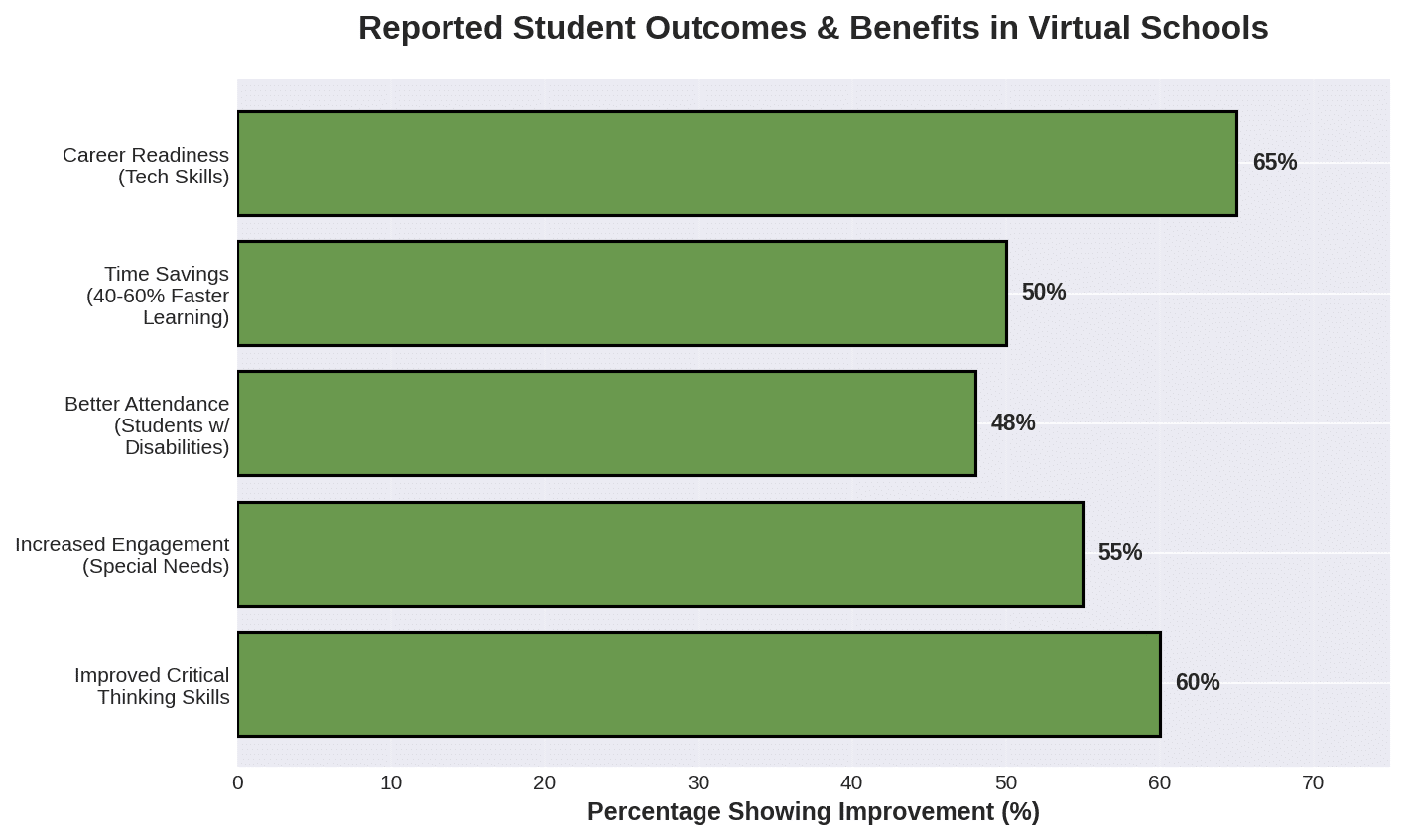
Neurodivergent learners particularly thrive. Students with ADHD benefit from flexible pacing and the ability to take movement breaks without disrupting others. Autistic students avoid overwhelming sensory environments while still accessing rigorous academics. Learning differences become manageable rather than insurmountable.
The data supports these benefits. Research indicates 60 percent of online learners report improved critical thinking skills. Students with disabilities show increased engagement and participation compared to traditional settings. The familiar home environment reduces anxiety and allows genuine focus on learning.
Support for Special Education Students
Approximately 7.3 million students—15 percent of all K-12 learners—receive special education services under IDEA. Virtual schools must provide the same accommodations and IEP support as traditional schools, but often do so more effectively.
One-on-one attention increases. Teachers can meet with students individually via video call without the logistical challenges of pulling students from busy classrooms. Parents participate more directly in daily learning, catching gaps immediately rather than discovering problems at quarterly parent-teacher conferences.
Assistive technology integrates seamlessly. Screen readers, speech-to-text software, visual aids, and other adaptive tools work more naturally in digital environments. Students access resources designed specifically for their learning profiles.
Physical disabilities cease creating barriers. Wheelchair accessibility becomes irrelevant. Students with mobility challenges work from spaces configured for their needs. Those with chronic pain adjust positions freely without classroom constraints.
The Financial Equation
Virtual schooling often costs less than traditional education.
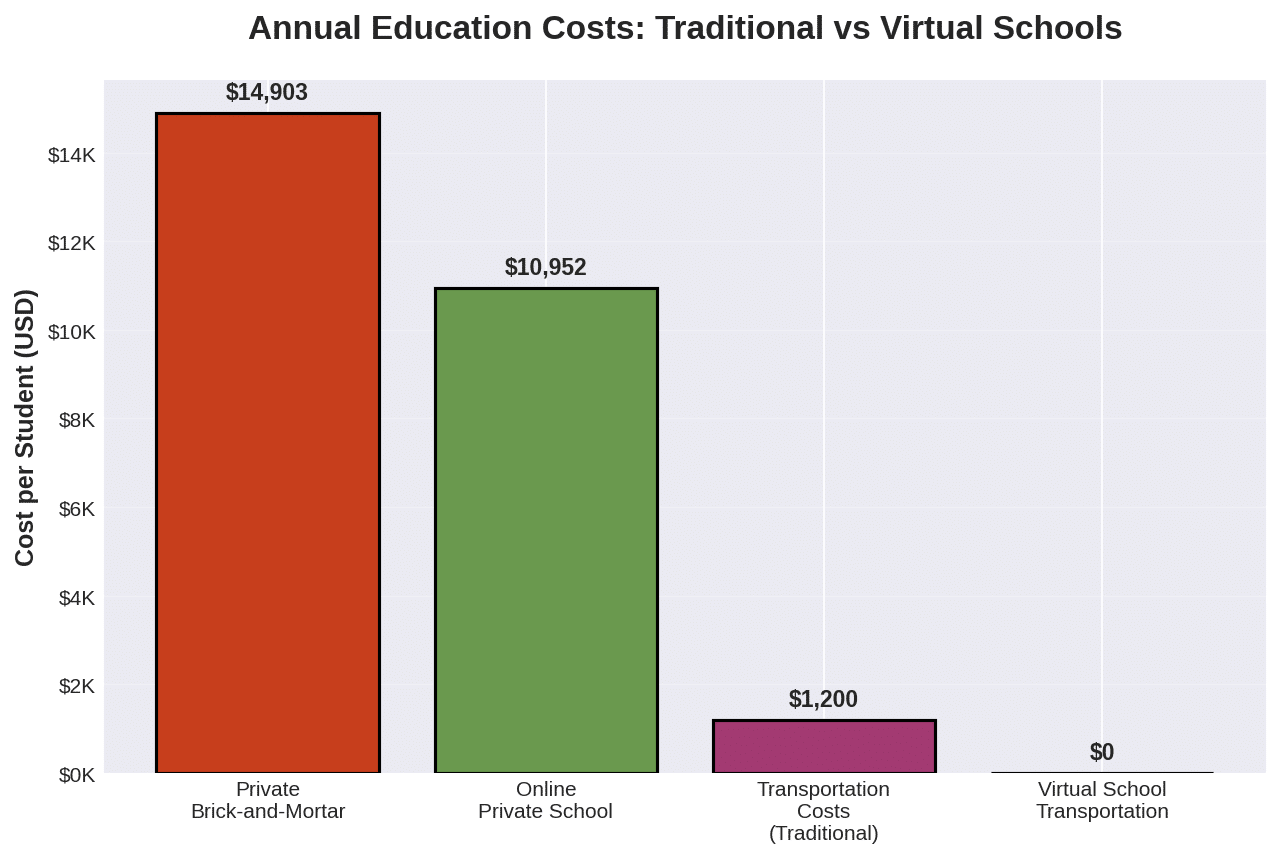
Public virtual schools eliminate many expenses entirely. No transportation costs, no lunch money, no school supplies beyond basics. Students save over $1,200 per semester on expenses like gas, parking, meals, and materials.
Private online options frequently undercut brick-and-mortar tuition. Online private K-12 schools average $10,952 annually compared to $14,903 for traditional private schools. Parents report institutions they previously considered cost double or triple what quality virtual schools charge.
The time savings translate to financial benefits. Parents who can work full-time rather than coordinating school schedules see income increases. Those with flexible remote jobs can relocate to lower cost-of-living areas without sacrificing educational quality. The financial flexibility compounds over years.
Technology Skills and College Readiness
Virtual school students enter college already comfortable with online learning.
Higher education increasingly uses hybrid and online formats. Students who’ve navigated learning management systems, digital collaboration, and virtual communication throughout K-12 have significant advantages. They know how to manage time independently, communicate effectively in text and video, and troubleshoot technical issues.
The skills extend beyond academics. Remote work dominates many industries. Students learn digital collaboration, project management in virtual environments, and self-directed learning—all critical for modern careers. These competencies develop naturally through daily virtual school participation.
What Research Reveals About Outcomes
Virtual school effectiveness remains hotly debated.
Critics point to lower average graduation rates—around 65 percent for full-time virtual schools compared to 86.5 percent nationally. Academic performance on standardized tests often lags behind traditional school averages. These numbers deserve attention.
But context matters enormously. Many students choose virtual school specifically because they struggled in traditional settings. Schools serving students with special needs, previous bullying trauma, or academic challenges naturally show different metrics than institutions serving primarily high-performing students.
Individual success stories reveal virtual school’s potential. Students who were failing in traditional environments thrive online. Those with anxiety disorders finally focus on academics instead of survival. Gifted learners accelerate through material at appropriate paces. The question isn’t whether virtual school works universally—it’s whether it works for specific students in specific circumstances.
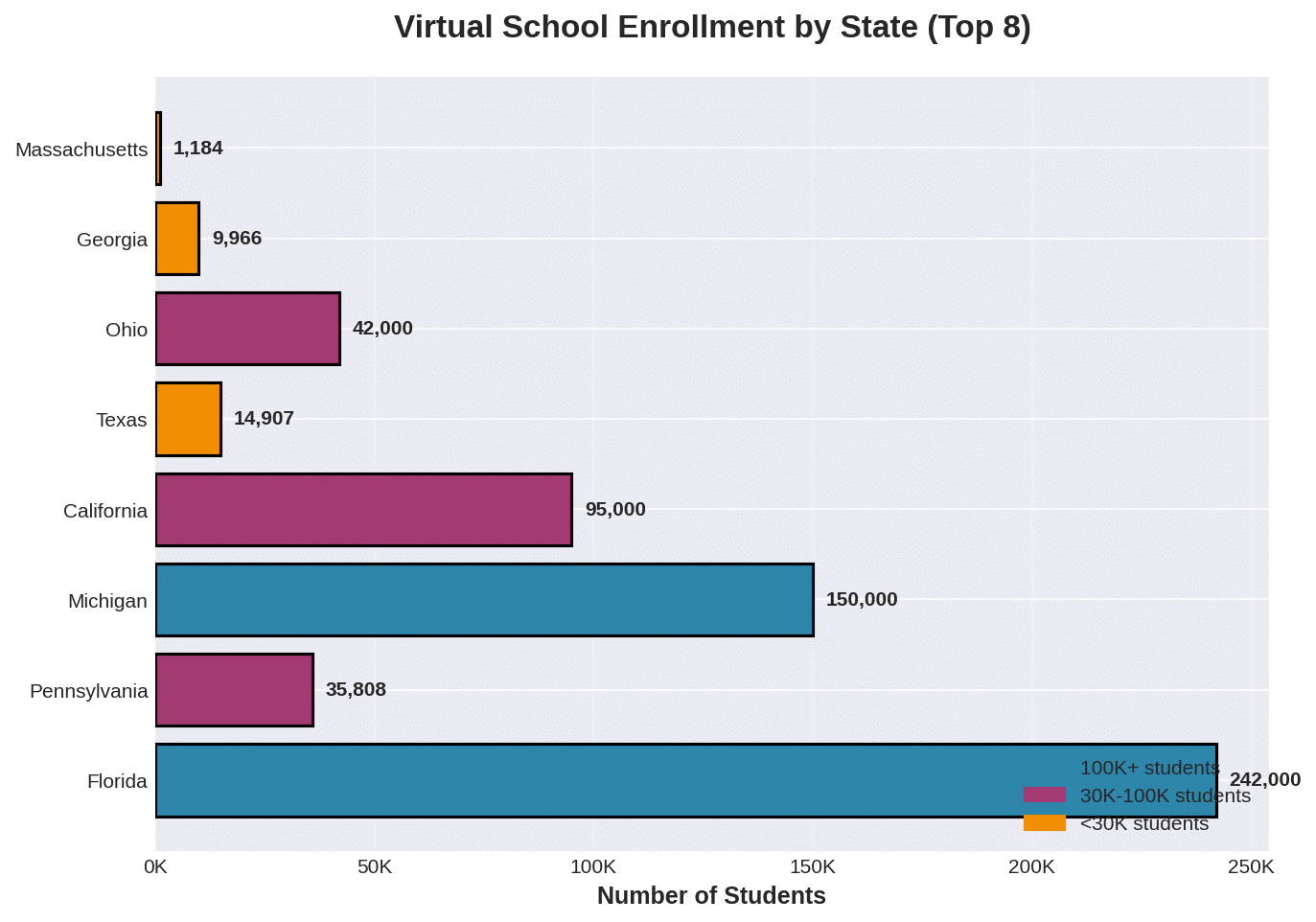
Enrollment trends suggest families find value. Despite debates about efficacy, virtual school enrollment continues growing. Georgia’s statewide program serves nearly 10,000 students. Texas enrollments climbed from 6,793 to 8,114 over three years. Massachusetts hit its enrollment cap. Michigan reports 11 percent of public school students taking at least one virtual course, with 68 percent of districts reporting full-time virtual enrollment.
The Social Connection Question
Socialization concerns dominate conversations about virtual schooling.
The concern has merit. Traditional schools provide built-in social structures—lunch tables, recess, group projects, extracurricular activities. Students form friendships naturally through daily proximity. Virtual environments require more intentional effort.
Quality virtual schools address this directly. They organize virtual clubs, live video sessions, group projects, and in-person meetups. Many host events like graduation ceremonies, proms, and field trips. Students connect across geographic boundaries, forming friendships with peers nationwide rather than just those in their zip code.
Parents report unexpected benefits. Without the intensity of all-day peer interaction, students often maintain energy for after-school activities, community involvement, and deeper friendships. The socialization becomes more intentional and sometimes more meaningful than cafeteria small talk.
For students escaping bullying or social anxiety, reduced peer pressure enables authentic self-expression. They develop confidence in virtual settings before gradually expanding comfort zones. The result can be healthier social development than struggling through toxic peer environments.
Making the Choice
Virtual schooling isn’t right for everyone.
Young children typically need more hands-on support. Students lacking self-motivation may struggle with independence. Families without reliable internet access or quiet learning spaces face challenges. Parents unable to serve as learning coaches—especially for elementary students—should consider carefully.
But for families dealing with bullying, those needing schedule flexibility, students with special needs or gifts, or children who simply learn better outside traditional environments, virtual schooling offers genuine solutions. The enrollment surge reflects authentic needs being met, not just pandemic reactions fading slowly.
The education landscape transformed permanently. Families now have real choices about how and where children learn. Some will choose traditional schools—and that’s appropriate for millions of students. Others will choose virtual options because those settings better serve their children’s needs. The expansion of virtual schooling means education can finally adapt to students rather than forcing all students to adapt to one model. For families who’ve made the switch, that flexibility makes all the difference.