

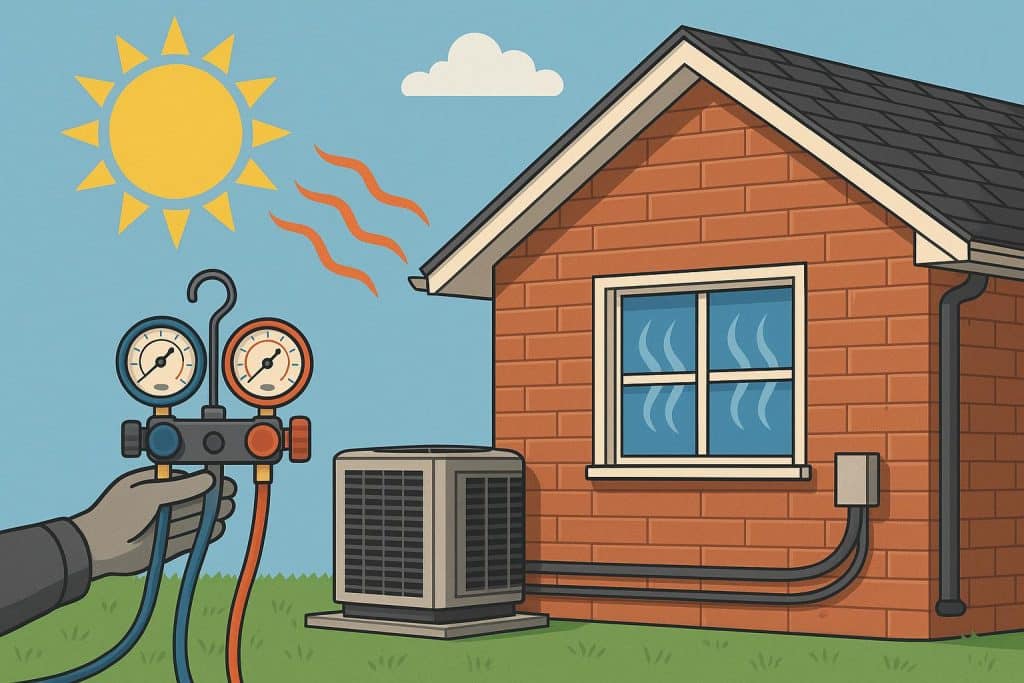
Sunlight can make a home feel inviting, but it can also cause stubborn comfort problems that show up as overheated rooms, uneven temperatures, and rising cooling costs. Sun exposure changes throughout the day, so the discomfort often feels inconsistent—fine in the morning, oppressive by mid-afternoon, then suddenly chilly after sunset once the system catches up. Large windows, skylights, dark roofing materials, and minimal exterior shading can intensify the effect, especially on south- and west-facing sides of the home. HVAC contractors focus on diagnosing how solar heat gain interacts with insulation, airflow, and equipment capacity. When the true cause is identified, the solution usually blends system adjustments with targeted improvements that help the home handle sunlight without constant thermostat battles.
When Sunshine Creates Indoor Hot Spots
Diagnosing Solar Heat Gain and Pattern-Based Complaints
Comfort issues linked to sun exposure rarely present as an all-home problem; they usually appear in specific rooms at predictable times. HVAC contractors begin by mapping when and where discomfort occurs, noting afternoon heat spikes, temperature swings near large glass areas, or rooms that remain warm even after the sun moves. They also evaluate how quickly the space heats up and how long it takes to recover after sunset, because this timing reveals whether the issue is mostly solar gain, poor distribution, or inadequate heat and humidity removal. During evaluation, an HVAC contractor may measure supply air temperature, static pressure, and return-air conditions while comparing readings across zones. This approach prevents guesswork and helps pinpoint whether the solution requires airflow balancing, duct modifications, equipment tuning, or improvements to the home’s envelope.
Thermostat Placement and Sensor Strategy for Sunny Rooms
Sun exposure can mislead thermostats, causing systems to run too long or shut off too soon, depending on where sensors are located. If a thermostat sits in a hallway that stays cooler, the system may not run long enough to reduce heat in a sunlit living room. If the sensor is placed where sunlight hits it directly, the system may overcool the entire home to compensate for a false “hot” reading. Contractors address this by verifying sensor placement and recommending adjustments that better reflect the occupied zones. In some homes, relocating the thermostat to a central interior wall improves consistency. In others, adding remote sensors allows the system to respond to actual problem areas rather than an average that hides solar-driven hot spots. Proper sensing is a foundational step because it influences every subsequent adjustment.
Airflow Balancing and Duct Adjustments for Sun-Facing Areas
When sun-facing rooms heat up faster than the rest of the home, airflow often needs recalibration so those spaces receive more cooling capacity during peak exposure times. HVAC contractors check supply and return performance to ensure conditioned air reaches the rooms that need it most and that warm air returns to the system efficiently. A common issue is inadequate return pathways in bright rooms, which trap heat and prevent the HVAC system from “seeing” the true load. Contractors may adjust dampers, resize or add returns, and correct duct restrictions that limit airflow. They also look for duct leakage in attics or crawlspaces that wastes cooled air before it reaches the sun-exposed rooms. By improving the delivery and return balance, the system can remove heat where it accumulates rather than overcooling other areas in an attempt to compensate.
Equipment Tuning, Staging, and Humidity Control Under Solar Loads
Sun exposure often triggers comfort complaints that feel like “too hot,” but humidity can be a major contributor to that sensation. When solar gain increases indoor temperature, the system may cool the air without adequately controlling moisture if cycling patterns are inefficient or airflow settings are off. Contractors tune equipment to improve sensible cooling while maintaining moisture removal, often by adjusting blower speeds, verifying refrigerant charge, and ensuring coils and drains are functioning properly. Variable-speed systems and staged equipment can be particularly helpful because they match output to the changing load that the sun creates across the day. Instead of blasting cold air briefly and shutting off, a properly tuned system can run longer at a lower output, smoothing out temperature swings and improving comfort. When humidity is handled correctly, sunlit rooms feel less stuffy and recover faster without making the rest of the home feel overly cold.
Building Envelope Improvements That Support HVAC Performance
HVAC adjustments alone may not fully solve solar-driven discomfort if the home continuously absorbs and stores heat. Contractors frequently recommend envelope improvements that reduce solar gain before it becomes an HVAC problem. Window films, upgraded glazing, exterior shading, and well-fitted blinds or drapes can significantly reduce radiant heat, especially in west-facing rooms that get intense afternoon sun. Attic insulation and ventilation also matter because solar heat often enters through the roof and radiates downward into living spaces. Sealing air leaks around windows and doors prevents hot outdoor air from being pulled into cooled rooms as the system runs. These measures reduce the load the HVAC system must fight each day, which can stabilize temperatures and lower energy use. When the envelope supports the mechanical system, comfort solutions tend to last longer and require fewer aggressive equipment changes.
When Zoning or Supplemental Solutions Make Sense
Some homes have layouts where sun exposure creates persistent imbalances that are difficult to correct with balancing alone, such as large open-plan spaces with tall glass walls or additions that were not integrated into the original duct design. In these cases, HVAC contractors consider zoning approaches that allow different parts of the home to respond independently. By controlling airflow and runtime based on specific areas, zoning can prevent one sunny room from forcing the entire home into longer cooling cycles. Supplemental solutions can also help when a particular space has a unique load profile, such as a glass-heavy sunroom or a bonus room over a garage that heats up quickly. The goal is to address the root cause without overworking the main system. When implemented thoughtfully, these strategies reduce hot spots, improve comfort predictability, and help homeowners maintain stable settings rather than constantly chasing the thermostat.
Turning Sunlight From a Problem Into a Manageable Factor
Sun exposure is one of the most common reasons homeowners experience uneven comfort, yet it is also one of the most solvable when approached methodically. By diagnosing patterns, correcting thermostat sensing, improving airflow, and tuning equipment for changing daytime loads, HVAC contractors can reduce temperature swings and make sunlit spaces feel consistent throughout the day. When needed, envelope improvements and zoning strategies further reduce the strain that solar heat gain places on the system. The most reliable outcomes come from combining mechanical adjustments with practical ways to limit unwanted heat entering the home. With the right plan, sunlight becomes an aesthetic benefit rather than a comfort burden, and the home stays steady, efficient, and comfortable throughout every season.