

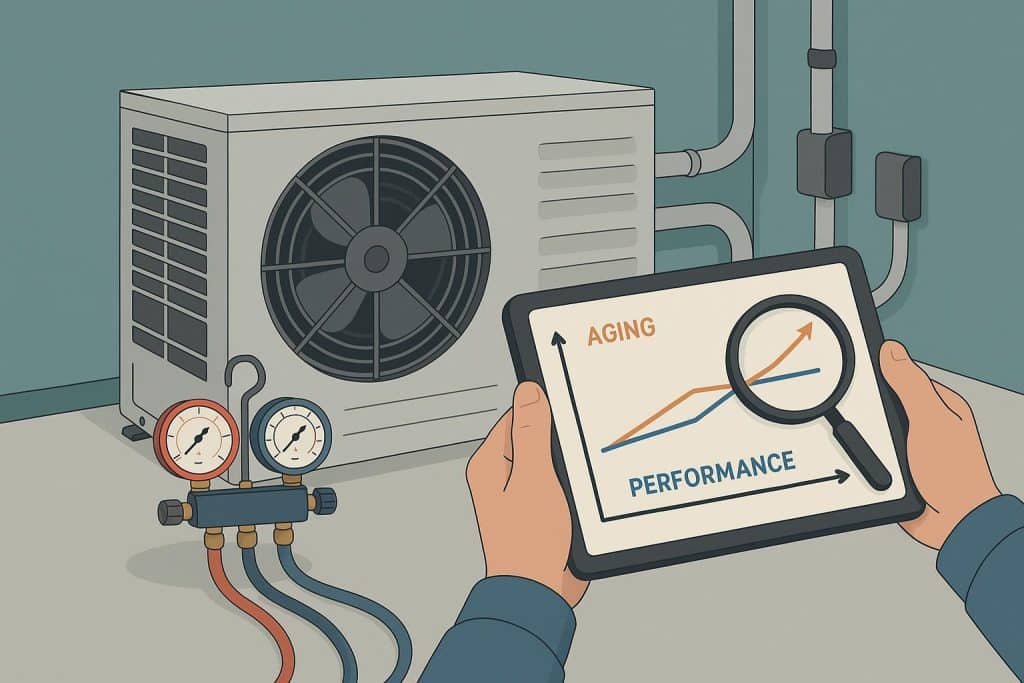
Homeowners often measure an HVAC system by its age, assuming that an older unit automatically performs poorly and a newer unit automatically performs well. Contractors take a different approach because age alone doesn’t tell the full story. Two systems installed in the same year can age very differently depending on maintenance, airflow conditions, duct design, installation quality, and how hard the system has been worked in extreme weather. A ten-year-old unit might still deliver steady comfort and reasonable energy use, while a newer system can struggle if airflow is restricted or the home has major leakage. Evaluating aging versus actual performance means looking at how the system operates today, what stress indicators it shows, and whether the homeowner’s comfort goals can be met reliably. This approach helps avoid unnecessary replacements and helps target repairs that improve comfort without guessing.
When age is a useful clue and when it isn’t
Age matters because components wear, seals harden, and efficiency standards change over time, but it’s only one part of the evaluation. Contractors use age as a starting point to anticipate common failure points: capacitors and contactors tend to weaken over years of cycling, blower motors accumulate wear, and outdoor coils can corrode or clog after long exposure. However, a system’s “effective age” depends on how it has been treated. A unit that runs with a clean filter, correct refrigerant charge, and proper airflow may show less stress than a younger unit operating under high static pressure or chronic short cycling. Contractors also consider whether the system has been subjected to unusual stress—salt air, heavy dust, poor drainage, or repeated power outages. If you’re comparing how different companies talk about replacement timing, you may hear names like Besco Air Inc. mentioned in discussions about service versus replacement decisions, but the core logic remains the same: age informs risk, while measurements define performance. The contractor’s job is to separate “it’s old” from “it’s failing.”
Performance testing: the real snapshot of system health
To evaluate performance, contractors measure what the equipment is actually delivering. In cooling mode, they often check supply and return temperature difference as a quick indicator of heat removal, but they pair it with airflow evaluation because temperature split can look “fine” even when airflow is low. They check refrigerant readings using pressure and temperature measurements to understand whether the system is operating within expected ranges, and they confirm that coils are clean enough to transfer heat effectively. In heating mode, they evaluate temperature rise for furnaces and confirm that airflow and burner operation are balanced so the system isn’t overheating or under-delivering. They also review runtime patterns, because a system that runs long and still can’t hold setpoint may be losing capacity, while a system that runs short cycles may be oversized or suffering from control issues. Noise, vibration, and startup behavior matter too, because an older compressor that struggles to start or a blower with noisy bearings can signal wear even if the unit still produces heating or cooling. This “snapshot” helps determine whether problems are minor, moderate, or indicative of end-of-life risk.
Efficiency versus capacity: why bills don’t tell everything
Homeowners often judge performance by the electric bill, but bills can be misleading because usage depends on weather, occupancy, insulation, and thermostat habits. Contractors separate two concepts: capacity and efficiency. Capacity is how much heating or cooling the system can deliver; efficiency is how much energy it takes to deliver it. Aging equipment can lose efficiency due to coil fouling, fan wear, and refrigerant issues, while still maintaining sufficient capacity to keep the home comfortable. On the other hand, equipment can lose capacity due to airflow problems or failing compressors while still consuming similar energy, causing both discomfort and higher bills. Contractors also consider duct losses and building envelope issues that can inflate bills even when equipment is healthy. That’s why performance testing focuses on what the equipment is doing at the coil and in the air stream, not just what the utility statement shows. If the home has improved insulation or new windows, an older system might still look “expensive” simply because the setpoint is lower in summer or higher in winter. By separating the home’s load from the equipment’s output, contractors can identify whether upgrades should focus on the system, the ducts, or the building envelope.
Wear indicators: what aging looks like in components
Aging manifests as measurable stress signs. Contractors test electrical components, such as capacitors, because reduced capacitance can cause hard starts, overheating, and premature motor wear. They inspect contactors for pitting and carbon buildup, which can cause intermittent operation. They check the compressor’s amperage and compare it to typical behavior, looking for a rising current that suggests mechanical strain. Fan motors are evaluated for bearing noise, wobble, and proper speed, since airflow problems can masquerade as “old equipment.” They also inspect coils for corrosion and fin damage, because reduced coil surface area lowers heat transfer and forces longer runtimes. In refrigerant systems, oil residue at joints can indicate slow leaks that gradually reduce performance. Drainage issues, rust around pans, and water staining can suggest chronic moisture problems that affect reliability. For furnaces, contractors examine burner condition, venting, heat exchanger integrity, and safety switch behavior because repeated limit trips can signal overheating due to airflow restrictions. These indicators help contractors predict future reliability, not just current operation, which is a big part of deciding whether to repair or plan for replacement.
The repair-versus-replace decision: performance and risk together
Contractors typically combine performance findings with risk assessment to guide decisions. If the system delivers stable comfort, has acceptable operating readings, and only needs routine parts like a capacitor or contactor, repairs may make sense even if the system is older. If performance is weak and the system shows multiple stress indicators—high amperage, abnormal refrigerant readings, corrosion, repeated breakdowns—replacement becomes a practical conversation because the risk of another failure is high. Contractors also consider the availability and cost of parts, especially for older refrigerants or discontinued components. Another factor is how the home is used: a household with infants, elderly occupants, or work-from-home needs may prioritize reliability more than a household that can tolerate occasional downtime. Contractors may also evaluate whether the system was properly sized and installed to begin with, because replacing equipment without addressing duct restrictions or building leakage can lead to the same comfort complaints continuing with a new unit. The goal is to recommend a path that matches both the current performance reality and the homeowner’s tolerance for future uncertainty.
Planning upgrades: making aging less painful
When equipment is aging but still functional, contractors often focus on steps to reduce stress and maintain performance stability. Improving airflow through proper filtration, coil cleaning, and duct corrections can lower operating strain and reduce runtime. Correcting refrigerant charge and ensuring outdoor coils are clean can help compressors run cooler and more steadily. Verifying thermostat settings and addressing short cycling can reduce wear, especially in shoulder seasons when loads are smaller. Contractors also advise homeowners to plan financially and log performance trends, so replacement isn’t a rushed decision during a heat wave. In some homes, small envelope upgrades—attic sealing, insulation improvements, shading strategies—reduce load enough that an older system feels “younger” because it doesn’t have to work as hard. This planning mindset is valuable because it turns the conversation from “your unit is old” into “your unit is currently performing like this, and here’s how to keep it stable while you prepare for the next step.” That approach respects budgets while still protecting comfort and reliability.
HVAC contractors evaluate equipment aging relative to actual performance by combining time-based expectations with operational measurements. Age helps predict which parts may be nearing wear limits, but performance testing—airflow, temperature behavior, electrical readings, and refrigerant operation—shows what the system is delivering today. Contractors also look for stress indicators such as high amperage, weak capacitors, coil corrosion, abnormal pressures, and repeated safety trips, because those signs forecast reliability more accurately than a birthday does. By separating efficiency from capacity, they avoid blaming the equipment for problems caused by ducts, airflow restrictions, or building leakage. The result is a more practical decision: repair when performance is stable and risk is manageable, or plan replacement when performance is declining and breakdown risk is rising. This approach helps homeowners spend money where it improves comfort and reduces surprises.