

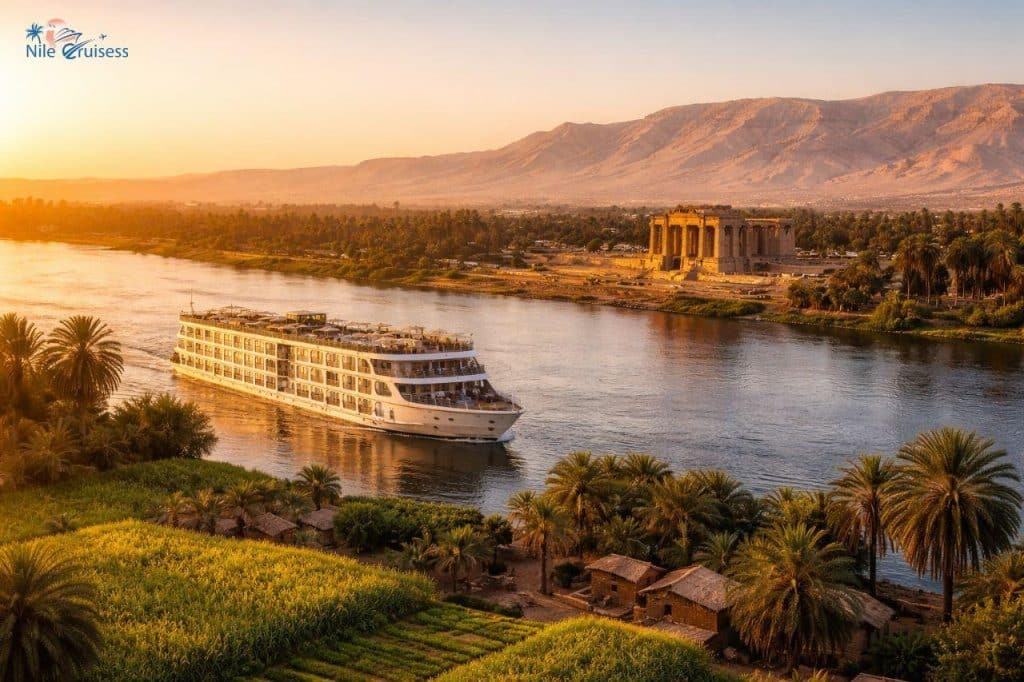
Egypt did not grow by chance. It grew because of a river. Long before cities, roads, or borders existed, the Nile made life possible in a land surrounded by desert. This is why historians call Egypt “the Gift of the Nile.”
For travelers today, especially those learning about the country through Nile cruises, this idea becomes easy to understand. The river does more than run through Egypt—it explains how the land works, where people live, and why ancient history still feels alive.
This article explains why the Nile earned this title and how traveling along the river helps visitors understand Egypt in a clear and meaningful way.
A River That Turned Desert Into Life
Most of Egypt is dry desert. Rain is rare, and the land cannot support farming on its own. The Nile changed that completely.
Every year, the river brought water and rich soil to its banks. This allowed crops to grow again and again.
Because of the Nile:
- Food could be grown in large amounts
- People could settle in one place
- Communities became cities
Without this river, ancient Egypt could not have survived.
Why People Built Their Lives Along the Nile
Even today, most Egyptians live close to the river. This is not tradition—it is practical.
The Nile provides:
- Water for farming
- A natural path for travel
- Cooler air compared to the desert
From above, Egypt looks like a green ribbon surrounded by sand. Seeing this in person makes the country’s geography easy to understand.
The Nile as Egypt’s First Travel Route
Before cars or trains, the Nile acted like a natural road. Boats moved easily with the current, carrying people and goods.
This made it possible to:
- Move stone for temples
- Trade food between regions
- Keep the country connected
Traveling by river today follows the same path ancient Egyptians once used, helping visitors understand how the country stayed united for so long.
Learning Geography by Watching the Riverbanks
One of the clearest lessons the Nile teaches is how sharply life depends on water.
From the river, travelers can see:
- Green farms ending suddenly at desert sand
- Villages placed close to the water
- Empty land just a short distance away
This view explains why ancient builders placed temples and towns exactly where they did.
Many travelers notice that understanding Egypt becomes easier when the journey follows the river itself. Observing daily life, farmland, and historic sites from the water gives context that land travel often misses. This perspective is often discussed in guides focused on Nile cruise journeys, where geography and history are seen together rather than separately.
Why Temples and Cities Face the Nile
Most major ancient sites were built near the Nile for clear reasons.
The river provided:
- Water for workers
- Transport for materials
- A symbol of renewal and life
Standing near the river makes these choices feel logical, not mysterious.
The Nile in Everyday Egyptian Life Today
The Nile is not only important to history. It still supports daily life.
Along the river, visitors often see:
- Farmers watering crops
- Small fishing boats
- Families living near the banks
These scenes show that the Nile still gives life, just as it did thousands of years ago.
Why Slow Travel Helps Understanding
Rushing through historical places makes learning difficult. Moving slowly allows the mind to connect ideas.
Traveling along the Nile offers:
- Time to think between sites
- Fewer long road journeys
- A steady daily rhythm
This calm pace makes history easier to absorb.
Respect for the Nile in Ancient Beliefs
Ancient Egyptians did not take the Nile for granted. They respected it deeply.
This respect appeared in:
- Religious festivals
- Art showing river scenes
- Stories explaining floods and seasons
The Nile was seen as a gift, not a force to fight.
A Living Link Between Past and Present
Egypt feels timeless because its past and present exist together. The Nile connects both.
Travelers often notice:
- Ancient ruins near modern towns
- Traditional farming still in use
- Old river paths still guiding life
The river keeps history alive.
Final Thoughts: Why Egypt Truly Is the Gift of the Nile
Egypt exists because of the Nile. The river made farming possible, allowed cities to grow, and connected people across the land. It shaped history and still shapes daily life.
Traveling along the Nile helps visitors understand Egypt not as a list of monuments, but as a living story written by water.