

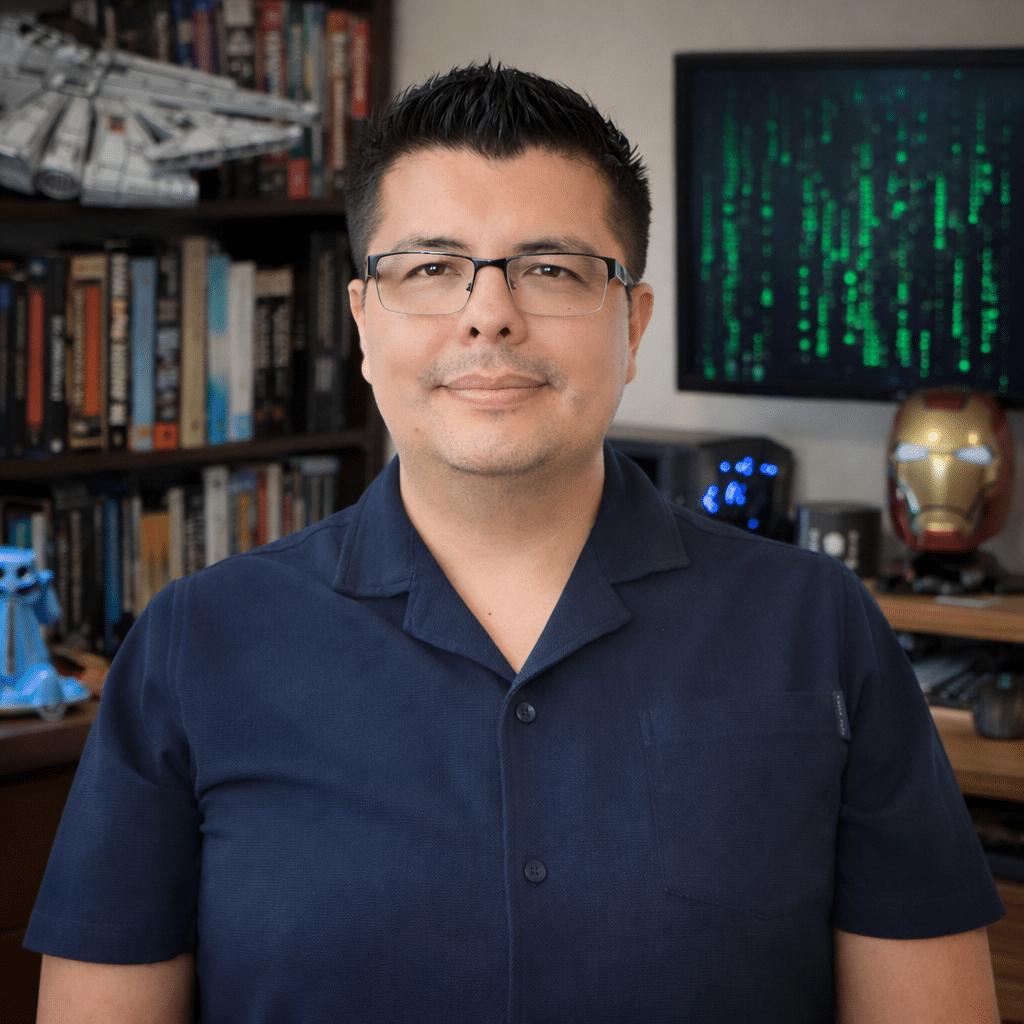
There is a particular kind of confidence that comes from having lived inside systems before they became fashionable. Long before artificial intelligence was framed as a consumer miracle or a corporate threat, Franz Torrez Quiroga was learning how machines actually behave when placed under real world pressure. Not in theory. Not in demo environments. But in factories, global supply chains, and businesses that could not afford abstraction.
Born in Bolivia and shaped professionally across continents, Franz spent more than a decade living and studying in China, where he completed his advanced degrees and encountered artificial intelligence as infrastructure rather than spectacle. In manufacturing hubs and industrial systems, AI was not a chatbot or a headline. It was a quiet engine optimizing processes, reducing waste, and making decisions at scale. That exposure would later define his work and shape his skepticism toward AI solutions that promise transformation without understanding the human and economic realities they touch.
Today, Franz is the co-founder and chief technology officer of Karyoo, an AI driven, no code, no touch automation platform built to help small business owners automate workflows, orchestrate teams and tools, and increase enterprise value as they prepare for future exits.
A Career Built Across Borders
Franz’s career does not follow the familiar arc of Silicon Valley mythology. His technical foundation was forged across Asia, with professional exposure spanning the United States, Singapore, Hong Kong, and LATAM. That global lens mattered. It taught him that technology does not land evenly. It benefits those with resources, technical fluency, and institutional support first, while smaller operators are left reacting rather than leading.
In his early entrepreneurial work, Franz built highly technical systems focused on business process management and secure infrastructure. The software worked, but it demanded sophistication from its users. It was built for CTOs, not owners. For companies with engineering teams, not family run businesses.
That realization led to a pivotal shift. Franz partnered with business strategist Peter Thomson, whose insight reframed the challenge. The issue was not technological capability. It was accessibility.
Together, they examined what economists describe as the Silver Tsunami. A massive wave of business owners nearing retirement in the United States, holding trillions of dollars in private company value but lacking the operational maturity needed to protect that value in a rapidly changing market.
The irony Franz observed was unsettling. AI promised efficiency, but it was also compressing valuations. Processes once considered proprietary were now automated. Labor advantages flattened. Owners who expected strong exits were instead facing futures where their life’s work sold for far less than anticipated.
Teaching these owners how to implement AI themselves was not realistic. The learning curve was steep and the timeline unforgiving. So Franz made a different decision. He would build a system that absorbs the complexity on their behalf.
Karyoo as Infrastructure, Not Just Software
Karyoo is not positioned as another software tool competing for attention. It functions as an operational layer that sits beneath a business, managing workflows, automation, and decision making without requiring the owner to become technical.
At its core, Karyoo uses advanced AI models to automate workflows, integrate business tools, and support day to day operations across accounting, customer service, procurement, and marketing. The system observes how a business operates, identifies inefficiencies, and builds intelligent workflows that adapt over time.
What makes the platform distinct is its architecture. Karyoo was engineered to be accessible to small businesses from the start. Entry level pricing allows owners to use enterprise grade automation without paying for capacity they do not need. As usage grows, the system scales accordingly.
This design choice reflects a fundamental belief that small businesses should not be penalized for their size. Most do not fail due to lack of effort or intelligence. They fail because they are exposed to volatility they cannot absorb. Tariff changes, supply chain disruptions, platform dependency, and shifting consumer behavior hit them first and hardest.
Karyoo does not eliminate risk. It reduces surprise.
AI With Practical Intelligence
What sets Franz apart as a technologist is his insistence on grounding AI in reality. He is quick to note that popular narratives often confuse artificial intelligence with consumer interfaces. Large language models may be visible, but they represent only one layer of a much larger system.
Karyoo focuses on action rather than conversation. It orchestrates workflows. It connects tools. It executes decisions. It reduces the cognitive load placed on owners who already carry too much responsibility.
The platform can automate customer interactions, optimize vendor selection, integrate with accounting systems like QuickBooks, and manage social media activity based on competitive analysis and seasonal behavior. These capabilities are not presented as features. They are presented as relief.
By lowering the barrier to adoption, Karyoo allows small businesses to move from reactive decision making to informed strategy without hiring large teams or expensive consultants.
Beyond Automation: Value and Exit Readiness
In conversations with business owners across the United States, Franz hears the same concern repeated in different forms. The world is moving faster than their ability to respond. Markets shift overnight. Providers change terms. Customer loyalty erodes. Planning feels fragile.
Karyoo was designed with that emotional reality in mind. By handling operational complexity in the background, the platform gives owners something increasingly rare. Time to think.
This clarity matters not just for survival, but for value. Businesses with documented workflows, automated processes, and data driven operations are more resilient. They are also more attractive to buyers. Franz sees automation not as a replacement for human judgment, but as a prerequisite for preserving it.
A Vision for the Future
Franz is realistic about what comes next. The pace of global change will not slow. Small businesses will either be augmented or outpaced. His ambition is not to dominate a market, but to create infrastructure that levels it.
Karyoo’s public crowdfunding initiative reflects that philosophy. It invites broader participation in the company’s growth and aligns with his belief that transformative technology should not be locked behind institutional gates.
In an era where artificial intelligence is often framed as an existential threat, Franz offers a quieter answer. The future does not belong to the loudest technology. It belongs to the most humane one.