

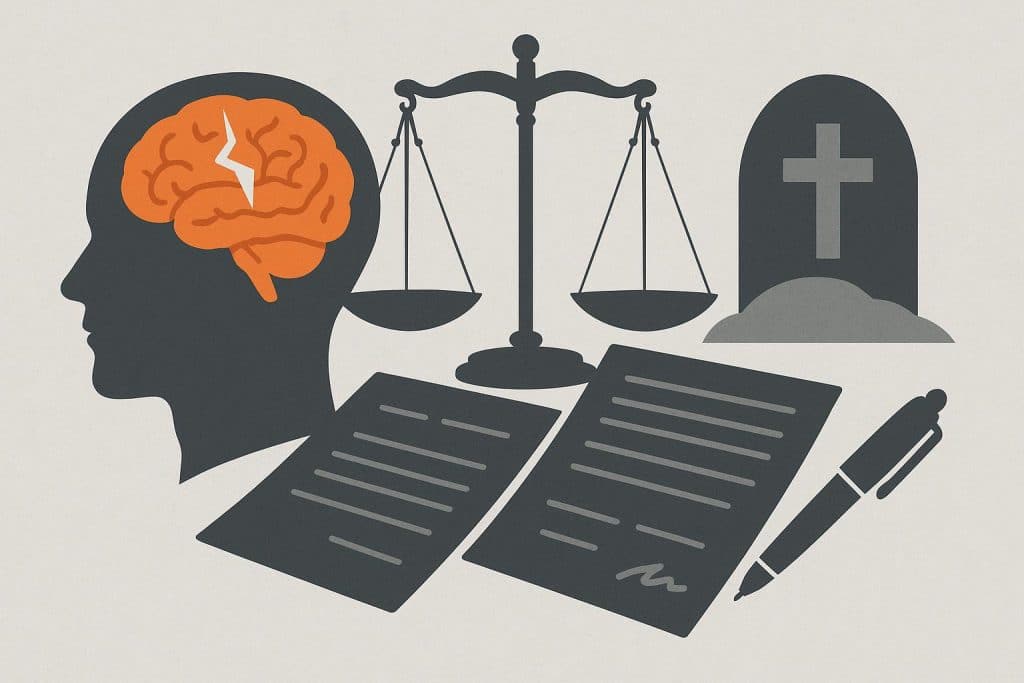
The lawsuits related to the traumatic brain injuries (TBIs) are the most complicated cases in the personal injury law. In cases where an individual die as a result of a serious head injury when another party acts in such a way, the family can initiate legal action using lawyers from Vogel LLP in a court to ensure that those responsible hold the other party accountable and recover their money. The basis of such claims is the proving of negligence, and it takes a clear and evidence-based methodology that directly links the traumatic brain injury with the ultimate fatality.
Learning about negligence in wrongful death.
In a wrongful death action, the plaintiffs have to prove negligence. This usually entails demonstration of four legal factors which include the duty of care, violation of the duty of care, causation and damages. The support of each aspect in the case of traumatic brain injuries should be backed by a solid factual and medical evidence.
There is a duty of care whereby one person or a body has a legal obligation to exercise reasonable care. This can be the drivers complying with the laws of the road, home owners keeping their premises safe, or the employer ensuring that the workplace is safe. Breach will arise when that duty is broken and an example is by driving carelessly or exposing those onboard to unsafe conditions or breaking safety standards that are in place.
Associating traumatic brain injury with the lethal outcome.
The issue of causation is the most controversial in TBI wrongful death cases. Lawyers have to demonstrate that the traumatic brain damage was the direct cause of the negligent behavior of the defendant and that, as a result, caused death. It is so especially when the symptoms have emerged with time or the victim already had an underlying medical condition.
The medical records are very important in creating this connection. Reports in the emergency room, neurological assessments, imaging examination, and expert assessment aids in showing the extent of the brain damage. Mostly, special medical evidence is provided to help clarify the way the TBI developed, lead to complications, or result in lethal brain enlargement, blood breakage, or brain cognitive loss.
The role of expert witnesses
In the wrongful death cases involving traumatic brain injuries, expert witnesses are required. Professional opinions can be given by neurologists, forensic pathologists and experts in accident reconstruction to explain how the injury happened and why such injury proved to be fatal. Their evidence assists the juries and judges to know the complicated medical terms and give support to the argument that death would not have come about in the event of negligence.
Economic experts can also be engaged in order to determine the economic losses incurred by the survivors within the family. These may be the lost revenue, earned potential, medical costs before death and the funeral costs.
Arguments to establish negligence.
Effective wrongful death litigation is based on numerous pieces of evidence. This can involve the accident reports, witness reports, surveillance videos and vehicle records and safety records. Documentation of the immediate effects of the incidence and development of symptoms is especially useful in the case of traumatic brain injury.
Lawyers usually collaborate with investigators to recreate the events and find out the violations of safety rules or care standards. Such an overall solution contributes to the argument and minimizes chances of the defense to refute liability.
The importance of legal representation.
Traumatic brain injury lawsuits are difficult to challenge as it impacts wrongful death claims. A competent wrongful death lawyer knows how to get medical evidence and expert witnesses and demonstrate a strong case that can carry the burden of proof. Having defined negligence in a comprehensive manner families are able to seek justice as well as financial stability in seeking to memorize the loved one.
Not only is proving negligence a legal obligation, it is an essential measure towards responsibility in wrongful death cases of traumatic brain injuries.