

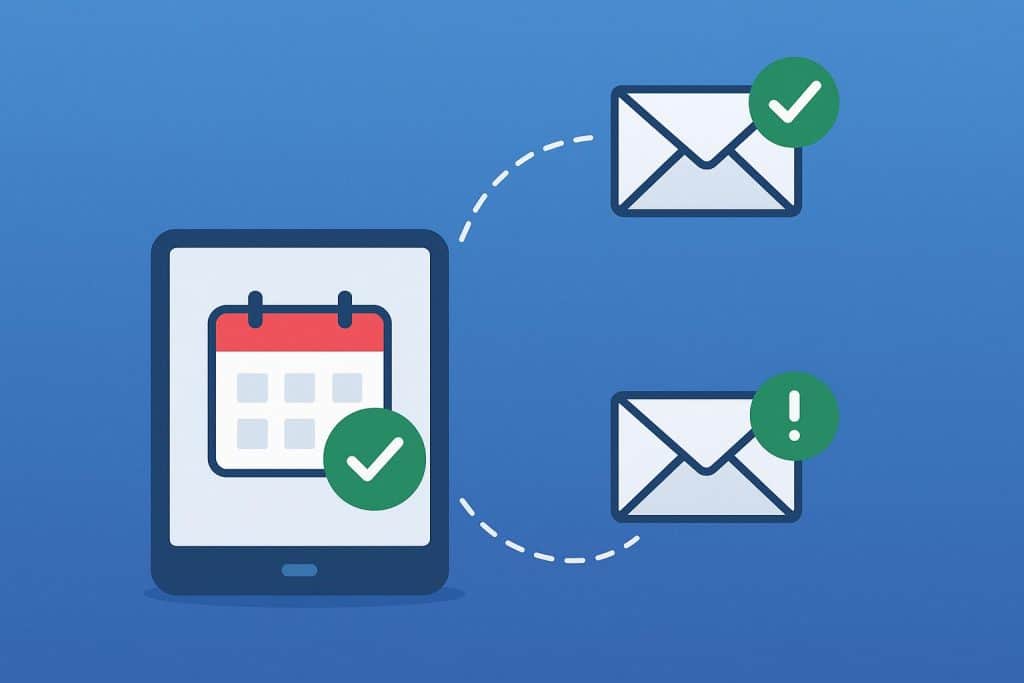
Missed appointments cost organizations time and money, erode service quality, and inconvenience both staff and clients. Automated confirmation and follow-up systems offer a practical, scalable way to reduce no-shows and increase attendance rates. When implemented thoughtfully, these systems create a clearer communication loop, reduce administrative burden, and improve client experience by removing friction around scheduling and reminders.
Why confirmations change behavior
A confirmation message validates the appointment in the client’s mind and prompts them to make a plan to attend. Humans forget, schedules shift, and uncertainty about details can cause people to deprioritize commitments. Automation ensures reminders are sent consistently, eliminating reliance on manual outreach. Beyond mere repetition, confirmations deliver crucial details—date, time, location, host, preparation steps—so recipients can assess the appointment’s importance and feasibility at a glance. When recipients receive clear, timely confirmations, they are more likely to honor the commitment or proactively reschedule, which protects operational efficiency.
Crafting messages that work
The effectiveness of automated outreach hinges on message content. Short, specific messages with a friendly tone outperform long, formal ones. Start with the essential details and include a single clear call to action, such as a link to confirm, reschedule, or cancel. Personalization matters: addressing the recipient by name, referencing the type of appointment, and adapting language to the audience’s preferences increases engagement. Including a direct contact option for questions reduces friction for people who might otherwise not respond.
A multi-channel approach helps reach more people. SMS is particularly effective for quick confirmations and last-minute reminders; email can carry attachments like forms or directions; voice calls may help reach clients who prefer spoken interaction. For brevity and clarity, a concise appointment reminder text that links to rescheduling tools and calendar invites is often the highest-impact tactic for frontline attendance improvements.
Timing, cadence, and personalization
Timing is a decisive factor. A confirmation immediately after booking sets expectations and reduces uncertainty. Follow-up reminders staged at strategic intervals—such as one week, 48 hours, and two hours before the appointment—catch people at moments when they can act. The optimal schedule depends on your audience and the appointment type; longer lead-time services may warrant earlier and more detailed communications, while last-minute changes require short, urgent messages.
Personalization extends beyond the recipient’s name. Segment your audience by appointment type, historical behavior, and demographic cues. Clients who have a history of rescheduling might receive an extra reminder or a one-click reschedule option, while first-time visitors could get additional directions and parking information. Time zone awareness and language preferences prevent confusion and show respect for the recipient’s context.
Two-way interaction and easy rescheduling
Automation is most effective when it supports two-way communication. Allowing recipients to reply to confirm, cancel, or request a new time reduces administrative drag and increases transparency. Integrate simple reply keywords for SMS (for example, “YES” to confirm, “RESCHEDULE” to pick a new slot) and surface those responses directly in your scheduling system. Embedding a one-click reschedule link that shows only relevant availability minimizes back-and-forth and preserves staff time. When clients can manage their appointments effortlessly, you’ll see both improved attendance and higher satisfaction.
Follow-up for no-shows and cancellations
Not every reminder will prevent a missed appointment. A well-designed follow-up flow captures value from cancellations and no-shows by offering immediate options: reschedule, request a callback, or receive a virtual alternative. Automating follow-up outreach shortly after a no-show both recovers revenue and maintains relationships. Use empathetic language, make rescheduling frictionless, and, where appropriate, offer flexible options such as video visits or alternative locations. Tracking reasons for cancellations can reveal process improvements or barriers you can remove.
Integration, consent, and compliance
Automated confirmation systems should integrate with your scheduling platform, CRM, and billing systems to maintain data consistency. This synchronization enables accurate messaging and meaningful analytics. Ensure opt-in and opt-out procedures comply with communication regulations and respect customer preferences. Record consent and maintain clear logs of messages sent, replies received, and actions taken. For healthcare or legal services, add layers of privacy protection and secure message handling to meet industry standards.
Measuring success and continuous improvement
Define clear KPIs to evaluate the impact of automated confirmations: attendance rate, no-show rate, reschedule frequency, and revenue recovered from reduced no-shows. A/B test message copy, timing, and channels to discover what resonates with different segments. Track downstream effects as well, such as reduced staff overtime and improved utilization of facilities. Use analytics to identify patterns—certain appointment types or time slots with higher no-show risk—and target these with specialized flows. Over time, machine learning models can predict no-show probability and trigger tailored outreach, optimizing effort and cost.
Implementation roadmap
Start with a pilot for a specific appointment type or department. Design message templates with clear details and a single prioritized action. Ensure calendar invites, location links, and rescheduling tools are embedded. Train staff to interpret automated responses and manage exceptions quickly. Monitor performance metrics closely and solicit feedback from staff and clients to refine tone and timing. Scale gradually, leveraging what you learn to expand to other service lines.
When confirmations and follow-ups are automated and thoughtfully designed, attendance improves, staff time is freed for higher-value tasks, and clients appreciate the clarity and flexibility. An effective system connects scheduling, messaging, and analytics into a unified process that reduces uncertainty and keeps appointments predictable. With consistent measurement and iteration, automated confirmations and follow-ups become a durable advantage for any organization that relies on scheduled interactions.