

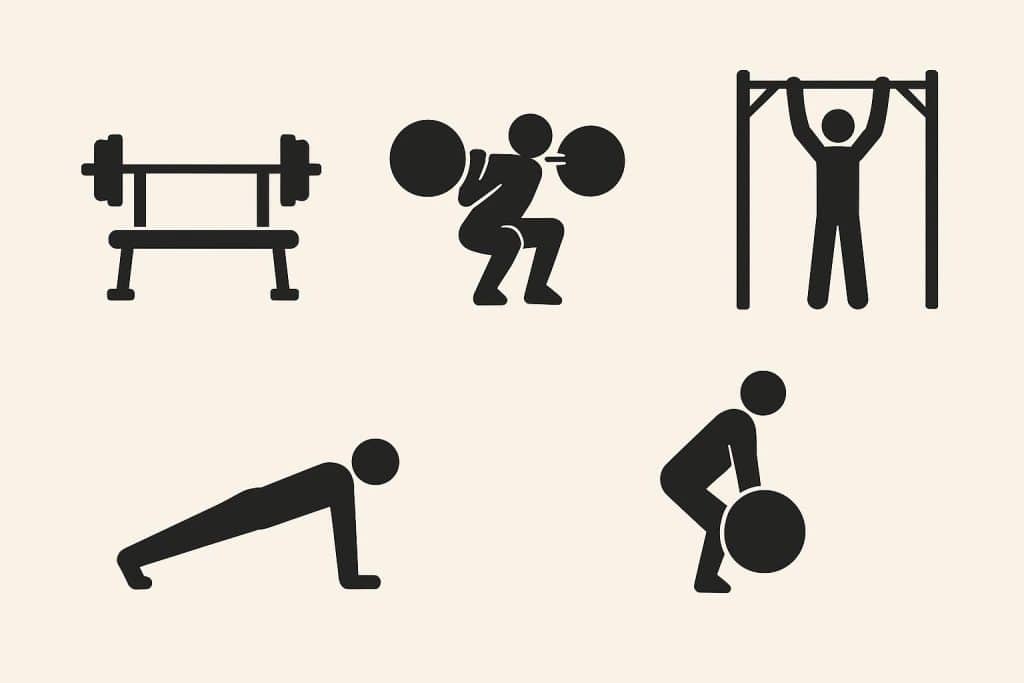
Getting fit doesn’t have to mean spending hours at the gym or learning dozens of different exercises. You can build a strong, healthy body with just five basic movements that work your entire body. This approach saves you time and takes away the confusion of complicated workout plans.
Most people think they need fancy equipment or long workout routines to see results. The truth is simpler than that. A few key exercises done consistently will give you better results than switching between countless different moves. These movements have been proven to work by trainers and coaches who focus on what actually matters.
The five exercises you’ll learn about target all your major muscle groups and can be done almost anywhere. You don’t need a gym membership or expensive equipment to get started. Whether you have 20 minutes or an hour, this minimalist approach works with your schedule and helps you build real strength.
Minimalist Fitness: The Only 5 Essential Exercises
A minimalist fitness approach focuses on five key movement patterns that work your entire body: push, pull, squat, hip-hinge, and plank. These compound movements save time while building strength, burning fat, and improving your overall fitness without fancy equipment or complicated routines.
Benefits of a Minimalist Approach
You can get a complete workout in 30 minutes or less when you focus on just five exercises. This approach eliminates the need for long gym sessions and removes the confusion about which exercises to do.
Your muscles grow faster with compound movements because they work multiple muscle groups at once. A push-up, for example, targets your chest, shoulders, triceps, and core in a single movement.
You’ll save money since most minimalist exercises use only your bodyweight or a basic set of dumbbells. No gym membership or expensive equipment required.
Time-saving benefits include:
- Less decision fatigue about which exercises to perform
- Shorter workout sessions (20-40 minutes)
- No commute time to a gym
- Faster progression tracking with fewer movements to monitor
Your body also recovers better when you’re not doing 15 different exercises per session. This means less soreness and more energy for your daily activities.
How to Structure an Effective Routine
Start each workout with a 5-minute warm-up of light cardio and dynamic stretching. This prepares your muscles and reduces injury risk.
Perform the five exercises in a circuit format. Complete one set of each movement, rest for 60-90 seconds, then repeat. Aim for 3-4 rounds total.
Basic structure:
- Push exercise (8-12 reps)
- Pull exercise (8-12 reps)
- Squat variation (10-15 reps)
- Hip-hinge movement (10-15 reps)
- Plank hold (30-60 seconds)
Schedule your workouts 3 times per week with at least one rest day between sessions. Your muscles need time to repair and grow stronger.
Add weight or difficulty progressively. Once you can easily complete 12 reps of an exercise, make it harder by adding resistance, slowing down the movement, or trying a more challenging variation.
The Science Behind Compound Movements
Compound exercises activate multiple joints and muscle groups simultaneously. When you do a squat, you’re working your quads, hamstrings, glutes, and core together.
Your body releases more growth hormone and testosterone during compound movements compared to isolated exercises. These hormones help build muscle and burn fat throughout your entire body.
Research shows that compound movements burn more calories per minute than isolation exercises. A squat burns about 35% more calories than a leg extension machine.
Muscle recruitment breakdown:
| Exercise Type | Muscle Groups Used | Calories Burned |
|---|---|---|
| Compound | 3-5+ groups | High |
| Isolation | 1-2 groups | Low |
Your nervous system also gets stronger with compound movements. This improves your coordination, balance, and overall athletic performance in daily activities.
Common Mistakes to Avoid
Don’t skip the warm-up even when you’re short on time. Cold muscles are more prone to injury and won’t perform as well during your workout.
Avoid rushing through repetitions just to finish faster. Controlled movements with proper form build more strength and prevent injuries.
Watch out for these errors:
- Adding too much weight before mastering proper form
- Training the same muscles on consecutive days
- Holding your breath during exercises
- Skipping certain movement patterns you find difficult
You shouldn’t expect results in just one week. Real strength and body changes typically appear after 4-6 weeks of consistent training.
Don’t ignore pain signals from your body. Muscle fatigue is normal, but sharp or joint pain means you need to stop and check your form or reduce the intensity.
Mastering the 5 Key Movements
These five movements form the foundation of human strength and function. Each one targets different muscle groups and movement patterns your body uses every day.
Squat: Building Lower Body Strength
The squat builds strength in your legs, glutes, and core all at once. It mimics movements you do daily like sitting down and standing up.
Start with bodyweight squats before adding weight. Stand with your feet shoulder-width apart and point your toes slightly outward. Lower yourself by bending at your knees and hips like you’re sitting in a chair.
Keep your chest up and your weight on your heels. Your knees should track over your toes without caving inward. Go as low as you can while keeping good form.
Work up to three sets of 10-15 repetitions. Once bodyweight squats feel easy, add a barbell, dumbbells, or a weighted vest. The squat strengthens your entire lower body and burns more calories than isolated leg exercises.
Push-Up: Upper Body Power
Push-ups build your chest, shoulders, and triceps while engaging your core. They’re one of the most practical upper body exercises you can do anywhere.
Place your hands slightly wider than shoulder-width on the ground. Keep your body in a straight line from head to heels. Lower yourself until your chest nearly touches the floor, then push back up.
If standard push-ups are too hard, start with your hands on a bench or do them on your knees. Focus on keeping your core tight throughout the movement. Your elbows should be at about a 45-degree angle from your body, not flared straight out.
Aim for three sets of as many reps as you can do with good form. Push-ups translate directly to real-world pushing movements and build functional upper body strength.
Pull-Up: Back and Grip Development
Pull-ups target your back muscles, biceps, and grip strength better than almost any other exercise. They’re challenging but incredibly effective for building a strong upper body.
Grab a pull-up bar with your palms facing away from you. Hang with your arms fully extended. Pull yourself up until your chin clears the bar, then lower back down with control.
Most people need to work up to pull-ups gradually. Start with assisted pull-ups using a resistance band or machine. You can also do negative pull-ups by jumping to the top position and lowering yourself slowly.
Even one or two pull-ups per set is beneficial when you’re starting out. Your grip will get stronger and your back muscles will develop as you practice. Pull-ups build the pulling strength you need for everyday activities.
Hinge: Hip Dominant Movements
The hip hinge teaches you to move from your hips while keeping your back safe. Deadlifts and kettlebell swings are common hinge movements that build your posterior chain.
Stand with your feet hip-width apart and hold a weight in front of you. Push your hips back while keeping a slight bend in your knees. Your back should stay flat as you lower the weight toward the ground.
The movement comes from your hips, not your lower back. Think about closing a car door with your butt. Your hamstrings and glutes do most of the work.
Stop when you feel a stretch in your hamstrings, then drive your hips forward to stand up. This movement protects your back and builds powerful glutes and hamstrings. It’s essential for lifting objects safely in daily life.
Loaded Carry: Full-Body Stability
Loaded carries involve picking up a weight and walking with it. This simple exercise builds grip strength, core stability, and total body coordination.
Start with farmer’s carries by holding a weight in each hand at your sides. Walk forward with good posture for 30-60 seconds. Keep your shoulders back and your core engaged.
You can also try single-arm carries, which challenge your core even more. Other variations include overhead carries and front-rack carries. The key is to maintain proper posture while moving.
Carries improve your ability to handle everyday tasks like carrying groceries or moving furniture. They build practical strength that transfers directly to real life. Start with lighter weights and focus on walking with control before adding more load.