

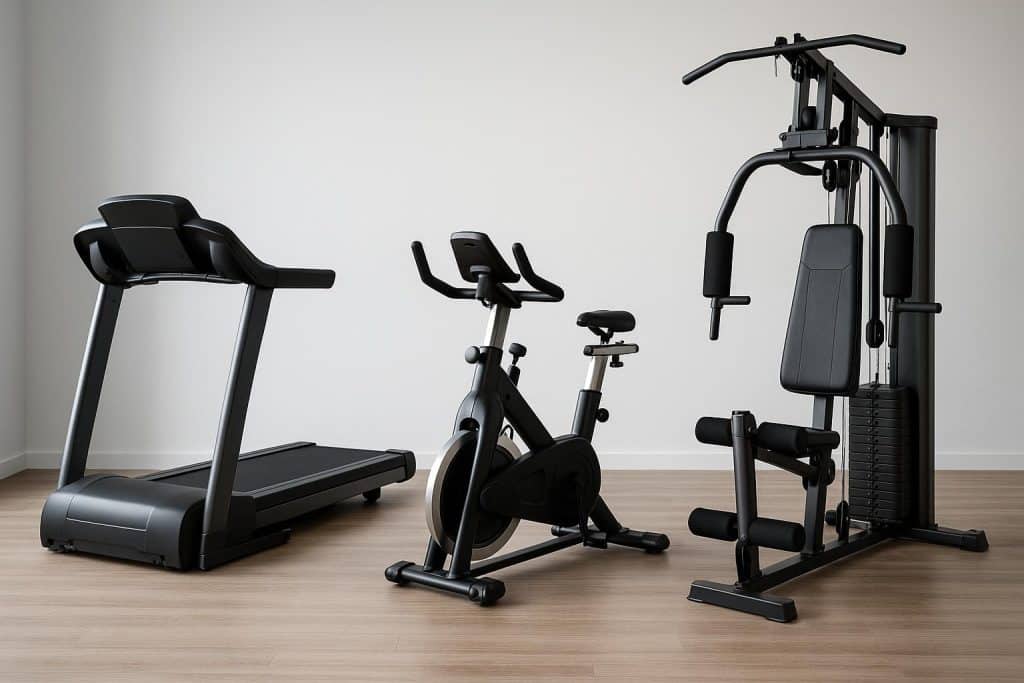
Buying your first big piece of fitness equipment is exciting but can feel overwhelming. You want something that fits your space, matches your goals, and actually gets used instead of becoming an expensive clothes rack.
The best first piece of equipment depends on what type of workouts you enjoy most and will actually stick with over time. If you love running or walking, a treadmill makes sense. If you want full-body workouts without high impact, a rowing machine or elliptical could be better. There’s no single right answer for everyone.
This guide will help you think through what matters most before you spend your money. You’ll learn how to match equipment to your real goals and avoid common mistakes that lead to buyer’s regret.
Key Considerations Before Making Your Purchase
Buying your first large fitness equipment requires planning and thoughtfulness. You need to match the equipment to your goals, make sure it fits in your space, set a realistic budget, and pick the right type of machine for your needs.
Assessing Your Fitness Goals
Your fitness goals should guide which equipment you buy. If you want to build cardiovascular endurance, you’ll need different equipment than someone focused on strength training.
Think about what you want to achieve in the next 6-12 months. Are you training for a specific event? Do you want to lose weight, build muscle, or improve your overall health? Write down your top three fitness priorities.
Consider how often you’ll actually use the equipment. A machine that doesn’t match your goals will end up collecting dust. If you hate running, a treadmill won’t help you no matter how good the deal is.
Your current fitness level matters too. Beginners might need equipment with simpler features and adjustable resistance levels. Advanced users often require machines with more sophisticated programming and higher weight capacities.
Measuring Your Space and Layout
Measure your available space before you start shopping. You need to know the exact dimensions of where the equipment will go, including height clearance for your ceiling.
Most fitness equipment needs extra space around it for safe use. Leave at least 2-3 feet of clearance on all sides. Treadmills and rowing machines need even more space behind them for safety.
Don’t forget about doorways and hallways. Measure the path from your front door to the equipment’s final location. Many large fitness machines won’t fit through standard 32-inch doorways when assembled.
Consider the floor underneath the equipment. Heavy machines can damage flooring or create noise. You might need protective mats or need to avoid placing equipment on upper floors in multi-story homes.
Think about ventilation and lighting in your workout space. You’ll want good airflow and adequate lighting to stay comfortable and safe during exercise.
Understanding Your Budget
Set a total budget that includes the equipment price, delivery fees, assembly costs, and any accessories you’ll need. Many people forget these extra costs and overspend.
New equipment costs more but often includes warranties and modern features. Used equipment saves money but may lack support or have hidden wear. Factor in potential maintenance and repair costs over the next few years.
Budget Categories to Consider:
- Equipment purchase price
- Delivery and setup fees
- Floor mats and protective gear
- Extended warranties
- Maintenance supplies
- Heart rate monitors or other accessories
Don’t max out your budget on the equipment alone. Save some money for the extras that make your workouts safer and more comfortable.
Look for sales during major holidays or end-of-year clearance events. You can often save 20-30% on quality equipment during these times.
Evaluating Equipment Types
Each type of fitness equipment serves different purposes and has unique pros and cons. Understanding these differences helps you make a smart choice.
Cardio equipment like treadmills, ellipticals, and stationary bikes focuses on heart health and calorie burning. Treadmills offer natural running motion but take up significant space and create noise. Ellipticals provide low-impact workouts but may feel awkward at first. Stationary bikes work well for joint-friendly cardio in smaller spaces.
Strength training equipment includes weight benches, power racks, and all-in-one home gyms. Free weight setups offer the most exercise variety but require proper form and technique. Cable machines and home gyms provide guided movements that are safer for beginners.
Rowing machines combine cardio and strength training in one compact package. They work your entire body and fold up for storage, making them good for smaller spaces.
Test equipment in person when possible. What feels comfortable for someone else might not work for your body type or movement patterns.
How to Select the Right Fitness Equipment for You
Quality construction, honest user feedback, and long-term support separate equipment worth buying from machines that end up collecting dust in your garage.
Comparing Features and Quality
Start by examining the weight capacity and frame construction of any machine you’re considering. A treadmill with a 300-pound capacity and a steel frame will last longer than one with a 200-pound limit and aluminum construction.
Check the warranty details closely. Motors should have at least 5 years of coverage, while frames often come with lifetime warranties on quality equipment.
Look at the adjustment options available. Can you change the incline, resistance levels, or seat position? More adjustability means the equipment can grow with your fitness level.
Test the stability if possible. Shake the machine gently or step on it to see if it wobbles. Sturdy equipment stays in place during intense workouts.
Compare the space footprint versus features offered. Some ellipticals take up 6 feet of length but offer minimal resistance levels, while others use the same space more efficiently with better programming.
Reading Reviews and Brand Reputation
Read verified purchase reviews on multiple websites to get a balanced view. Look for patterns in complaints rather than focusing on single negative experiences.
Pay attention to reviews that mention durability after 6-12 months of use. Initial impressions matter less than how equipment performs over time.
Check if the brand has been in business for at least 5 years. Established companies are more likely to honor warranties and provide replacement parts.
Search for the brand name plus “customer service” to see how they handle problems. Quick response times and helpful support teams indicate a company that stands behind its products.
Watch video reviews from actual users rather than just promotional content. You’ll see the equipment in real home settings and learn about issues that written reviews might miss.
Factoring in Maintenance and Warranty
Find out what parts are covered under warranty and for how long. Electronics typically have 1-2 year coverage, while mechanical parts might get 3-5 years.
Ask about the warranty claim process before buying. Some companies require you to ship heavy equipment back at your expense, while others send technicians to your home.
Check if replacement parts are readily available. Equipment from obscure brands might leave you stuck if a belt or pedal breaks after a year.
Calculate annual maintenance costs like lubricant for treadmills or replacement batteries for monitors. These expenses add up to $50-100 per year for most machines.
Look for equipment with accessible parts that don’t require special tools. Simple maintenance you can do yourself saves money on service calls.