

An influencer marketing agency is a specialist partner that connects brands with digital creators who hold the attention of today’s consumers. Brands use these agencies because they turn the often messy “wild west” of social media into a clear, data-led growth channel.
With 69% of consumers trusting influencer recommendations more than traditional ads, an agency brings the skills, tools, and contacts needed so your message not only reaches people but actually matters to them.
Working your way through the creator economy takes more than picking someone with a big follower number. To bridge this gap, many successful companies partner with a specialist influencer marketing agency All 4 Comms to sharpen their outreach and make sure every penny spent supports real community building.
These agencies take care of vetting, contracts, and tracking results, so your internal team can focus on core work while turning clicks into loyal customers.
What Is Influencer Marketing and Why Should Brands Use It?
How Influencer Marketing Connects Brands With Audiences
Influencer marketing is modern word-of-mouth. It relies on people who have built strong trust inside specific online communities. Unlike classic ads that interrupt what someone is doing, influencer content appears naturally in feeds that users choose to follow. Your product becomes part of a personal recommendation from a familiar voice instead of a random commercial.
The idea is not new-public figures like Queen Victoria or Coco Chanel shaped trends long before the internet. But platforms like Instagram, TikTok, and YouTube gave everyday people the power to influence large groups. By 2025, the industry was expected to reach $24 billion, showing how the bond between creators and followers has become a major driver of global sales.
Key Benefits for Brand Growth and Awareness
The biggest advantage of influencer marketing is its sense of realness. When a creator recommends a product, they give social proof that a polished ad cannot copy. This trust often leads to higher conversion rates and a stronger brand image. For brands that want to grow, influencers offer a way to reach niche groups very precisely, so the right message hits the right people at the right time.
Influencer work also boosts social SEO and visibility. When many creators tag a brand and use smart keywords, algorithms read that as a sign of relevance, which helps the brand appear more often in search and discovery feeds. Seeing the same product praised by several trusted creators helps people remember it and shortens the path to purchase.
Common Misconceptions Brands Have About Influencer Marketing
A common myth is that influencer marketing is only about “vanity metrics” such as likes and follower counts. In truth, a million followers means little if most of them are inactive or fake. Modern strategies pay more attention to engagement quality—comments, shares, and saves—because these show real interest and buying intent. Many brands later learn that a small but highly engaged audience is more useful than a huge, quiet one.
Another misconception is that influencer marketing is a quick, one-off post. Many brands expect a single piece of content to fix everything. Real success usually comes from ongoing relationships. When you treat creators as long-term partners instead of short-term billboards, you get more natural stories and better results over time.
To navigate these complexities, many brands rely on specialists like https://all4comms.com/, who help build authentic partnerships that deliver a much higher ROI than random, one-time campaigns.
What Does an Influencer Marketing Agency Do for Brands?
Services Typically Offered by Influencer Marketing Agencies
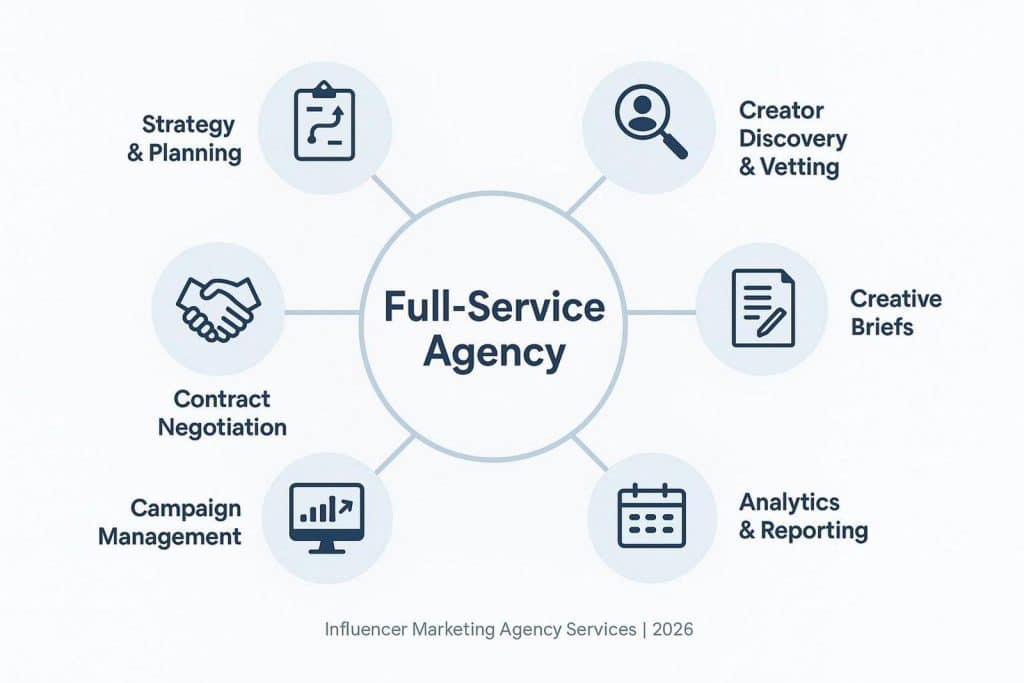
A full-service agency manages campaigns from start to finish. They begin with strategy and creator discovery, using databases to filter influencers by topic, keywords, and audience details. Once they find the right partners, they handle outreach, contract talks, sending products, and making sure all posts follow rules like FTC disclosure (#ad, #sponsored, etc.).
After launch, the agency shifts to analysis. They track performance in real time, following KPIs like impressions, click-through rate, and sales. They also guide the creative side, writing briefs that mix brand needs with the creator’s style so the content feels natural, not stiff or scripted.
Roles of Agencies Versus In-House Influencer Teams
In-house teams often find it hard to manage many creator relationships at once. An agency acts like an extra arm of the brand, offering a larger team and support across time zones. While in-house teams know the brand deeply, agencies bring specialist knowledge, creator matching tools, and experience with many platforms that internal staff may not have time to develop.
Agencies also usually have more bargaining power because they handle many influencers at scale. They can spot new trends early and turn them into opportunities before they spread, giving brands a clear advantage. In many companies, the agency handles daily tasks while the in-house team sets direction and signs off key decisions.
Differences Between Traditional and Platform-Backed Agencies
Traditional agencies lean heavily on personal relationships and manual research. They often return to the same pool of talent, which can be reliable but may limit reach into new communities. Their service is often very personal and “white glove,” but costs can be less clear when their fees and influencer payments are bundled.
Platform-backed agencies rely on software to run campaigns more efficiently. They offer live data and clear fee breakdowns, so brands see exactly how much goes to the creator and how much to the agency. They can change course quickly, scale up or down, and use AI to forecast results before content even goes live.
Types of Influencer Marketing Agencies: Which is Best for Your Brand?
Full-Service Influencer Marketing Agencies
Full-service agencies are “all-in-one” partners for brands that want to scale. They handle everything: strategy, influencer selection, content checks, and reporting. This works well for large or fast-growing brands that want a strong presence on several platforms without managing all the details themselves.
These agencies also connect influencer campaigns with wider digital efforts. They align social activity with paid ads and SEO, and reuse influencer content (UGC) across different channels so every post has a longer life and greater impact.
Niche and Micro-Influencer Agencies
Niche agencies focus on specific sectors-like beauty, fintech, or gaming-or on micro-influencers. They excel at building communities. They know the details of certain subcultures and can help a brand take over a space by working with many smaller creators who have very loyal fans.
For D2C brands, these agencies are often best for building trust and driving conversions. They focus on local or specialist content that feels close and believable. This approach works especially well for products that need explanation, such as skincare or specific tech tools.
Platform-Backed Influencer Agencies
Platform-backed agencies use connected technology to manage everything in one place. They are ideal for brands that care strongly about data and clarity. With shared dashboards, brands can see performance at every stage of the funnel in real time and avoid juggling many different tools.
These agencies often work closely with major platforms like TikTok or Meta, gaining early access to new tools and APIs. This lets them adjust campaigns based on live data and move budget to the best-performing creators while the campaign is still running.
Performance-Focused Digital Influencer Agencies
Performance-focused agencies treat influencer work like affiliate or paid media. Their main aim is measurable ROI, such as cost per acquisition (CPA) or direct revenue lift. They often agree to performance-based deals where influencers earn based on leads or sales they bring in, instead of a simple flat fee.
This setup is appealing for startups and SMEs with tight budgets. By tracking conversion-focused metrics and using affiliate links or promo codes, these agencies give clear proof of impact, which makes it easier for marketers to defend spend to company leaders.
What Are the Types of Influencers Agencies Work With?
Mega and Celebrity Influencers
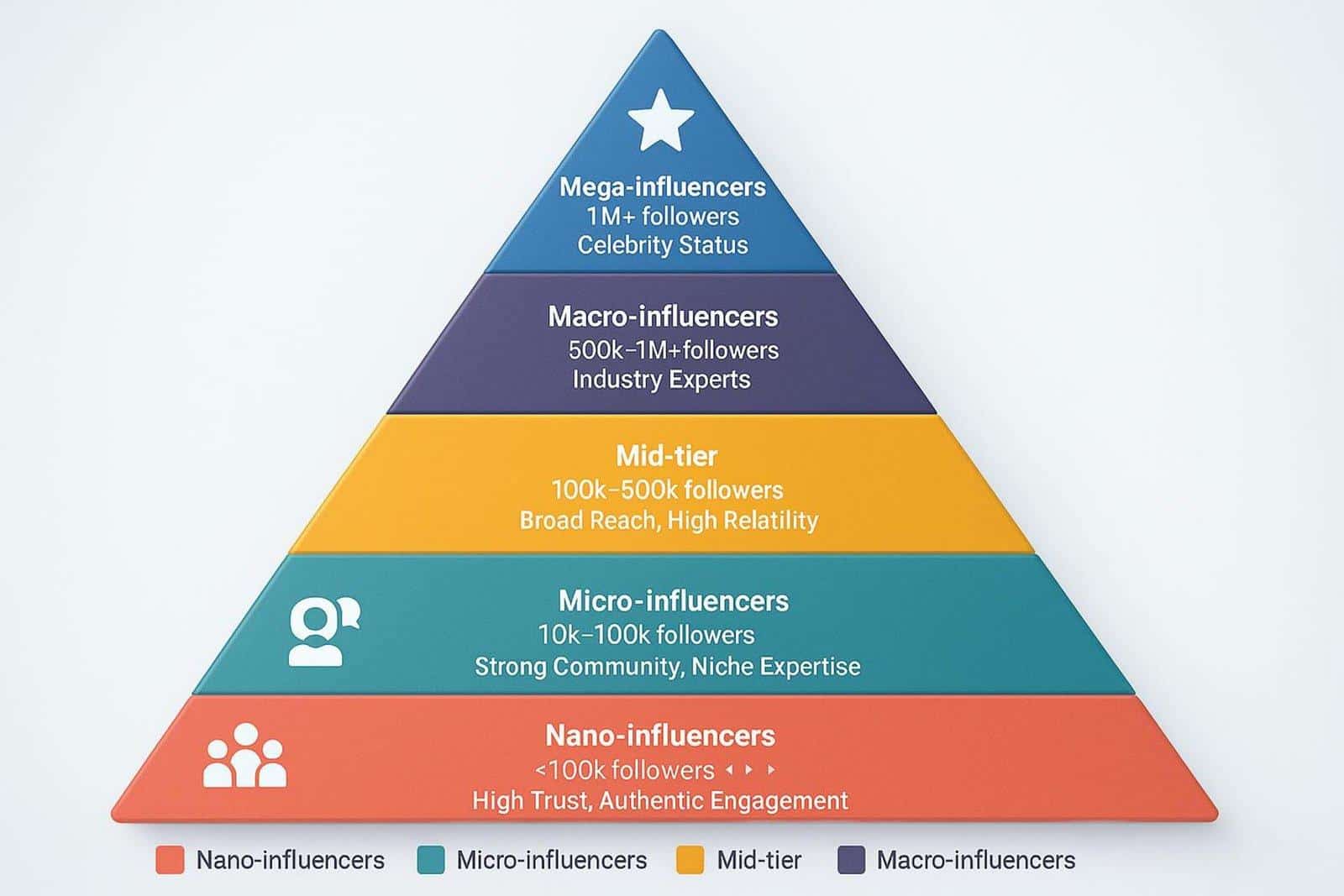
Mega-influencers are the biggest names online, with over 1 million followers. They include well-known actors, athletes, and internet stars who can reach large audiences at once. They are suitable for large awareness pushes where the goal is massive exposure and a strong public presence in a short time.
However, this wide reach is expensive and usually comes with lower engagement. Because their audiences are so broad, the bond between creator and follower can be weaker. Mega-influencers tend to work best for big brands with large budgets that mainly want top-of-funnel awareness.
Macro-Influencers
Macro-influencers have about 100,000 to 1 million followers. They are often experts or leading voices in a field. They offer a useful mix of reach and focus. Their audiences share clear interests, which helps brands that want both visibility and authority.
These creators are usually very professional. They deliver polished content and have a strong record of brand-safe work. They are ideal for product launches or category awareness, especially in areas like travel, fashion, or tech.
Mid-Tier Influencers
Mid-tier influencers typically have between 50,000 and 500,000 followers. They provide good reach while staying fairly accessible. Their key strength is blending a personal connection with professional content. Followers often see them as relatable, which helps build trust.
For many brands, this group gives the best value. They are big enough to shift awareness but still hold a niche feel with strong engagement. They work well for ongoing creator programs that need steady storytelling over time.
Micro-Influencers
Micro-influencers, with 10,000 to 100,000 followers, are often seen as the “up-and-comers.” They stand out for authenticity and deep knowledge of specific topics. Studies show 61% of consumers prefer relatable personalities to classic celebrity endorsements, which makes micro-influencers very effective at driving sales.
Their smaller, more engaged audiences often give higher interaction rates. They are usually affordable enough that brands can work with many at once, creating a “surround sound” effect where a target group hears about the brand from multiple trusted sources.
Nano-Influencers
Nano-influencers have under 10,000 followers but often deliver the highest engagement rates, around 7-9%. They run very tight-knit communities where their recommendations feel like they come from a close friend. This is powerful for local businesses or very niche products.
Collaborating with nano-influencers is a low-cost way to create buzz and gather useful product feedback. While they do not offer large reach alone, a gifting campaign involving 50-100 nano-influencers can spark strong organic support that shapes a brand’s image in a community from the start.
How to Choose the Right Influencer Marketing Agency for Your Brand
Key Factors Brands Should Evaluate
When choosing an agency, brands need to look past big-name logos and focus on how the agency works. One key factor is the size and variety of their influencer network-do they cover your industry and audience type? Brands should also check how the agency communicates. If one side expects very close involvement and the other expects full freedom, the relationship will quickly suffer.
It is also smart to ask about fees. You need to know whether the agency takes a cut of the influencer’s payment, which might push them toward pricier talent instead of the best match. Clear pricing and a plain explanation of how they pair brands with creators are basic needs for a healthy long-term relationship.
Creator Vetting and Brand Safety Practices
Brand safety is non-negotiable. A reliable agency must have a strong vetting process that checks old posts for problems and confirms the creator’s values match the brand. This includes spotting fake followers, reviewing engagement tone, and making sure audience demographics line up with your target market.
Agencies like Creo or Aspire use “Match Scores” and safety reports to give an objective view of a creator’s fit. This data-led method protects your image while letting influencers keep their creative freedom. Without good vetting, you risk PR issues or wasting money on accounts that have little real influence.
Content Control, Quality, and Campaign Extensions
A good agency balances brand rules with creator freedom. They write strong briefs that guide the message but do not crush the creator’s voice. Being too strict leads to fake, awkward content that audiences ignore. The agency sits between both sides, making sure key features are included while keeping the influencer’s style intact.
An agency should also help you stretch the impact of each campaign. This might include allowlisting (running ads from the influencer’s handle) and reusing high-performing UGC on your own channels or website. This approach lets good content keep working for you long after the original post is published.
Experience With Similar Brands and Industry Expertise
An agency may have worked with global giants like Microsoft or Coca-Cola, but the real test is their experience with brands similar to yours. A skincare brand will have very different needs to a B2B software company. Sector experience helps an agency understand culture, platform trends, and user behavior in your specific market.
The best way to judge this is by reviewing case studies and live examples. Look for agencies that have handled similar problems, like entering a new country or driving app installs. Talking to past clients is also helpful for understanding how reliable and flexible the agency is.
Analytics, Reporting, and Performance Tracking
By 2026, guesswork is no longer acceptable. A strong agency must provide clear analytics that go beyond surface-level stats. They should track saves, shares, site traffic, and assisted conversions. Understanding the whole customer journey-from first touch to purchase-is key to proving ROI and improving future campaigns.
The agency’s tools should connect with your systems, such as Shopify or Meta. Real-time reporting lets you see what works and what does not, so you can adjust while the campaign is live. If an agency cannot explain exactly how they measure success, they are unlikely to be the right choice for a brand focused on growth.
Channel-Specific and Cross-Platform Capabilities
Audiences now move across several platforms. A modern agency must know how to use Instagram, TikTok, YouTube, and even LinkedIn for B2B. Each channel works best for different content-for instance, YouTube is ideal for long reviews and guides, while TikTok is strong for short, viral clips.
The best results often come from linking channels together. An agency should explain how a TikTok trend can be boosted on Instagram Stories, or how a YouTube review can be cut into Shorts. This cross-platform method keeps your story consistent and spreads it across different age groups and interests.
How Agencies Build Effective Influencer Marketing Strategies
Setting Goals and Measurable Objectives
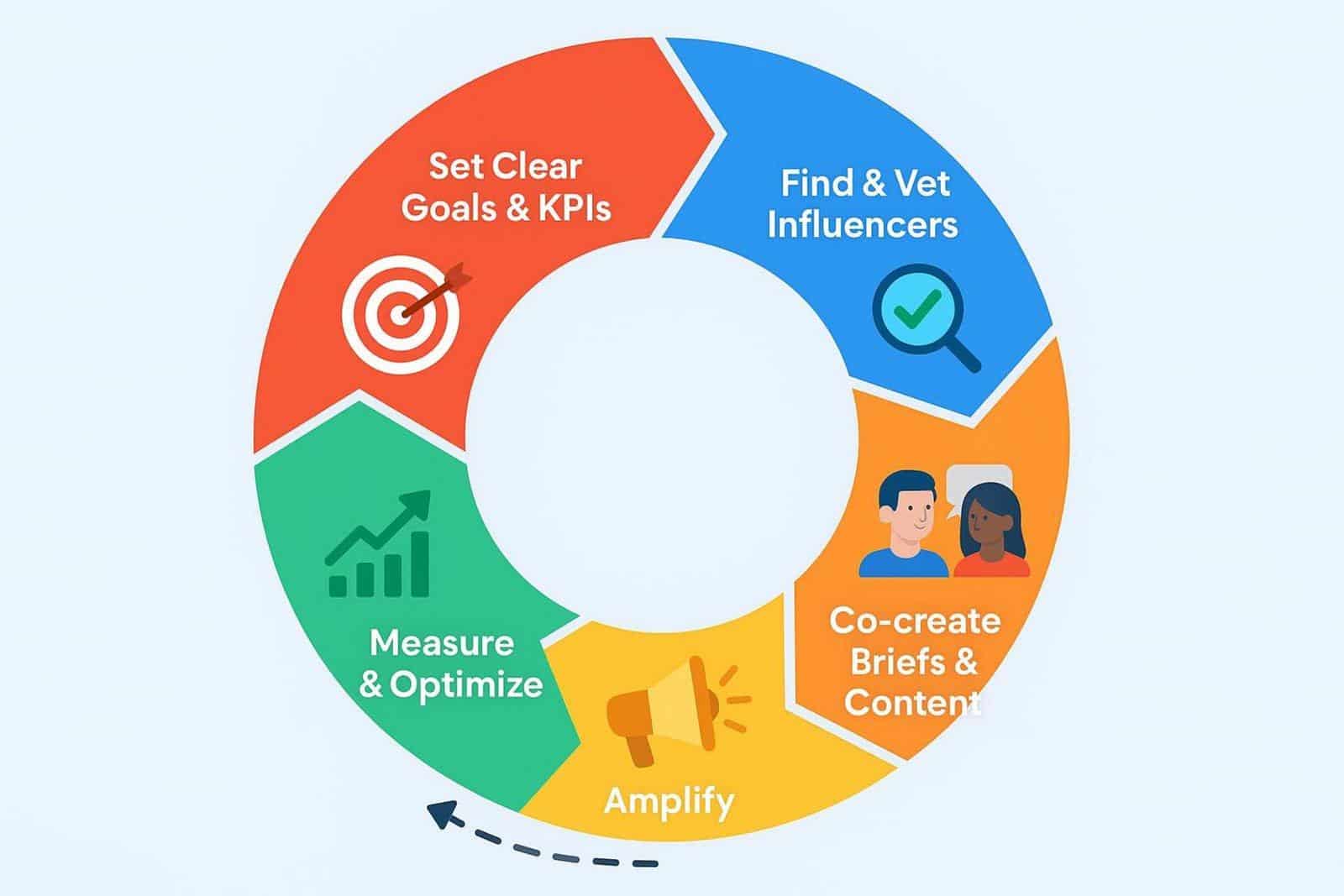
Every strong campaign starts with clear goals. Agencies help brands decide if they are aiming for awareness, leads, or direct sales. They then break these into specific metrics, such as target impressions or conversion rates. Without clear targets, you cannot judge success properly.
Agencies also map the “audience journey.” Are you trying to bring in new customers or speak to existing ones? The answer shapes which platforms to use, which influencers to pick, and what tone the content should take. A clear testing plan helps make sure every campaign supports the brand’s wider growth strategy.
Finding and Vetting the Right Influencers
Choosing the right influencers is often the biggest factor in campaign success. Agencies use advanced search tools and AI to find creators already talking about topics relevant to your brand. They do not just look for those who are popular-they look for those who are relevant and aligned with your values.
The vetting process is detailed. It includes checking follower locations to match target markets and reviewing past brand deals to see how sponsored content performed. This careful approach lowers the risk of a poor match and makes the partnership feel natural to the audience.
Establishing Clear Briefs and Creative Control
A strong brief is the backbone of a good campaign. It explains company background, product benefits, and target audience, without turning into a script. Agencies push for “co-creation”: the brand sets what needs to be said, and the creator decides how to say it. This keeps content honest and relatable.
Agencies also manage approvals, making sure posts meet brand standards but still feel real and “unfiltered.” They guide brands away from over-editing, which kills creativity. Letting go of some control is needed to get the human feel that drives modern social success.
Amplifying Campaigns Across Diverse Channels
Good content should not disappear after one post. Agencies plan how to spread it across platforms-for example, using a YouTube review as the main piece, then supporting it with TikTok teasers and Instagram Partnership Ads. This layered method boosts your chance of showing up in searches and reinforces your message.
They also use creator whitelisting, where brands run paid ads from the creator’s account. This often leads to around 38% higher click-through rates compared to standard brand ads. By putting extra spend behind content that already works, agencies help brands get more from every dollar.
Measuring Campaign Impact: Key Metrics and KPIs
The final step is a detailed look at results. Agencies provide reports that link outcomes directly to your goals. They check which creators drove the most engagement, which formats led to the most sales, and which channels delivered the best ROI. This data-led approach is what lifts campaigns from good to great.
In 2026, better attribution models help link influencer efforts to revenue, even when buying decisions take time. Agencies look at metrics like Customer Lifetime Value (CLV) and retention to see long-term effects. They then use these lessons to adjust future campaigns, creating a constant cycle of improvement.
Risks and Mistakes Brands Should Avoid When Working With Agencies
Prioritizing Reach Over Engagement and Brand Fit
Many brands chase big follower numbers without checking if those followers match their target audience. Large reach often equals low interaction, where people see content but do nothing. Agencies help avoid this by focusing on “resonance,” meaning how deeply creators connect with their communities.
Brand fit is just as important. If an influencer’s values or style clash with your brand, the partnership feels forced. Audiences notice paid posts that do not feel honest and scroll on quickly. A smaller but well-matched audience that trusts the creator is far more useful than a massive, detached crowd.
Restricting Influencer Creativity
Some brands tightly control messaging, provide scripts, and demand many edits. This kills the creativity that made the influencer popular. Overly polished content can feel like traditional ads-which only a small share of people trust.
Agencies recommend trusting the creators once you have vetted them. Influencers know what tone, jokes, and visuals work with their followers. Giving them clear guidelines and then stepping back allows for natural storytelling, which is what usually drives sales today.
Having Unclear Goals and Expectations
Without clear goals, campaigns lose focus. Many brands start influencer marketing because “everyone is doing it,” but without stating if they want awareness, leads, or sales, they cannot track success fairly. This confusion causes frustration for both brand and agency later on.
Expectations around timelines and tasks also need to be defined early. If the brand expects a low-touch setup and the agency needs frequent input, conflict will follow. Setting scope in writing-number of posts, payment rules, reports, and approval steps-helps keep the partnership smooth.
Focusing on the Wrong Success Metrics
Relying only on likes or views can be misleading. These numbers show reach but not real business impact. Brands that do not look at deeper measures such as saves, shares, site visits, and conversions are missing the full picture.
On the other hand, focusing only on immediate sales can also be a mistake. Influencer marketing can improve brand image, social SEO, and provide reusable content. A broad view that tracks several metrics at each stage of the funnel is needed to understand true ROI.
Influencer Marketing Agency Trends Brands Need to Know
AI-Powered Tools for Influencer Identification and Measurement
AI is reshaping influencer work in 2026. Agencies now use AI tools to predict results before campaigns start. These systems scan thousands of creators to find strong brand matches based on sentiment and past performance, cutting guesswork and pushing spend toward partners likely to do well.
On the measurement side, AI can find untagged organic mentions, giving a clearer view of overall social impact. Predictive models can also estimate long-term customer value, helping agencies adjust budgets in real time. This tech-led shift is making influencer marketing more measurable and transparent.
The Rise of Micro-Influencers and Niche Communities
Micro-influencers continue to grow in importance. As people seek real human connections, small creators who lead narrow niches are becoming key drivers of buying decisions. Brands are moving budget away from a few mega names to many micro and nano-influencers who tell honest and relatable stories.
This trend is especially strong in regional and local markets. Creators who understand local culture and language often get better engagement than national stars. For brands, relevance has now overtaken pure reach as the most important success factor.
Emphasis on Authentic Relationships and Long-Term Partnerships
Short, one-off posts are giving way to ongoing ambassador programs. Brands see that trust builds over time. When an audience repeatedly sees a creator support the same product, it feels more genuine and builds loyalty. Long-term deals also help creators become real experts on the product, which leads to better content.
These longer relationships also stretch budgets. Because both sides invest in each other, you do not start from zero every time. Influencers in ongoing partnerships often give extra ideas, feedback, and content since they care about the brand’s long-term success.
Data-Driven Decision Making and Transparency
The early “hype” stage of influencer marketing has shifted into a phase focused on proof. Brands now expect detailed tracking of where money goes. This has pushed more brands to work with platform-based agencies that provide full fee clarity and real-time data. Advanced attribution that links social activity to revenue is becoming standard.
Clarity also applies to creator rates. Brands are paying closer attention to what they pay for-reach, content production, usage rights, or a mix. This data-led method supports fairer pricing and helps direct budget to the activities and partners that truly move results.
Why Choosing the Right Influencer Marketing Agency Drives Brand Growth
Picking the right agency is about more than handing off tasks; it means adding a long-term growth partner. A skilled agency protects your reputation, delivers trackable growth, and creates content that keeps working over time. They act as the strategic engine behind your creator program, making sure each partnership is judged on real outcomes. With their mix of experience, tools, and creator networks, brands can move through the fast-changing digital space without losing direction.
The right agency can change your growth path. It turns influencer marketing from a loose creative test into a repeatable, scalable growth channel. At a time when consumers want real stories and relatable faces, an agency helps you find the right people to speak for you, building the trust and visibility needed to win in 2026 and beyond.
Frequently Asked Questions About Influencer Marketing Agencies
What does an influencer marketing agency do for my brand?
An agency is a full-service middleman that connects your brand with the right creators. It handles strategy, creator sourcing, contracts, campaign management, and reporting. The goal is to remove guesswork and deliver campaigns that have real impact.
By taking care of logistics like shipping, scheduling, and approvals, agencies free your team to focus on other priorities. They also help with brand safety and legal compliance, keeping your reputation safe while using creators’ strengths to the fullest.
How long does it take to achieve results from influencer marketing?
Visible engagement-likes, comments, and views-often starts as soon as posts go live. Strong, steady ROI usually builds over time. Influencer marketing works best as an ongoing effort rather than a single campaign. Many brands see major growth after 3-6 months of regular activity.
Timing also depends on how long people usually think before buying your type of product and how often influencers post. For high-priced or complex items, sales may take longer, but awareness and trust begin to grow from the first wave of content.
How do brands find the right influencer partners?
Finding the right partners is part data, part human judgment. Brands should focus on fit: the creator’s values, style, and audience should match the brand’s own. Agencies make this easier by using AI tools and “Match Scores” that compare audience profiles and engagement history.
It is also important to look at the creator’s usual topics. Do they already talk about things related to your industry? Do their followers see them as a real, honest voice? Checking for fake followers and reading the quality of comments are key steps in finding a partner who can really influence buying decisions.
Is micro-influencer marketing effective for smaller brands?
Yes. For smaller brands, micro-influencer marketing is often more effective than hiring celebrities. Micro-influencers have tight-knit, specific audiences that trust their opinions. With limited budget, working with several micro-influencers can give better value than one expensive macro-influencer.
These creators are generally more approachable and open to long-term or performance-based deals. For startups and SMEs, this approach supports steady growth and helps build a loyal community from the early stages.
Can influencer-generated content be reused in brand ads?
Yes, and many brands see strong results from this. High-performing influencer content often works very well in paid campaigns like Meta Advantage+ or TikTok Spark Ads. Because it feels natural and user-made, it usually gets higher click-through rates and lower acquisition costs than classic brand-made ads.
However, you must clearly set usage rights in the contract. Most agencies handle this during negotiation, so brands can reuse content on their sites, email, and social channels, getting the most value from each collaboration.