

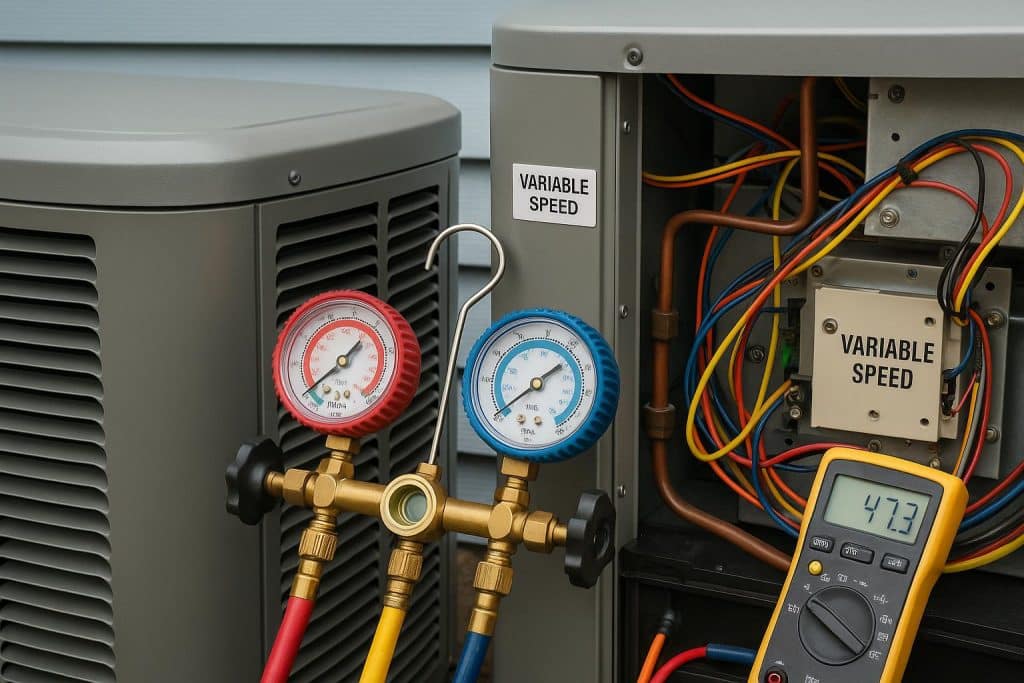
Variable-speed HVAC systems can deliver steadier comfort, lower noise, and smoother humidity control than older single-stage equipment, but only when they are tuned to the home and the duct system. Unlike equipment that runs at one output level, variable speed systems make constant small decisions about airflow, compressor speed, and capacity based on sensors and thermostat inputs. If the ductwork is restrictive, the returns are undersized, or the thermostat settings are incorrect, the system may hunt, short-cycle, or run longer than expected without improving comfort. Tuning is also important because variable-speed equipment can mask problems. A unit may keep rooms comfortable while operating inefficiently due to high static pressure or incorrect airflow per ton, and the homeowner may not notice until energy bills or comfort complaints appear. Contractors treat tuning as a commissioning process that verifies airflow, refrigerant performance, control settings, and duct balance. The goal is to align the equipment’s capabilities with the building’s capacity, so the system runs smoothly, maintains consistent temperatures, and manages humidity without constant adjustments.
What contractors tune and verify
- Duct conditions, static pressure, and airflow targets
Variable-speed systems respond strongly to duct conditions because the blower adjusts to maintain airflow targets, sometimes increasing speed to overcome restrictions. That can increase noise and energy use and reduce the system’s ability to dehumidify effectively. Contractors begin by measuring total external static pressure, then comparing it to equipment limits. If static pressure is high, they look for common causes such as undersized returns, dirty coils, restrictive filters, crushed flex duct, sharp turns, or closed dampers. Airflow is then set to match the home’s cooling and heating needs, often using airflow per ton as a guide, while considering humidity goals and the climate.
In many cases, lowering airflow slightly in cooling mode can improve dehumidification, but it must be done safely to avoid coil freezing or reduced comfort in extreme heat. Branch balancing is part of tuning as well, because rooms with long runs or limited returns may need adjustments to prevent the system from overfeeding one area while starving another. This is also when contractors confirm that supply and return grills are sized properly and not blocked by furniture or rugs. Even if a homeowner calls for AC Repair, contractors often check these tuning basics because comfort complaints and efficiency issues can come from airflow and duct restrictions rather than a broken compressor.
- Thermostat configuration and staging behavior
Variable-speed systems rely on controls that determine how aggressively the equipment ramps up or down. A thermostat may allow a longer low-speed run to maintain comfort quietly, or it may force quicker ramping if set incorrectly. Contractors check the thermostat type, wiring, and compatibility with the equipment to ensure all variable features are enabled. They then adjust key settings such as temperature swing, humidity targets, and staging thresholds. Some systems have modes that prioritize humidity control, allowing longer low-speed cooling to pull moisture without overcooling. During the heating season, the ramp strategy can affect comfort and energy use, especially for heat pumps, where backup heat staging should be set to avoid unnecessary operation of electric resistance. Fan settings also matter. A continuous fan can improve mixing, but may increase humidity if the coil is wet and the fan recirculates moisture back into the home. Contractors tune these choices based on how the home behaves, such as whether upstairs rooms lag, whether the home is tight, and whether occupants notice drafts. Proper thermostat setup makes the system feel steady rather than constantly changing, and it helps the equipment operate within the range where it is designed to be efficient.
- Refrigerant performance and charge verification
Even with perfect airflow, a variable-speed system will not perform correctly if the refrigerant charge and coil conditions are off. Contractors verify refrigerant performance using manufacturer procedures that consider outdoor temperature, indoor load, and system mode. Because variable compressors can change behavior during testing, technicians often lock the system into a specific test mode or stabilize it at a known capacity level before taking measurements. They check superheat, subcooling, line temperatures, and pressure relationships, but they also verify coil cleanliness and blower performance because dirty coils can mimic charge problems. In heat pump systems, both heating and cooling performance are checked, including defrost operation and reversing valve behavior, because issues can occur seasonally. They also inspect insulation on refrigerant lines and look for restrictions that can cause odd pressure behavior. A proper tune includes confirming that condensate drains properly, because poor drainage can cause moisture issues and can affect indoor comfort even when the temperature seems fine. Refrigerant verification is not only about preventing breakdowns. It is about ensuring the system can modulate smoothly across load changes without exceeding capacity or causing noisy operation.
Tuning that delivers steady comfort.
Variable speed system tuning is a structured process that links duct performance, airflow targets, thermostat behavior, and refrigerant verification into one stable setup. Contractors start with static pressure and airflow because restrictions can force the system to work harder and reduce dehumidification. Control settings then shape how the equipment stages, ramps, and manages humidity, preventing hunting and short cycling. Refrigerant performance checks ensure the system can modulate across real loads without instability. Finally, room-by-room checks confirm that comfort is delivered evenly, with small adjustments that help long runtimes feel quiet and consistent. When these steps are done together, a variable-speed system delivers smoother temperature control, better moisture control, and a calmer experience that remains reliable through changing seasons.